Guide ·
How to Tell if Rhinestones Are Vintage (and What “Dead” Stones Mean)
Short answer: you can tell if rhinestones are vintage by turning the piece over. Vintage rhinestones are almost always glass with a foil mirror on the back, often set in closed backs or held by prongs, and old foil tends to show its age as gray or dark patches. Plating wear, a maker’s mark, and the clasp help confirm the date, and an aurora borealis rainbow coating means about 1956 or later.
Rhinestones are tricky because the front of a stone doesn’t age much. A 1950s brooch and a brand new one can sparkle in exactly the same way under shop lights. The age shows up behind and around the stone, in the backing, the setting, and the metal. So the most useful habit you can build is to look at the back first (and if you’re buying online, to ask for a photo of it).
What is a rhinestone?
A rhinestone is a cut glass stone made to look like a gem, usually with a metallic foil on its back to bounce light out through the front. The name goes back to rock crystal (clear quartz) pebbles once gathered along the Rhine. The glass version grew out of 18th century paste: a jeweler in Paris, Georges Frédéric Strass, became known for imitation diamonds made from high-lead glass, which is why rhinestones are still called “strass” in many European languages. (Sources give different dates and even different spellings for Strass, so treat the details loosely.) You’ll also see rhinestones called paste or diamanté.
Most of the rhinestones in vintage American costume jewelry came from two places. Bohemia, around the town of Gablonz (now Jablonec nad Nisou in the Czech Republic), was a major center for glass stones and costume jewelry, which is where “Czech glass” comes from. Daniel Swarovski came from that region too. He patented an electric machine for cutting crystal glass in 1892 and set up his company in Wattens, Austria, in 1895, which is where “Austrian crystal” comes from.
How do you tell vintage rhinestones from modern ones?
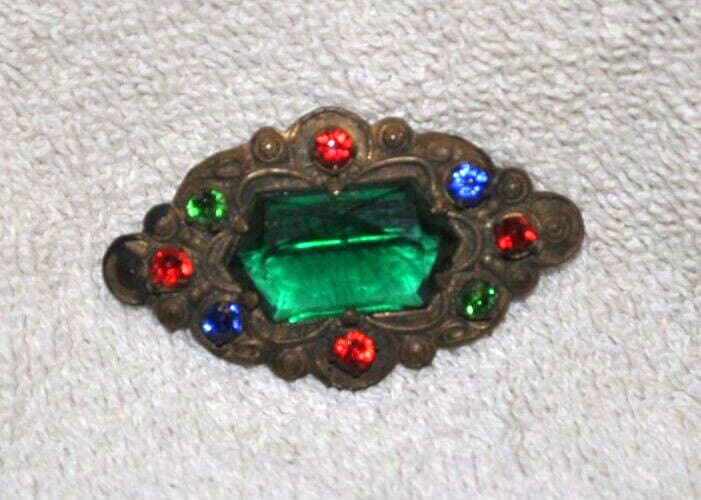
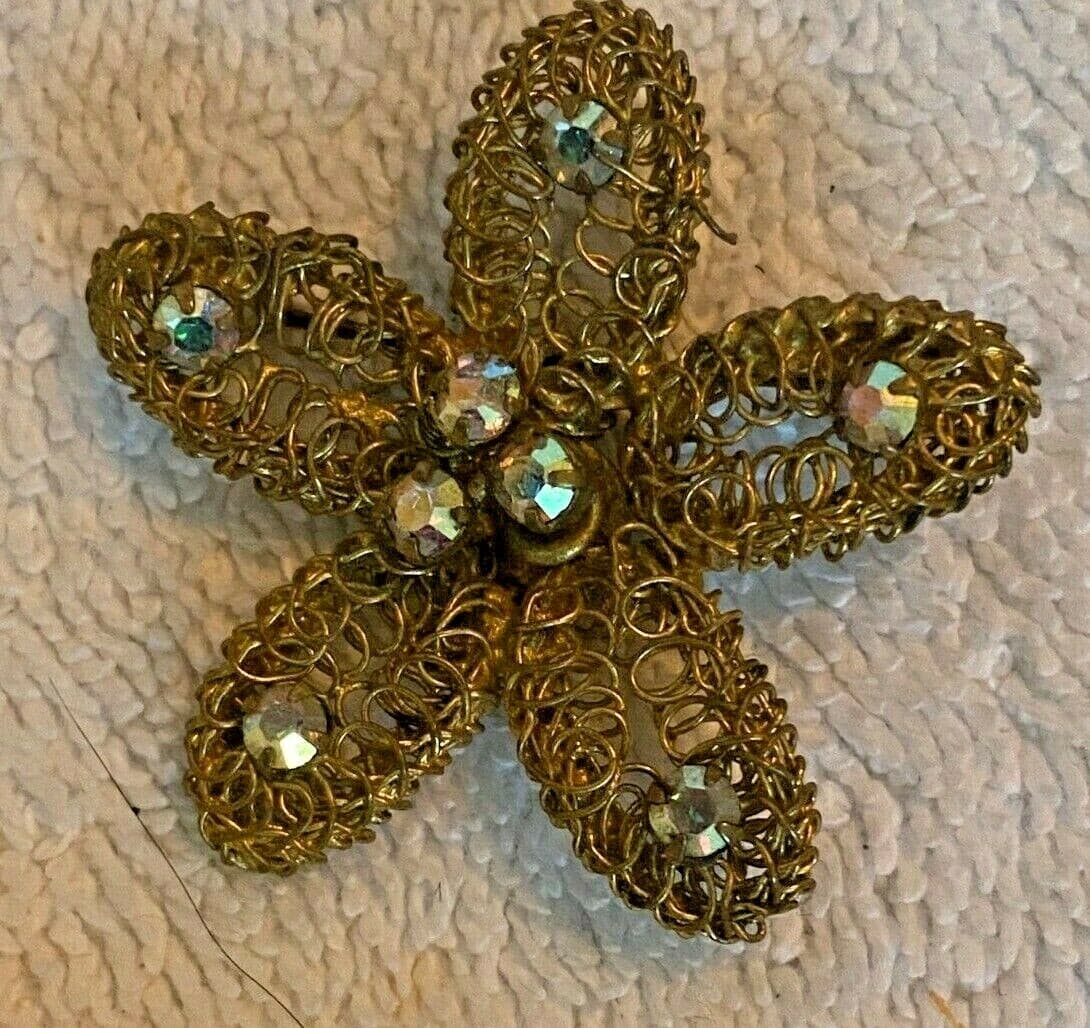
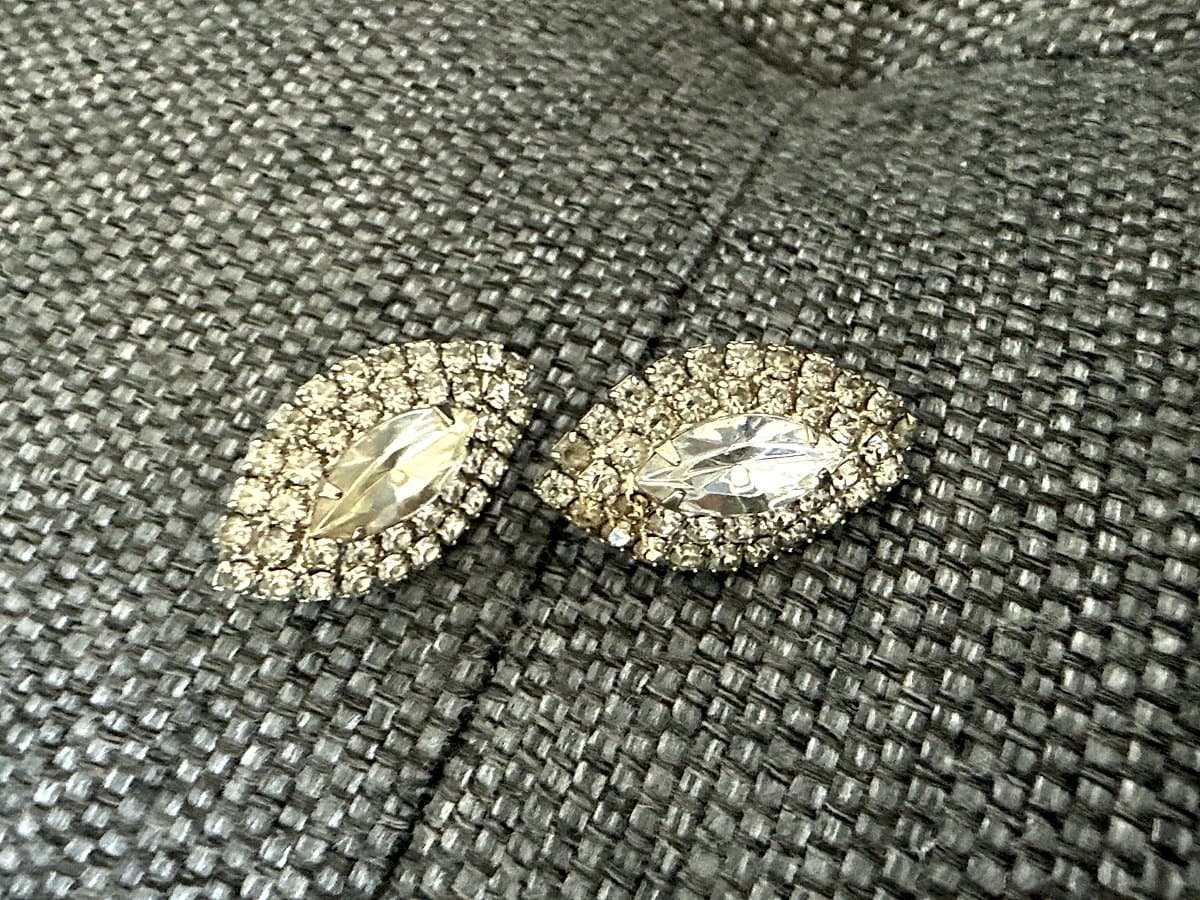
Vintage rhinestones usually show their age in the foil, the backs, and the setting, while the glass itself looks much the same as today’s. Start with the foil. Most rhinestones in older costume jewelry are foiled, and foil ages. Under a loupe, a vintage stone often has a few gray, smoky, or slightly pink spots where the foil has started to tarnish. Perfect, bright foil on every stone doesn’t rule out age (well-stored pieces exist), but a little uneven foil wear is one of the better signs that a piece has been around a while. Many modern stones have a painted or coated back instead, and plenty of modern pieces use cubic zirconia or plastic, which aren’t foiled at all.
Next, check the backs. Foiled stones were usually set in closed backs, little metal cups that hide the foil and protect it. Open backs, where you can see light through the stone from behind, show up on older paste and on better-quality pieces where the stone is clear enough to sparkle on its own. Neither one dates a piece by itself, but the back tells you what kind of stone you have.
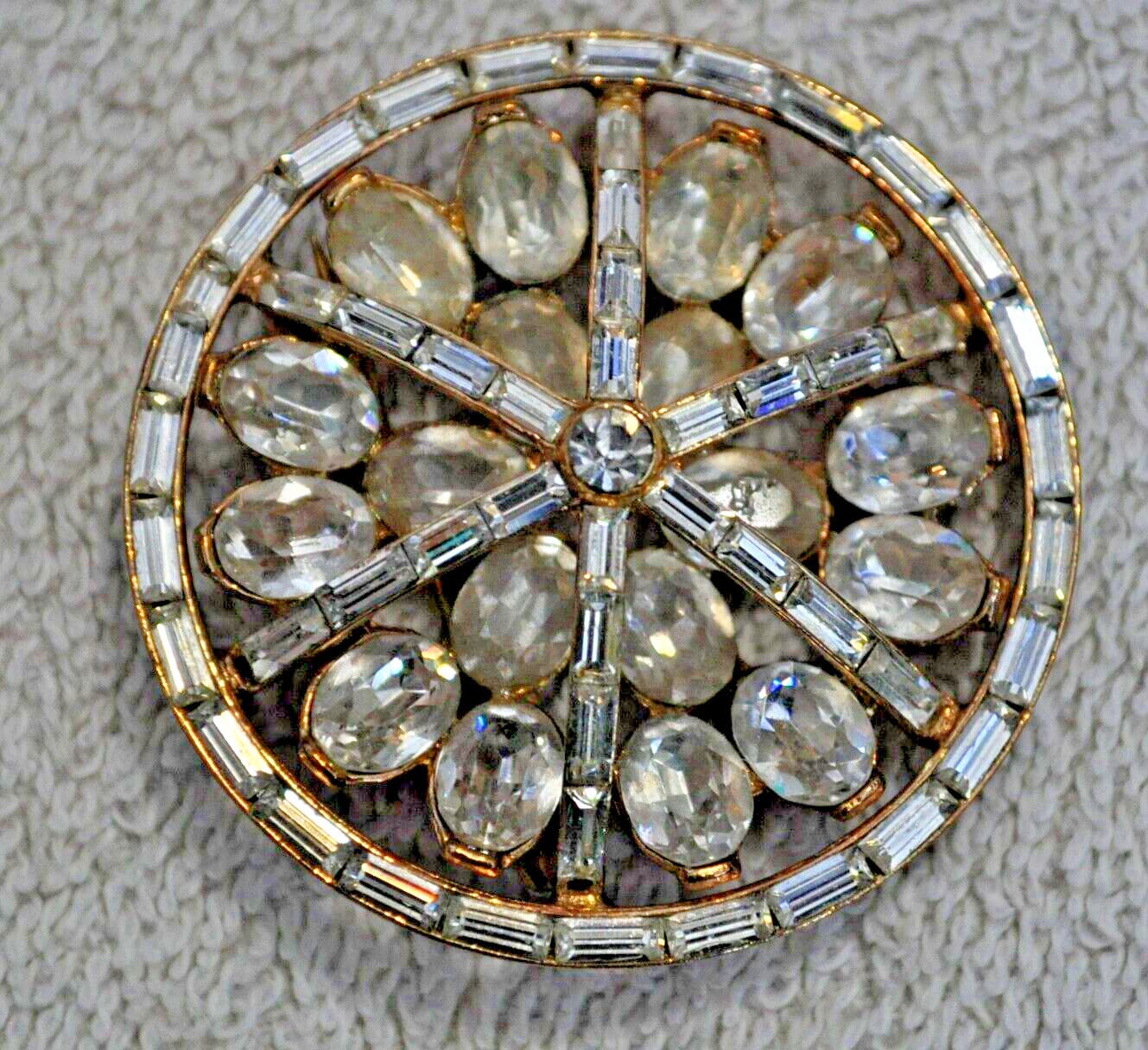
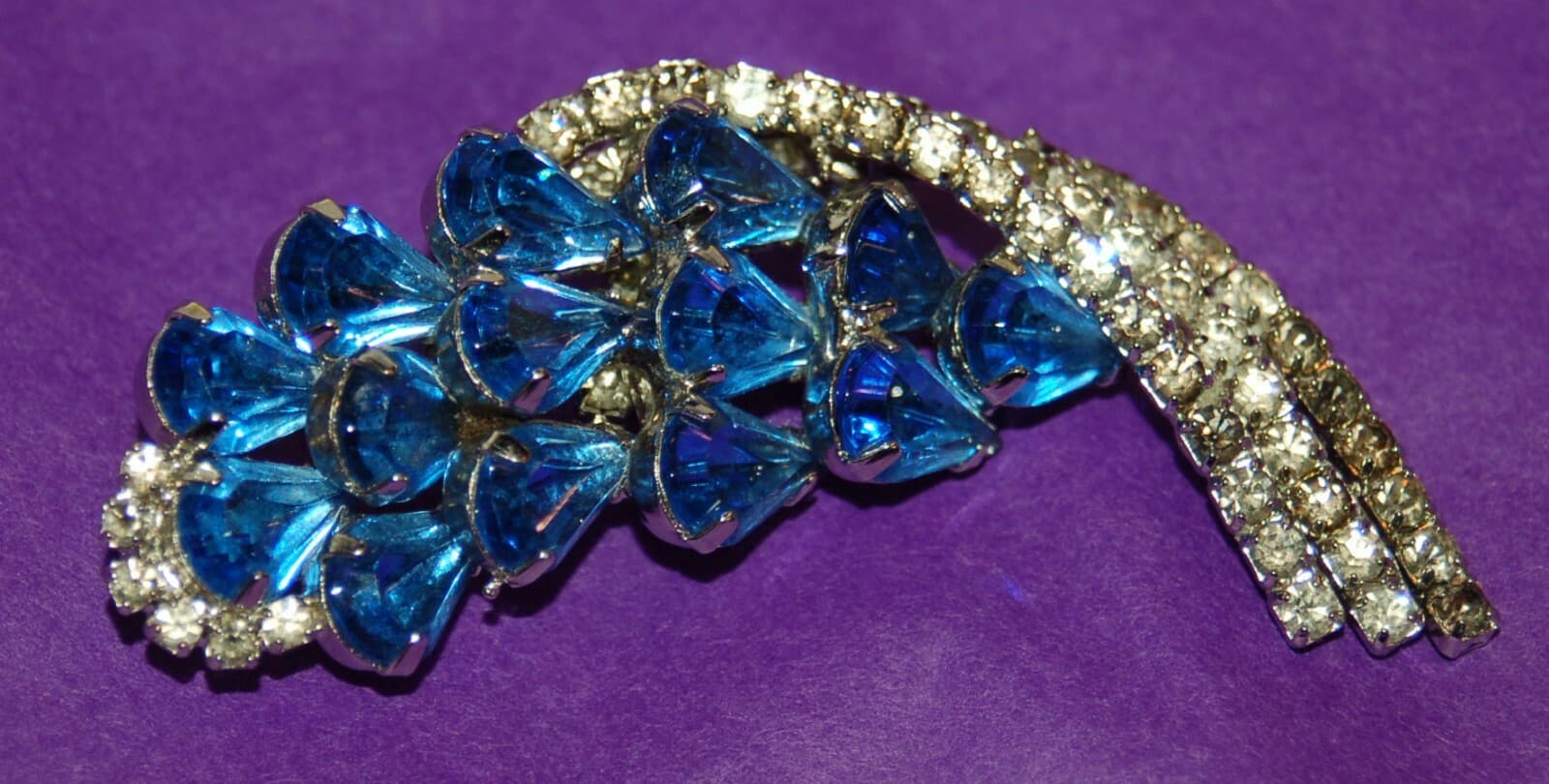
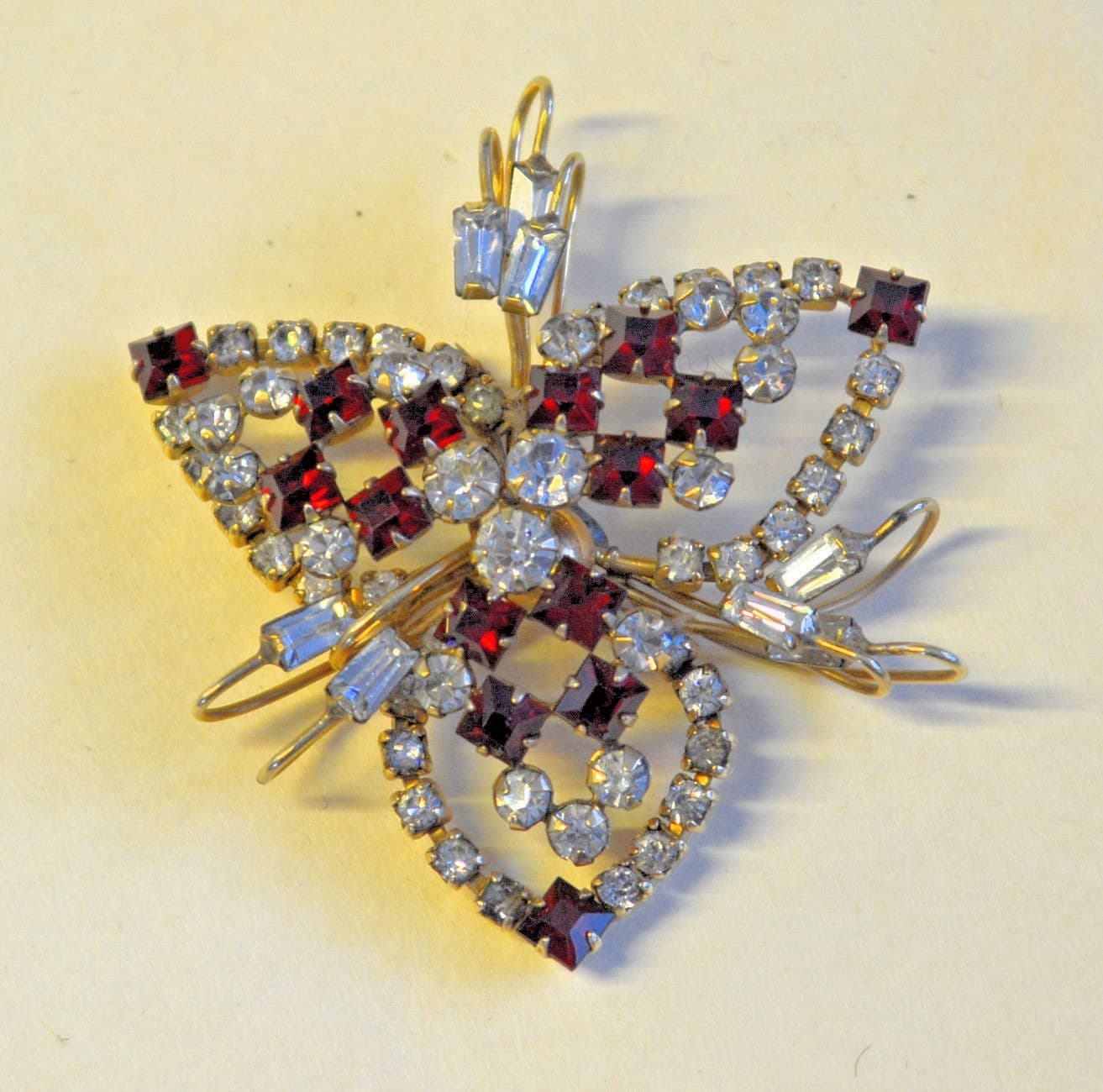
Then see how the stones are held. Better vintage costume jewelry often has stones held by tiny prongs, which you can see bent over the edge of each stone. Cheaper pieces, then and now, glue the stones into their cups. Prongs don’t date a piece on their own, though a piece with hand-placed, prong-set stones in several sizes and shapes (like the caged baguettes on the Trifari brooch below) took real work to make, and that kind of construction is a good sign on an unsigned piece.
Finally, look at the metal. Check the high points and the back for plating wear, where a brassy or coppery base metal shows through. Then look for a maker’s mark and check the clasp or pin back, which our guide to dating jewelry by clasps and findings walks through. Wear from real use shows up where the piece gets touched and rubbed, like the edges and the clasp.
What does an aurora borealis coating tell you?
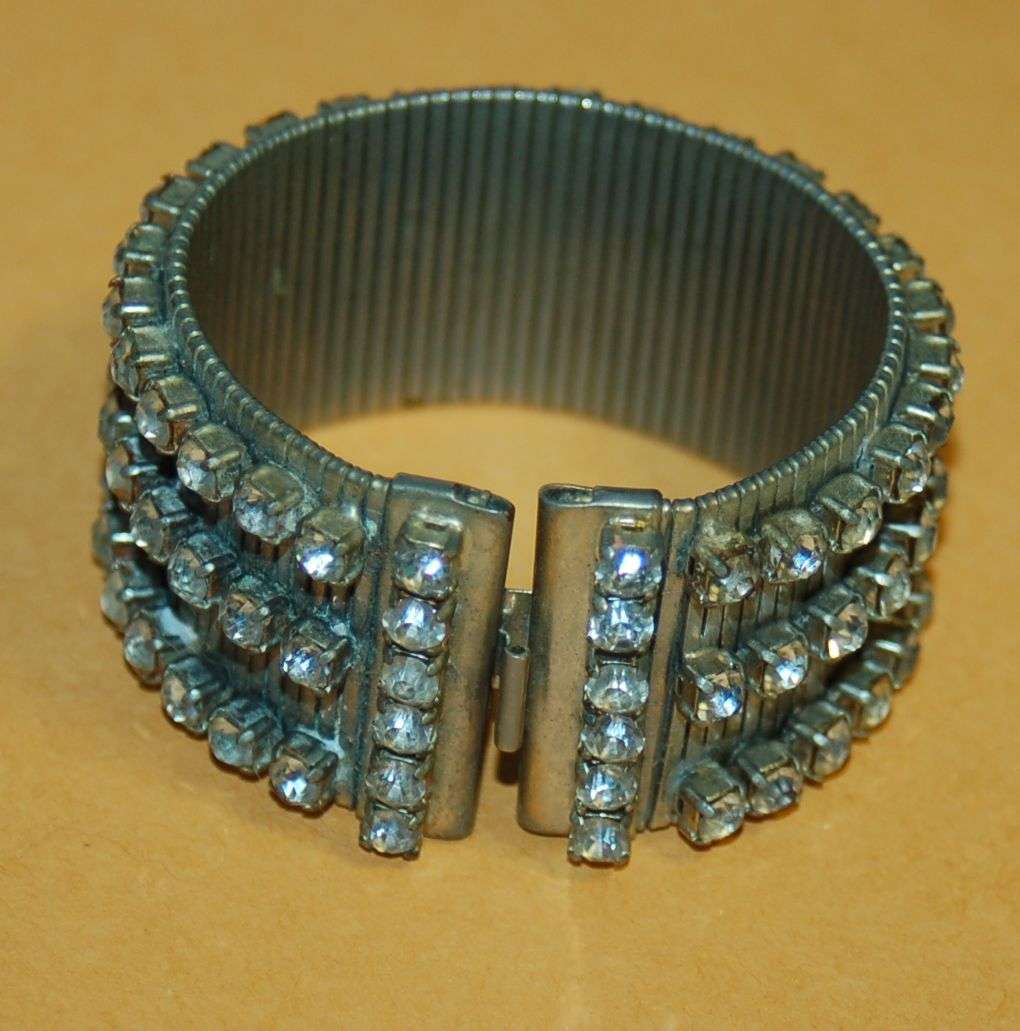
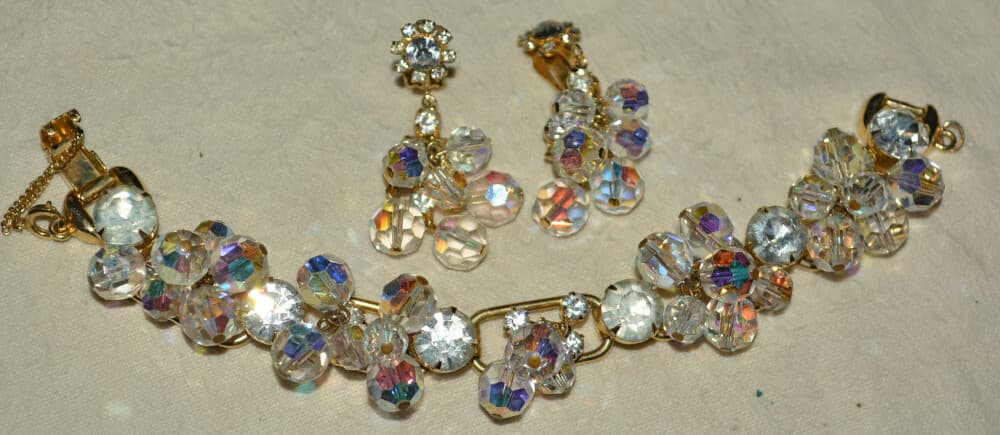
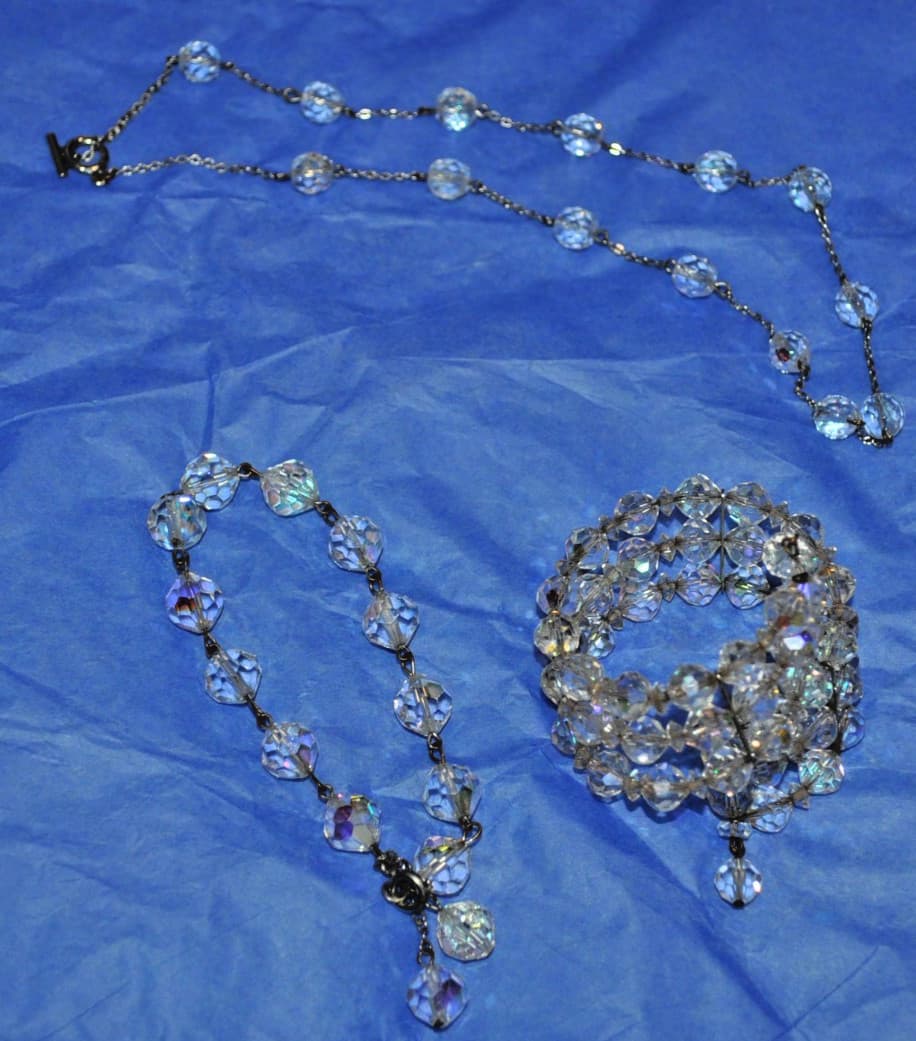
An aurora borealis (AB) coating, the rainbow sheen on some rhinestones, usually means a piece dates from about 1956 or later. The V&A credits Swarovski and Christian Dior with creating the aurora borealis crystal that year. Iridescent finishes on glass were around earlier, though, so treat the sheen as a clue rather than a date stamp (our vintage beaded necklaces guide has more on AB beads). AB stones were everywhere in the late 1950s and 1960s, including the bold, mostly unsigned rhinestone jewelry made by DeLizza & Elster.
What’s the difference between a rhinestone, crystal, and Swarovski?
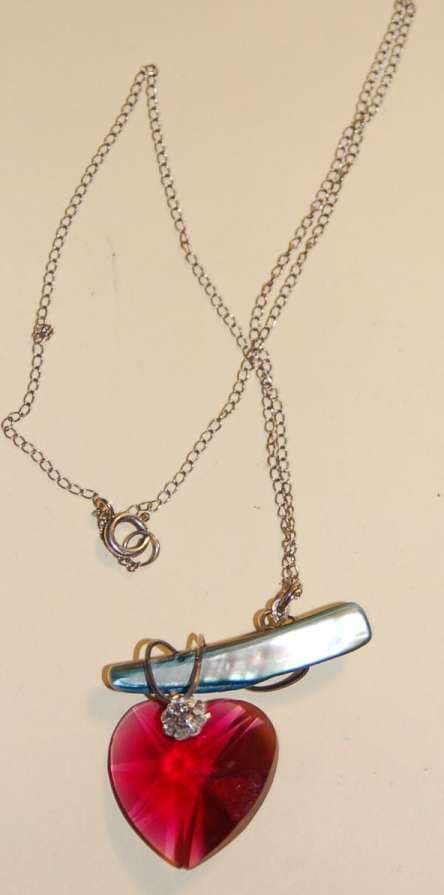
A rhinestone is the stone, crystal is a kind of glass, and Swarovski is a brand, so one stone can be all three. “Crystal” in jewelry means glass, not quartz. In the EU, “lead crystal” has to contain at least 24% lead oxide, which is what gives it extra sparkle, and lower-lead glass can only be called “crystal glass.” Swarovski crystals are high-quality cut glass rhinestones from one maker. Swarovski switched to a lead-free formula around 2012 (its own pages now describe its crystal as lead-free), so “Swarovski crystal” on a newer piece isn’t the same glass as on a 1960s one.
So when a listing says “crystal,” it’s describing glass (sometimes very good glass). When it says “Swarovski,” ask how the seller knows. Older stones aren’t marked, so for vintage pieces it’s usually an educated guess based on the quality of the cut, and a tag or box is better evidence.
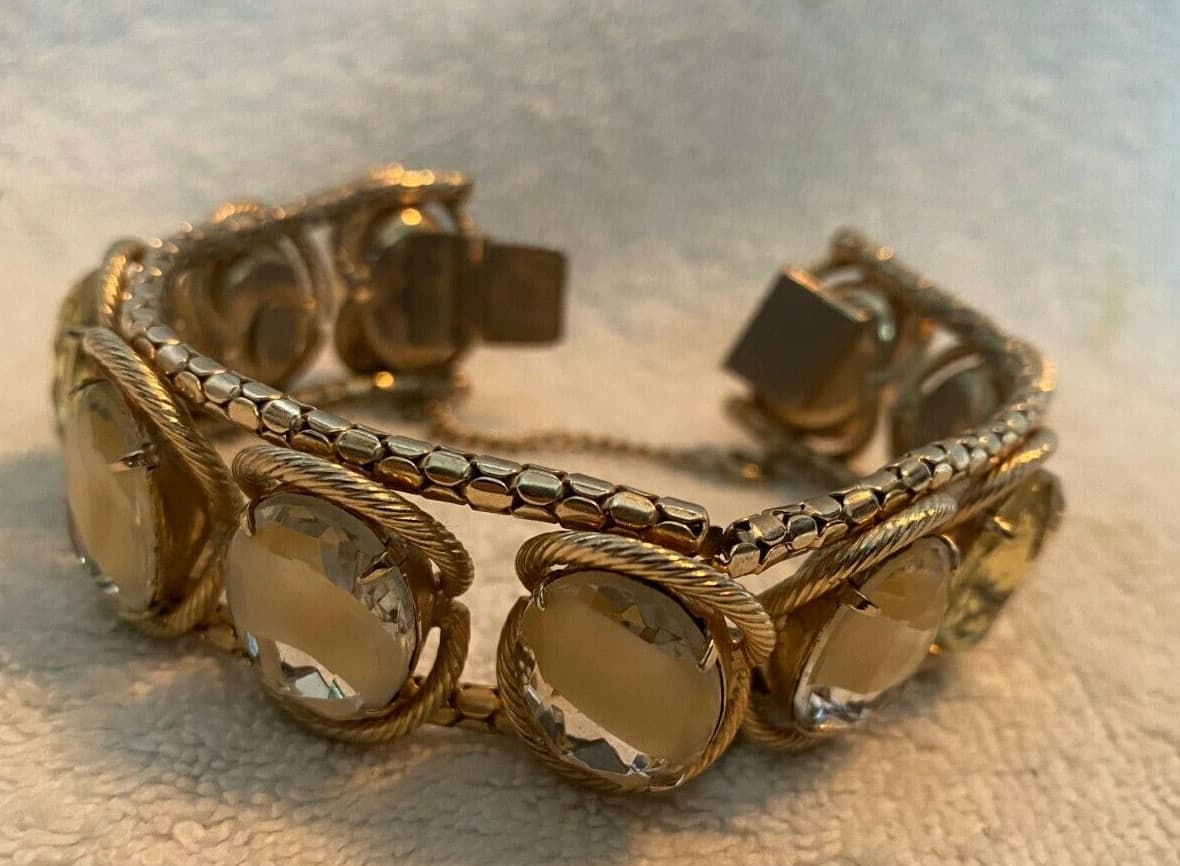
How do you tell a rhinestone from a diamond?
You can usually tell a rhinestone from a diamond by the back and the metal before you even look at the stone. Costume jewelry with foiled stones in closed cups, set in plated base metal with no karat or platinum stamp, is rhinestone jewelry. Diamonds in modern fine jewelry are normally set in gold or platinum with open backs, and the metal is usually stamped (our guide to telling if gold is real covers the stamps). Very old fine jewelry can be the exception, since some antique diamonds were set in closed, foiled backs, so a Georgian or Victorian piece deserves a jeweler’s eye.
Up close, GIA notes that glass imitations can contain gas bubbles, and that molded glass can have softer, rounded facet edges. Glass also bends light much less than diamond, which is why you can often read print through a loose glass stone and not through a diamond (this only works on loose stones, and it won’t separate diamond from moissanite or cubic zirconia). Skip the scratch test entirely, since it can damage a diamond and will definitely ruin a rhinestone. GIA’s advice is that a lot of at-home diamond advice online is wrong, so if a stone might be valuable, take it to a jeweler or a gem lab.
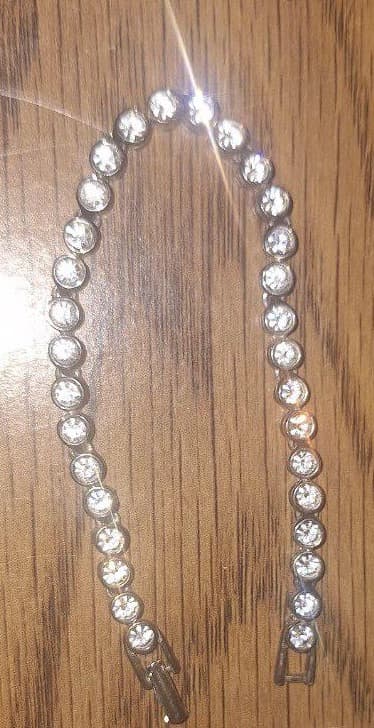
Why do rhinestones go dark, and should you replace them?
Rhinestones go dark (collectors call them “dead”) when moisture gets behind the stone and the foil tarnishes, blackens, or peels away. Without its mirror, the glass looks gray, cloudy, or flat. Water, sweat, perfume, and cleaning liquids are the usual causes, and the damage is permanent. No amount of cleaning brings the sparkle back, because the problem is behind the glass.
The fix is a new stone, and replacing stones is one of the most common costume jewelry repairs. Whether it affects value depends on the piece. On an everyday unsigned brooch, a well-matched replacement usually helps, since a dead or missing stone is the first thing a buyer notices. On a sought-after signed piece, collectors tend to prefer original stones, so it’s worth asking a specialist before you change anything. There’s no standard figure for how much replaced stones take off a price, so be wary of anyone who quotes one as fact. Some repairers even reuse old stones with similar wear so the replacement doesn’t look brighter than its neighbors. And if you’re selling, mention replaced stones in the listing.
How do you clean vintage rhinestones?
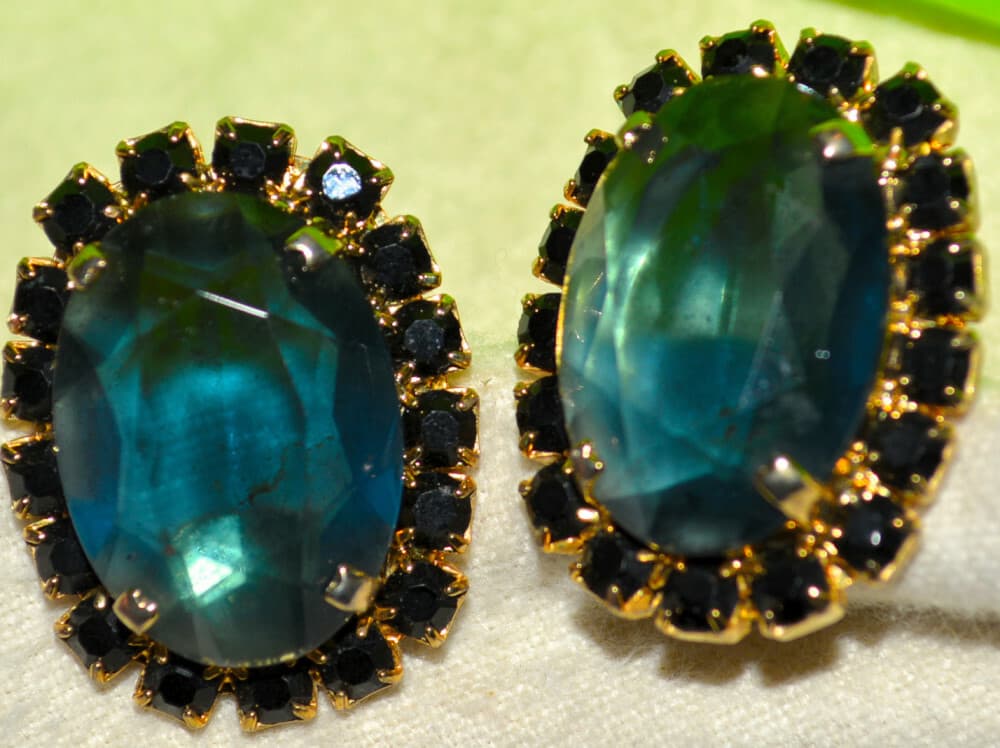
Clean vintage rhinestones dry, and keep water away from the backs. Since moisture is what kills the foil, soaking, steam, and ultrasonic cleaners are all out. A soft brush or a lint-free cloth handles dust, and for real grime a cotton swab dampened with glass cleaner or a little soapy water (then dried right away) does the job, working only on the face of the stones. Our jewelry cleaning guide has more on costume pieces, and our clip-on earrings guide covers resetting a stone that pops out.
Are vintage rhinestones worth anything?
Most vintage rhinestone jewelry sells for modest amounts, and a few pieces sell for a lot more, depending mainly on the maker, the design, and the condition. Signed pieces from collected makers (Trifari, Hobé, Weiss, Eisenberg, and plenty of others) usually do better, and so does unusual, well-made work, signed or not. Condition matters a lot with rhinestones in particular: a few dead or missing stones pull the price down noticeably. For the names and marks, see our guide to costume jewelry marks, and for what prices really look like, read is my vintage costume jewelry worth anything?
Selling rhinestone jewelry? Photograph the back, say whether any stones are dark, missing, or replaced, and buyers will trust the rest of your listing. Shopping? Browse rhinestone jewelry on StillSparkly, from vintage brooches to newly made pieces, and ask for a photo of the back on anything you’re serious about.
Sources
- V&A: Christian Dior, Designer of Dreams (aurora borealis crystal)
- GIA: how to tell if a diamond is real
- EUR-Lex: Council Directive 69/493/EEC on crystal glass
- Collectors Weekly: vintage rhinestone jewelry
- Collectors Weekly: to restore or not to restore? A look at vintage rhinestone jewelry
- Jablonec nad Nisou: Museum of Glass and Jewellery
- Swarovski: lead-free crystal (professional ingredient branding)
Related guides
Vintage Costume Jewelry Marks: A Guide to Designer Signatures
A name on the back of a brooch tells you who made it. How that name is written, and what’s stamped next to it, often tells you when.
Is My Vintage Costume Jewelry Worth Anything?
Usually a little, sometimes a lot. The value is in the maker, the design, the construction, and the condition, and you can check all four at the kitchen table.
How to Date Vintage Jewelry by Its Clasps and Findings
A clasp can’t give you a decade, but if it’s original, it can tell you the earliest a piece could have been made. Start with the catch, the clasp, and the earring backs.
Shopping for rhinestones?
Browse rhinestone jewelry from real sellers, and ask for a photo of the back. Selling? Show the back and mention any dark or replaced stones.