Guide ·
Vintage Beaded Necklaces: How to Tell What the Beads Are Made Of
Short answer: most vintage beaded necklaces are glass, plastic, or natural material like stone, wood, or shell. Glass feels cool and heavy and clicks brightly; plastic warms quickly, feels light, and sounds dull. Natural materials have their own tells, and dyed coral and jade are common. Skip the hot pin test, which damages beads.
Somewhere in almost every jewelry box there’s a strand of beads nobody can identify. Glass? Plastic? Something more interesting? Listings don’t always say (and sometimes guess wrong), but you can usually work it out in a minute or two with your hands, your ears, and a loupe.
How do you tell glass, plastic, and stone apart?
Start with temperature. Hold a bead against your wrist or lips: glass and stone feel cool and stay cool for a moment, while plastic, amber, wood, and bone feel close to room temperature almost right away. Then weight. Compare beads of the same size, and glass will feel noticeably heavier than plastic. Finally, sound. Tap two beads together, and glass gives a brighter click while plastic sounds duller.
Mold seams are less helpful than people think. Pressed glass and molded plastic both show them, so a seam tells you how a bead was made, not what it’s made of. Put these clues together and you’ll be right most of the time.
Skip the hot pin test. It damages beads, and celluloid (an early plastic) is highly flammable, so heating it is a genuinely bad idea. Hot water can permanently cloud or bubble some plastics, and solvents can strip finishes. If a strand might be valuable, let a jeweler or gem lab do the testing.
What kinds of glass beads will you find?
Millefiori (Italian for “a thousand flowers”) is made by fusing rods of patterned glass, slicing them crosswise, and setting the slices into or onto glass. The technique is ancient and was revived in Venice, and Venetian millefiori trade beads were made in huge numbers. The V&A notes trade beads were also made in Bohemia and the Netherlands, though, so not every millefiori bead is Venetian.
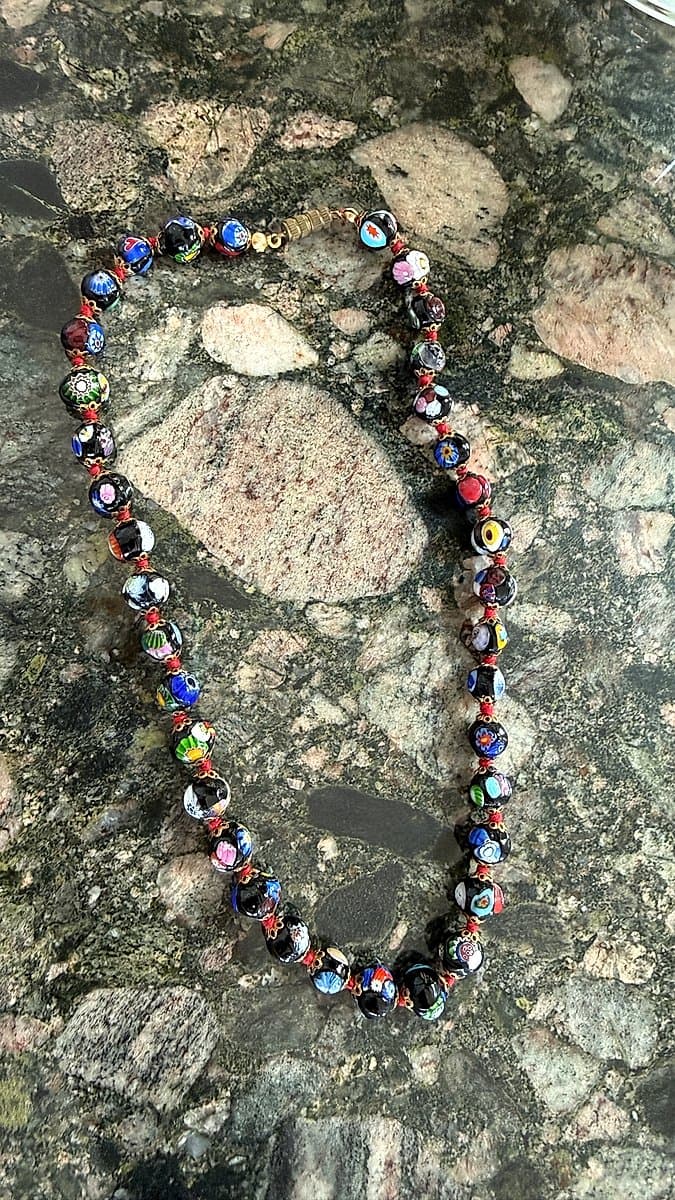
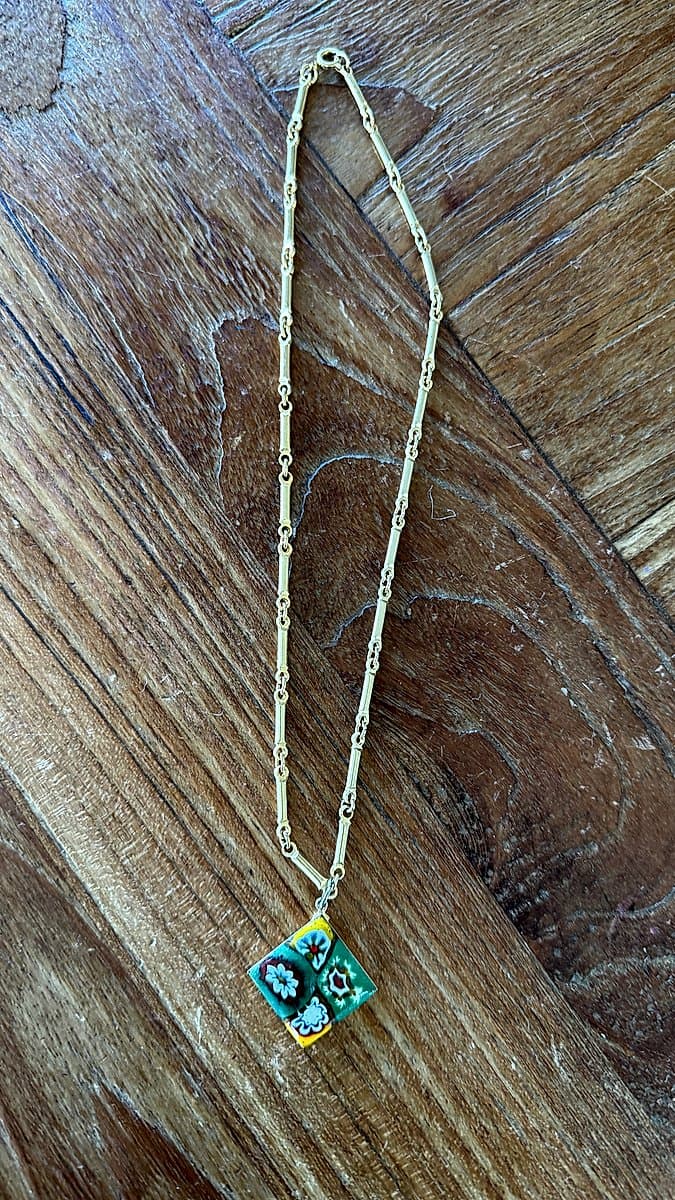
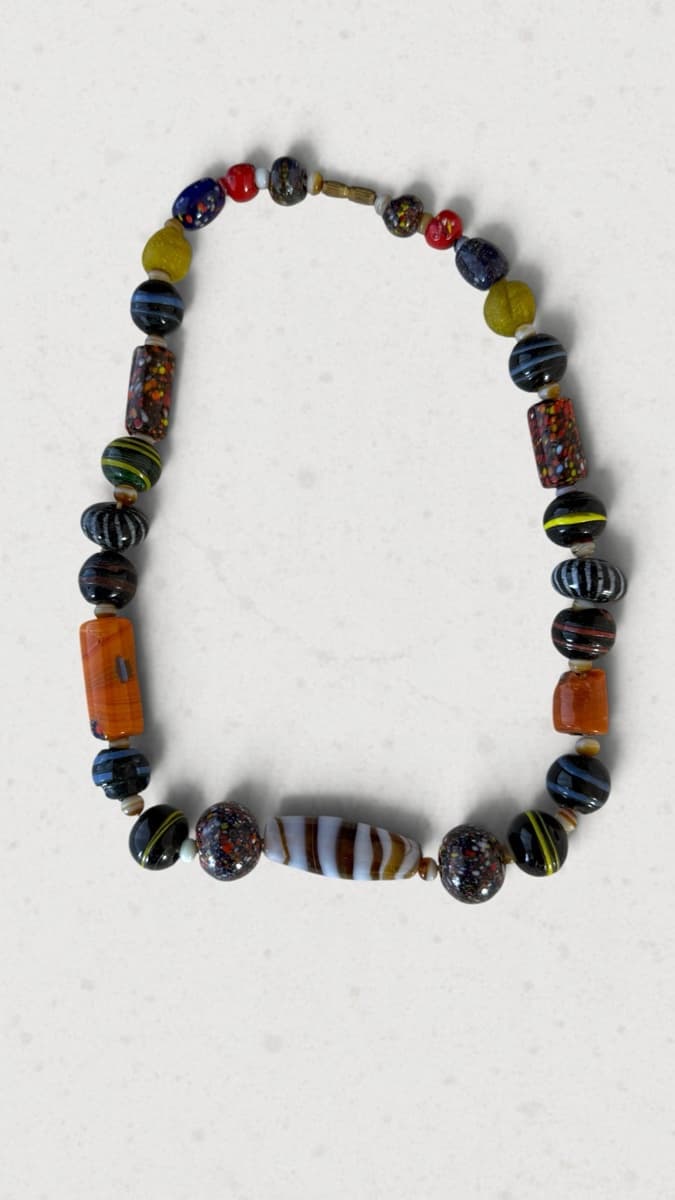
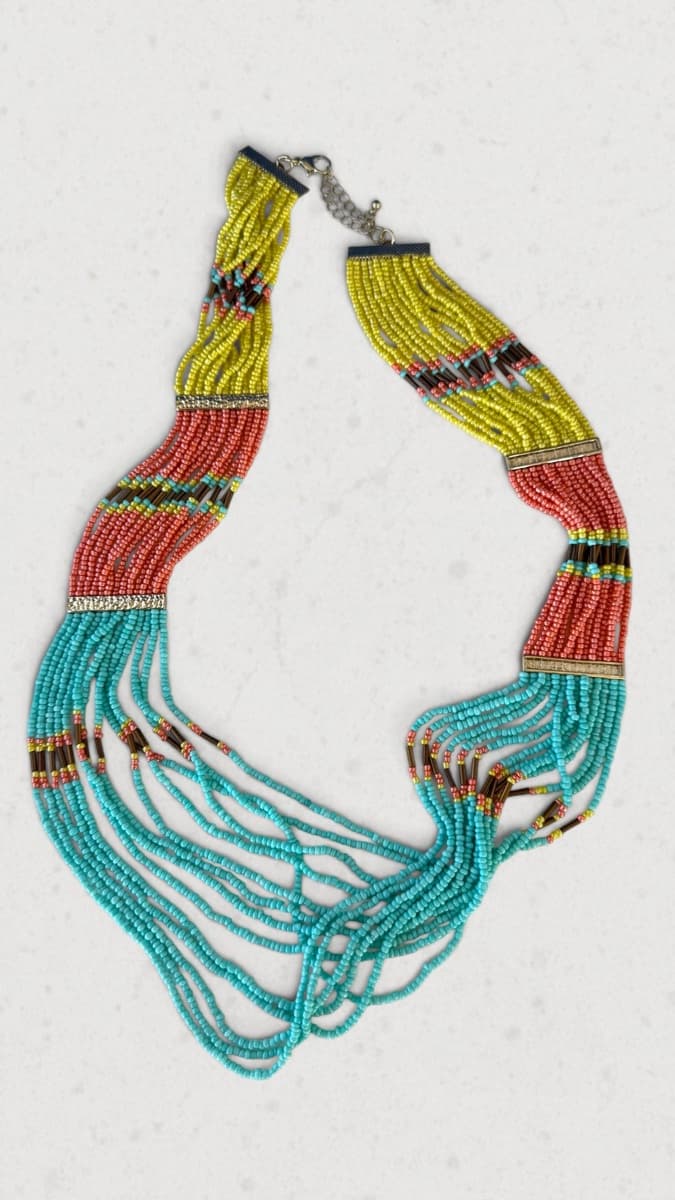
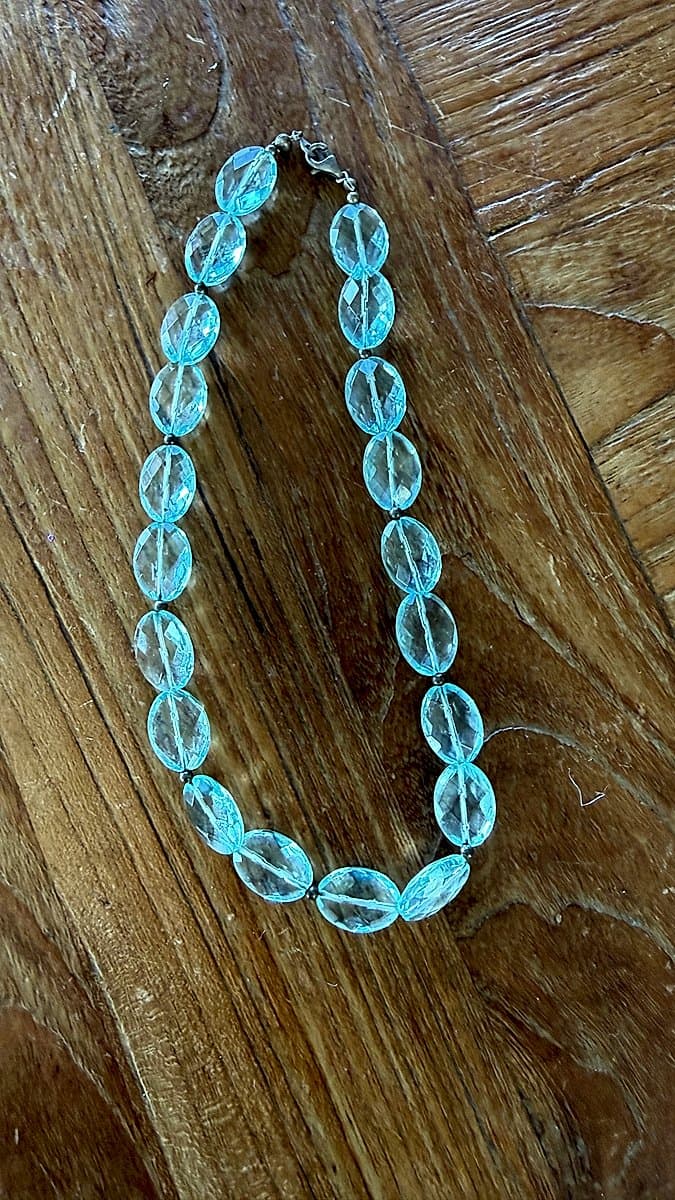
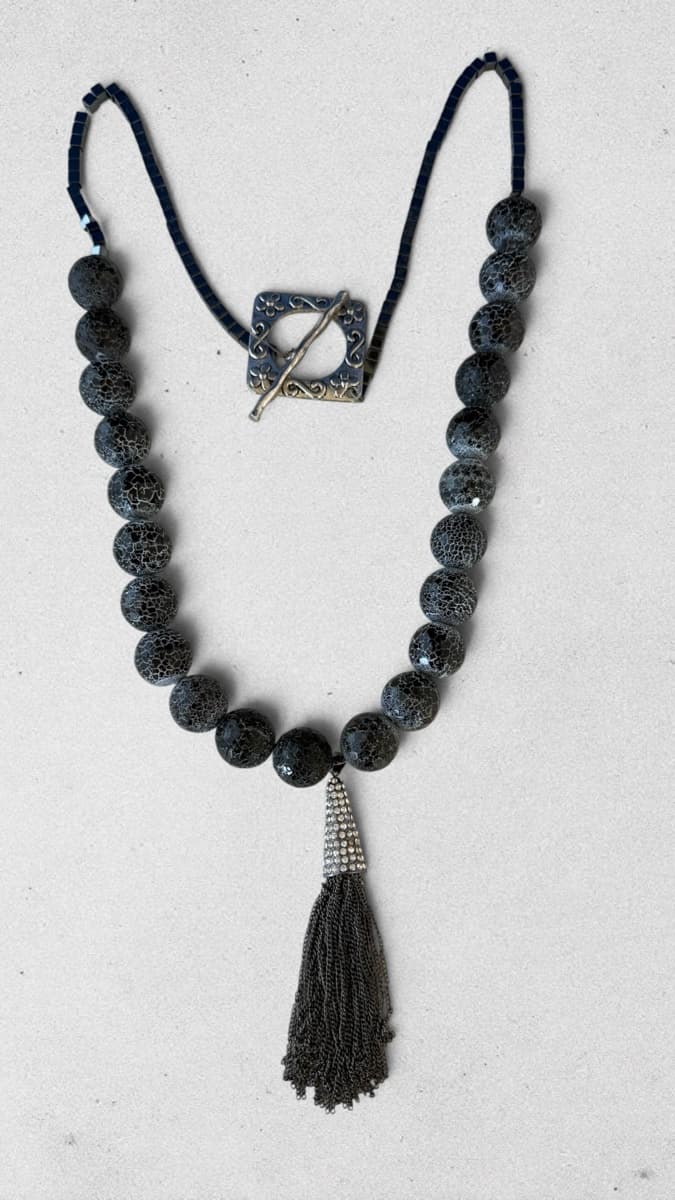
Czech (Bohemian) glass is the other giant. Pressed glass beads came out of the region around Jablonec, which by Corning’s account made a big share of the world’s costume jewelry between the World Wars. Fire-polished beads are Czech glass beads that are faceted and then briefly reheated, so the facets look soft and glossy rather than knife-sharp. Seed beads are the tiny ones, sized with an “aught” number like 11/0, where a bigger number means a smaller bead. Lampwork beads are made by winding melted glass around a metal rod in a torch flame, and crackle glass is plunged into cold water while hot so it crazes inside.
And that rainbow sheen? Aurora borealis coating was created by Swarovski with Christian Dior and is usually dated to 1956, so a necklace with AB-coated crystals is generally from the mid-1950s or later. Iridescent finishes existed earlier, though, so treat the sheen as a clue, not a date stamp.
What about plastic beads?
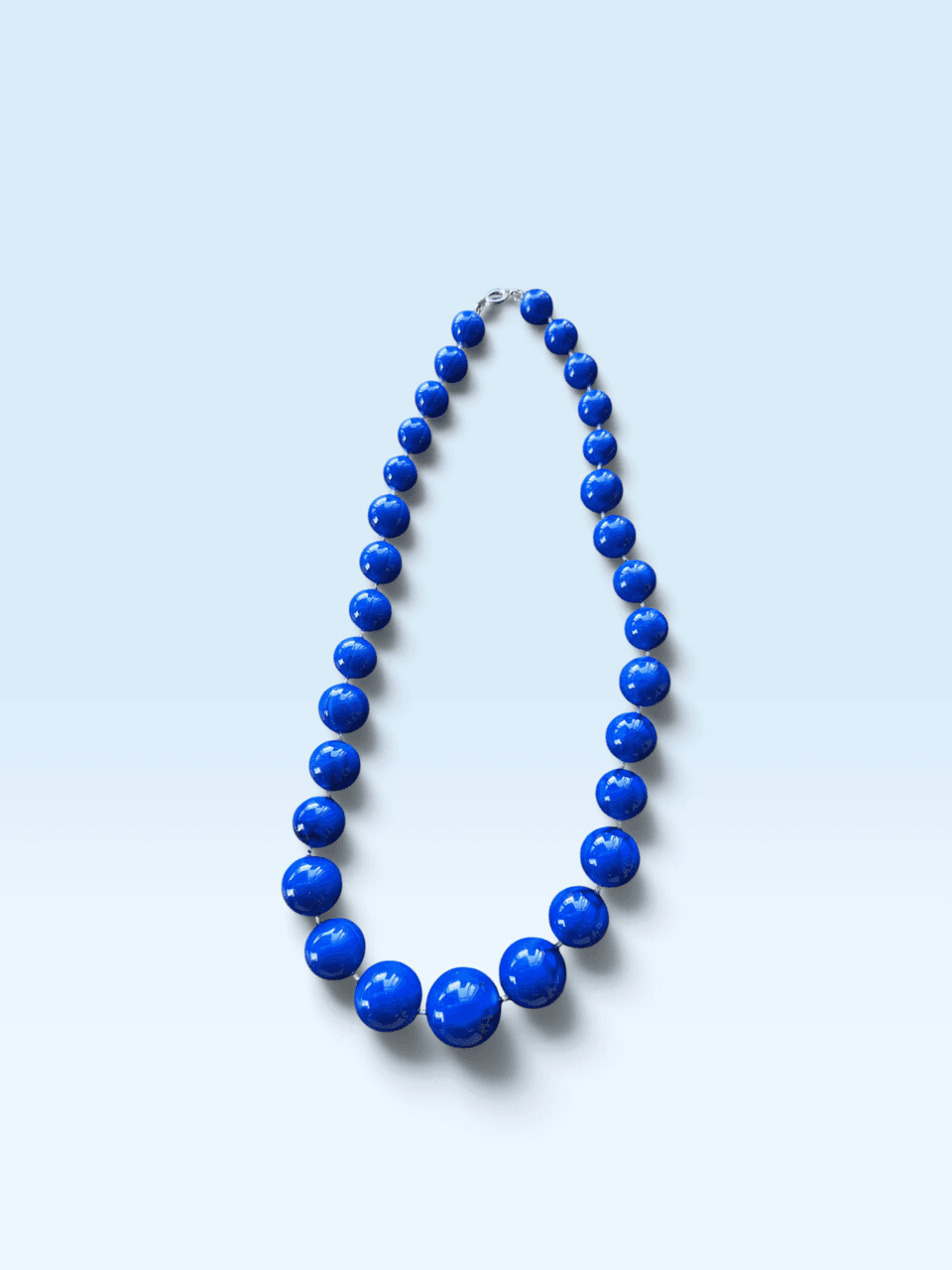
Plastic isn’t a dirty word in vintage jewelry. Celluloid was used for jewelry by the late 1800s. Bakelite, a hard thermoset plastic, peaked as cheap costume jewelry in the 1930s and is now quite collectible. Lucite (acrylic) was developed by DuPont in the 1930s and was especially popular for jewelry in the 1960s.
Collectors test for Bakelite by rubbing Simichrome polish or Formula 409 on a hidden spot with a cotton swab: a yellow or tan stain suggests Bakelite. It isn’t foolproof (black, red, and lacquered pieces often test negative) and rubbing can dull the surface, so do it somewhere nobody will see. Our vintage brooches guide covers the same tests for pins.
How do you identify natural beads like amber, jade, and coral?
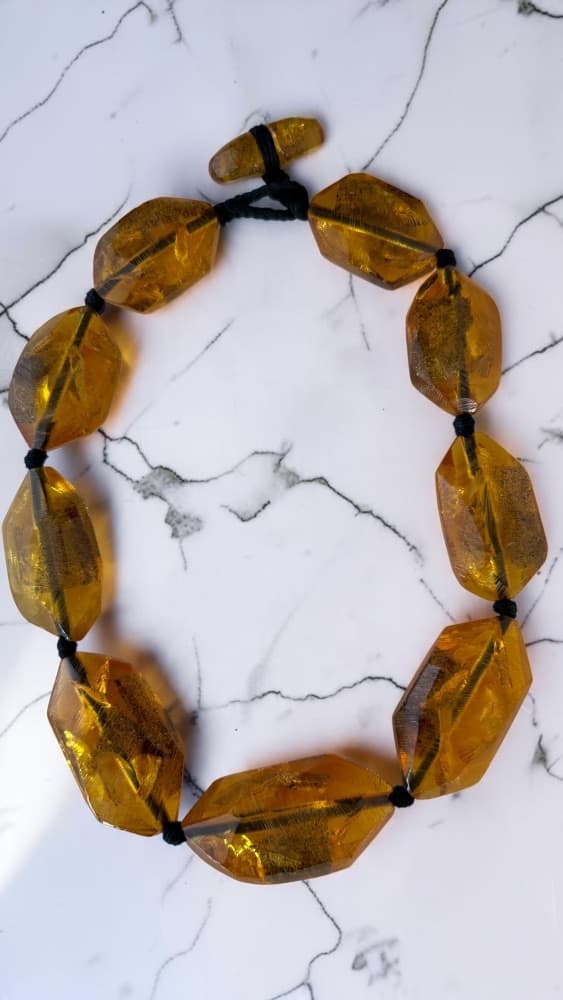
Amber floats in saturated salt water (stir in salt until no more dissolves) while most imitations sink. The catch is that copal, a younger resin, floats too, so the test can rule amber out but can’t prove it. Rinse the beads well afterward.
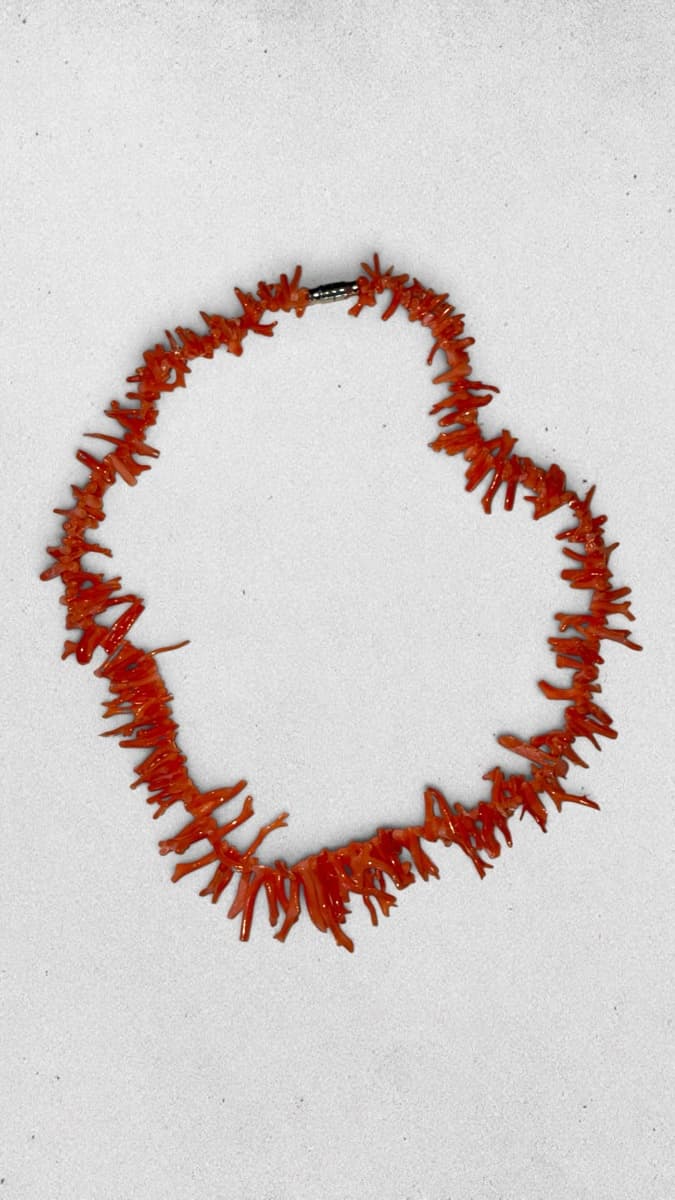
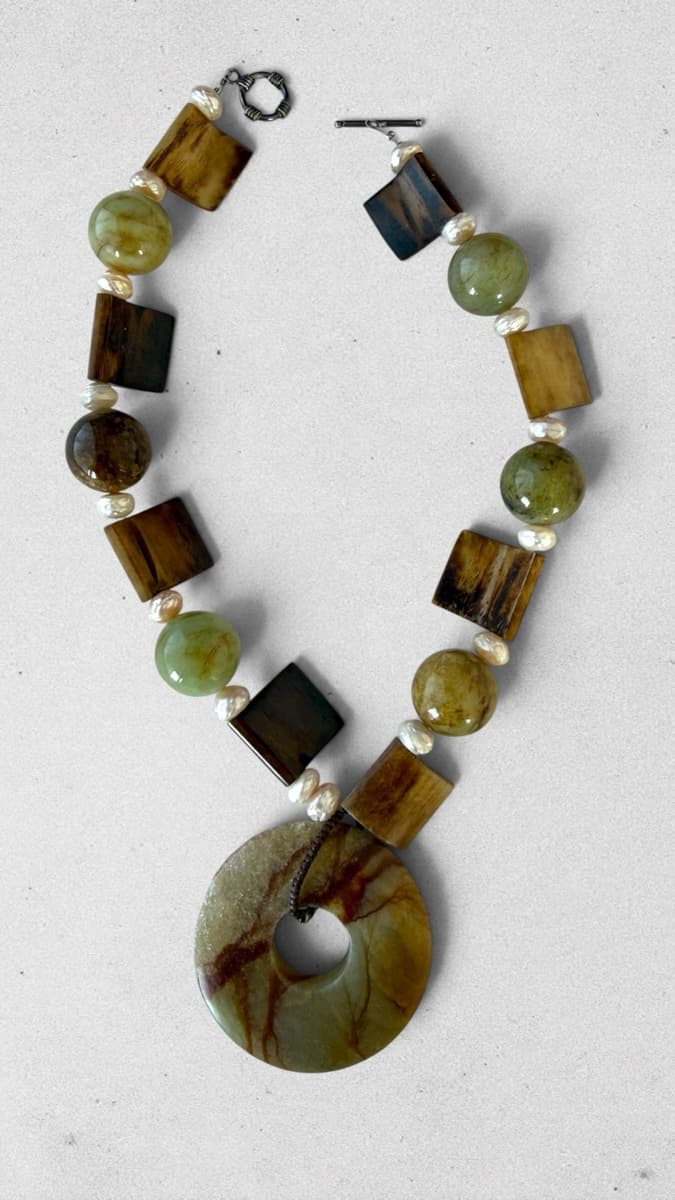
Jade is two different minerals, jadeite and nephrite. The trade grades jadeite as “A” (natural or only waxed), “B” (bleached with acid and filled with polymer), or “C” (dyed), and only a lab can reliably tell them apart. Coral is often imitated with dyed bamboo coral, or even dyed bone, and the dye tends to collect inside the drill holes, so look there first. Tiger’s eye has a silky, shifting sheen from its fibrous structure, and glass imitations exist for it too.
What should you check on the stringing?
Knots between beads are a good sign. As GIA explains for pearls, they keep beads from rubbing against each other and mean you lose only one bead, not the whole strand, if the string breaks. Silk darkens, stretches, and wears thin over time, so a knotted strand that looks gappy or fuzzy is due for restringing, which a local bead shop or jeweler can do. It’s usually worth it for a strand you love.
What makes a beaded necklace valuable?
Most vintage beaded necklaces sell for modest amounts, and that’s a big part of their charm. The ones that do better are signed pieces (Miriam Haskell is the famous name, though Haskell pieces were rarely signed before about 1950, so plenty of unsigned strands get attributed to Haskell without good reason) and necklaces of valuable natural materials like undyed precious coral, natural amber, and untreated jadeite. Condition matters too: chips, cloudy coatings, and worn stringing all pull the price down. Our guide to whether vintage costume jewelry is worth anything shows how to check what a specific strand actually sold for.
Selling a strand? Photograph the beads close up in daylight, show the clasp, give the length, and say what you think the beads are made of (and how you know). Shopping? Browse beaded necklaces on StillSparkly, and if you’re wondering how a long strand will sit, our necklace length guide has you covered.
Sources
Related guides
Statement Necklaces: How to Wear, Buy, and Care for One
One big necklace can carry a whole outfit. Here’s how to pick the right one for your neckline, check a secondhand one before you buy, and keep it in shape.
Necklace Length Guide (And How to Figure Out Which One You Actually Wear)
Necklace length is the single biggest reason a piece looks great on the model and weird on you. The standard lengths, where each one sits, and how to find yours.
Is My Vintage Costume Jewelry Worth Anything?
Usually a little, sometimes a lot. The value is in the maker, the design, the construction, and the condition, and you can check all four at the kitchen table.
Love a good strand of beads?
We have hundreds of beaded necklaces, vintage and handmade. Browse them, or list yours with a close-up of the beads.