Guide · 6 min read
Statement Necklaces: How to Wear, Buy, and Care for One
Short answer: a statement necklace is a bold necklace meant to be the focal point of an outfit, usually a big bib, collar, or chunky beaded piece. Wear a short one above a crew neck or strapless top, echo a V-neck with a V shape, and go long over a turtleneck. Before buying one secondhand, check the clasp, the stringing, and the plating. Store it flat, away from sun and perfume.
A plain black top, jeans, and one great necklace: that’s a whole outfit, and it’s why people love these things. A statement necklace does the work so the rest of your clothes don’t have to. The trick is matching it to your neckline, and if you’re buying one secondhand (which is where the best ones are), knowing what to check.
What is a statement necklace?
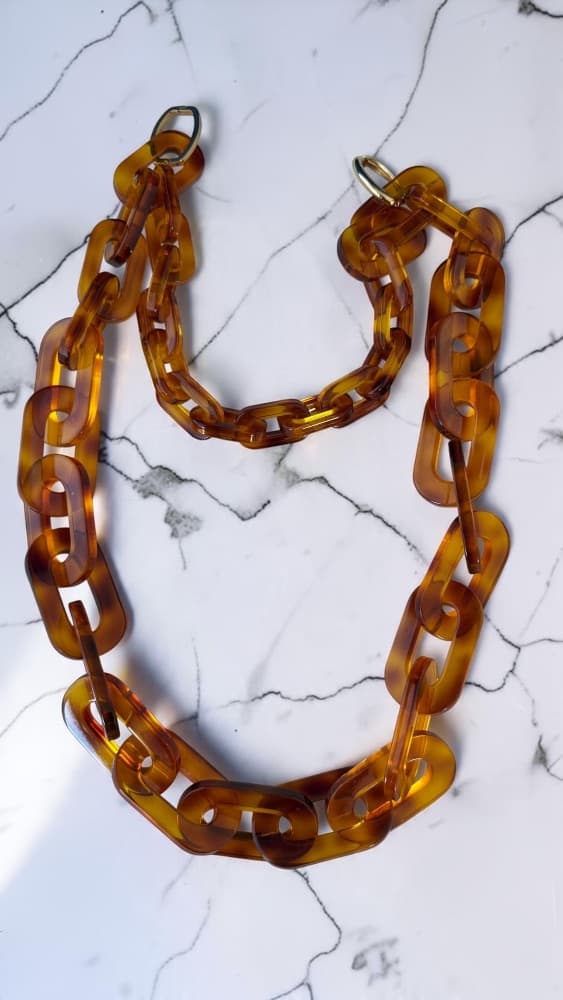
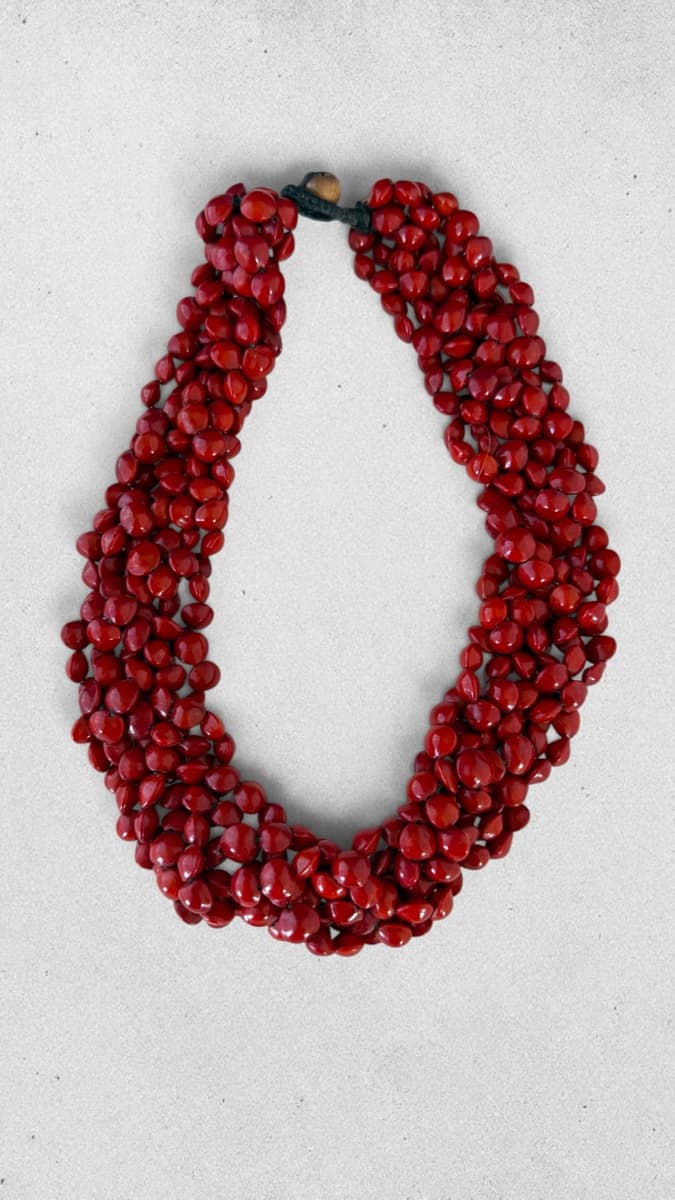
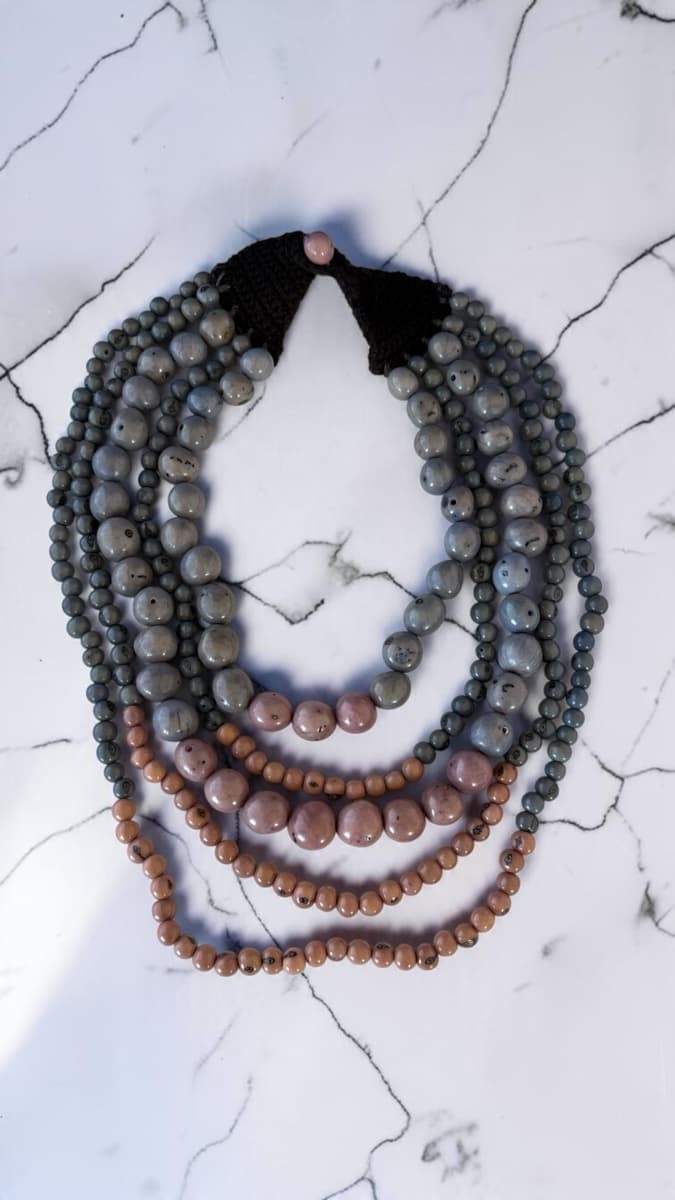
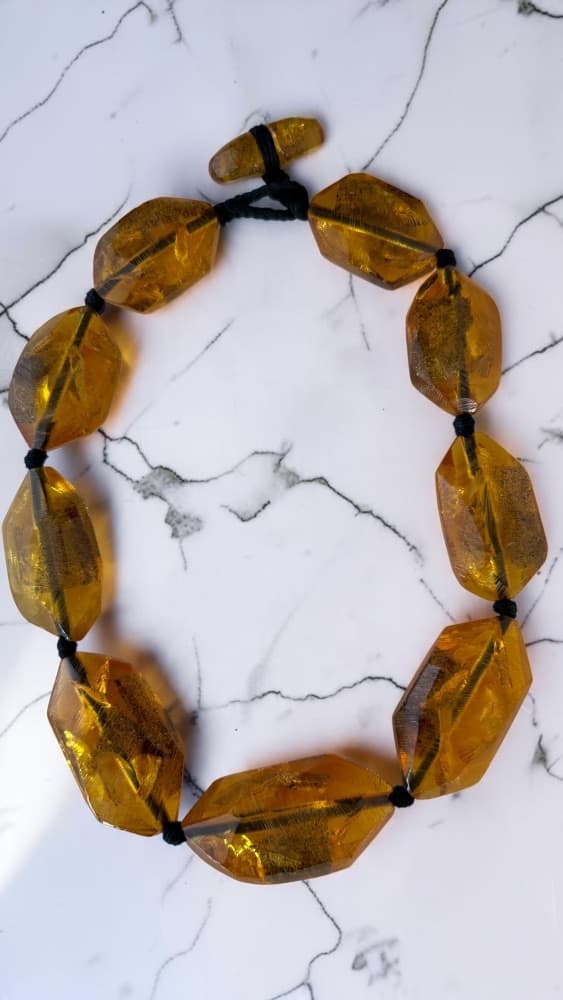
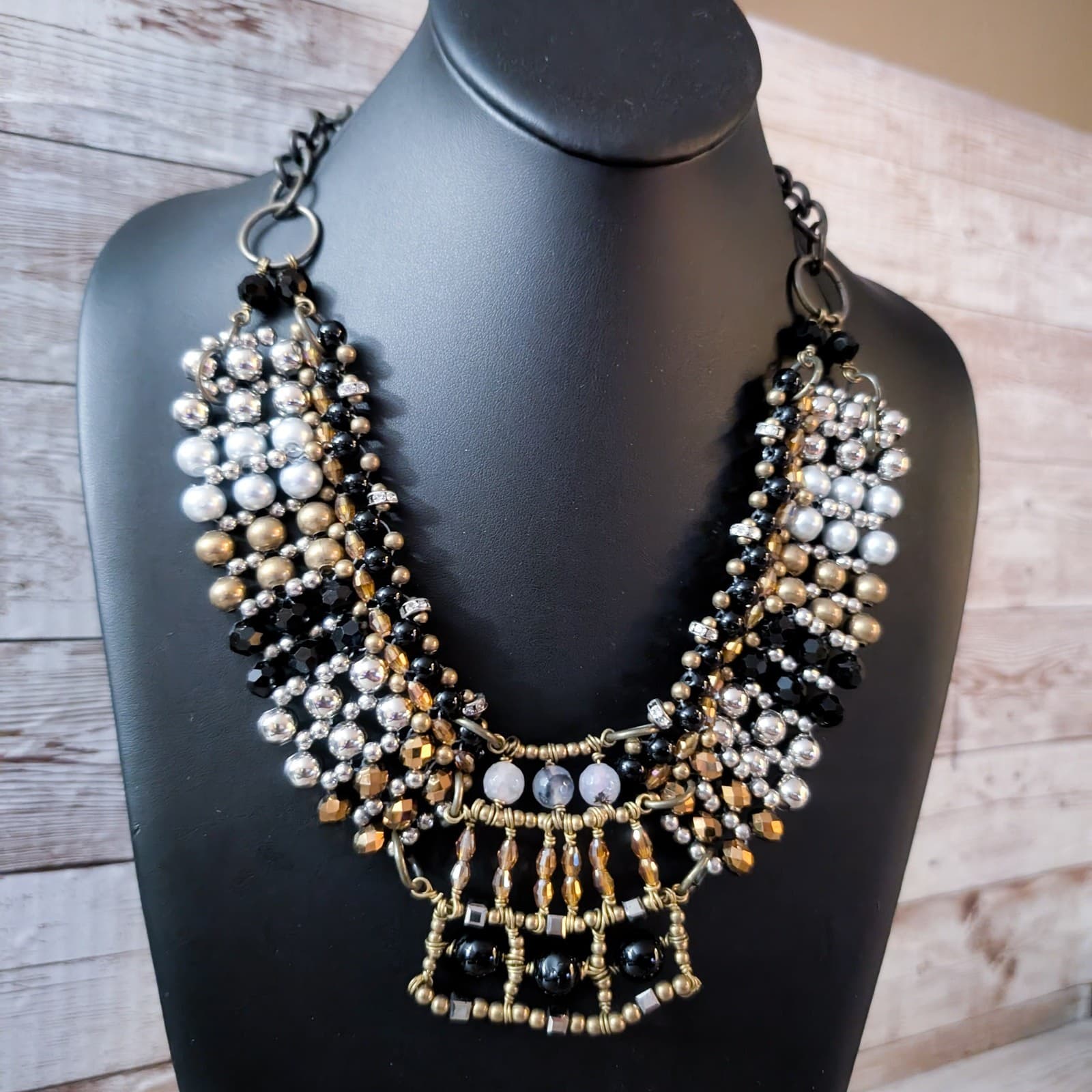
It’s any necklace big or bold enough to be the first thing people notice. The most common shapes are the bib, which Merriam-Webster defines as a necklace with a broad front section covering part of the chest, the collar, which sits close around the base of the neck, and chunky beaded strands, often in several layers. Material doesn’t matter. A statement necklace can be resin, wood, glass, metal, or fabric.
They come and go in fashion, which is great news for secondhand shoppers. Jewelry trade magazine JCK reported bib necklaces “back in style” in 2009, and the early 2010s turned into a full-on statement necklace boom (J.Crew’s Jenna Lyons gets a lot of the credit). By 2025, The Zoe Report was calling bold necklaces a trend again. Every wave leaves a lot of great pieces behind in jewelry boxes, and that’s a big part of why you’ll find so many of them on resale sites now.
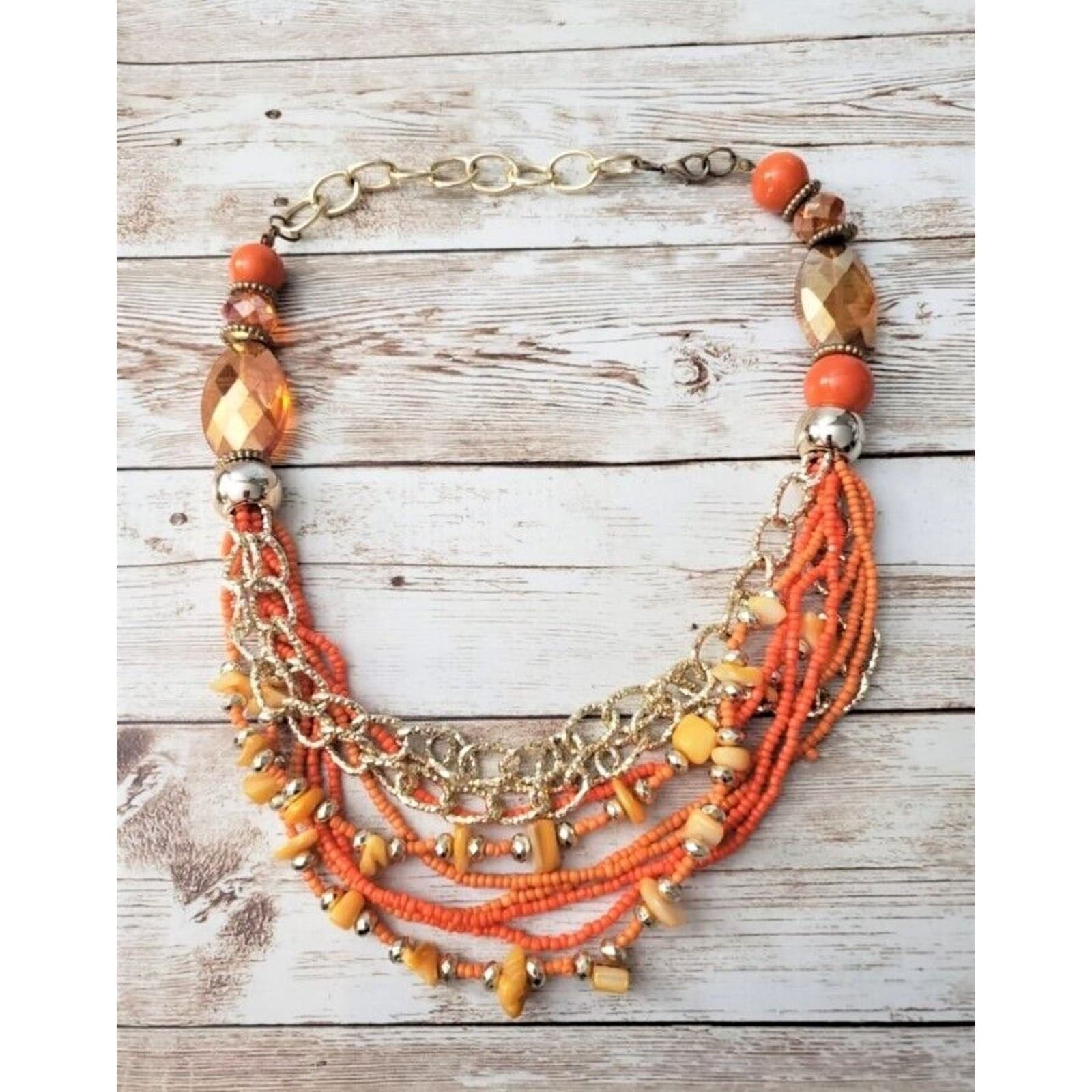
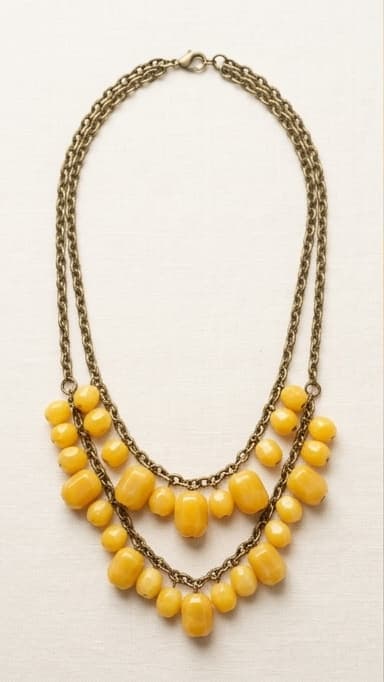
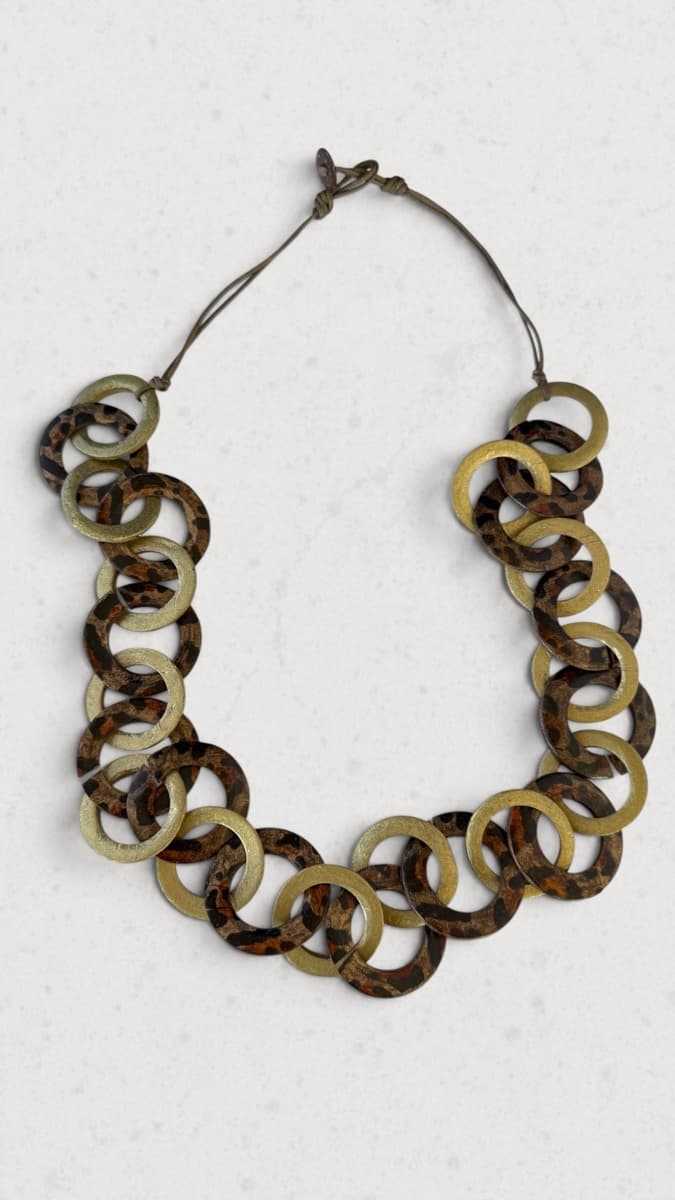
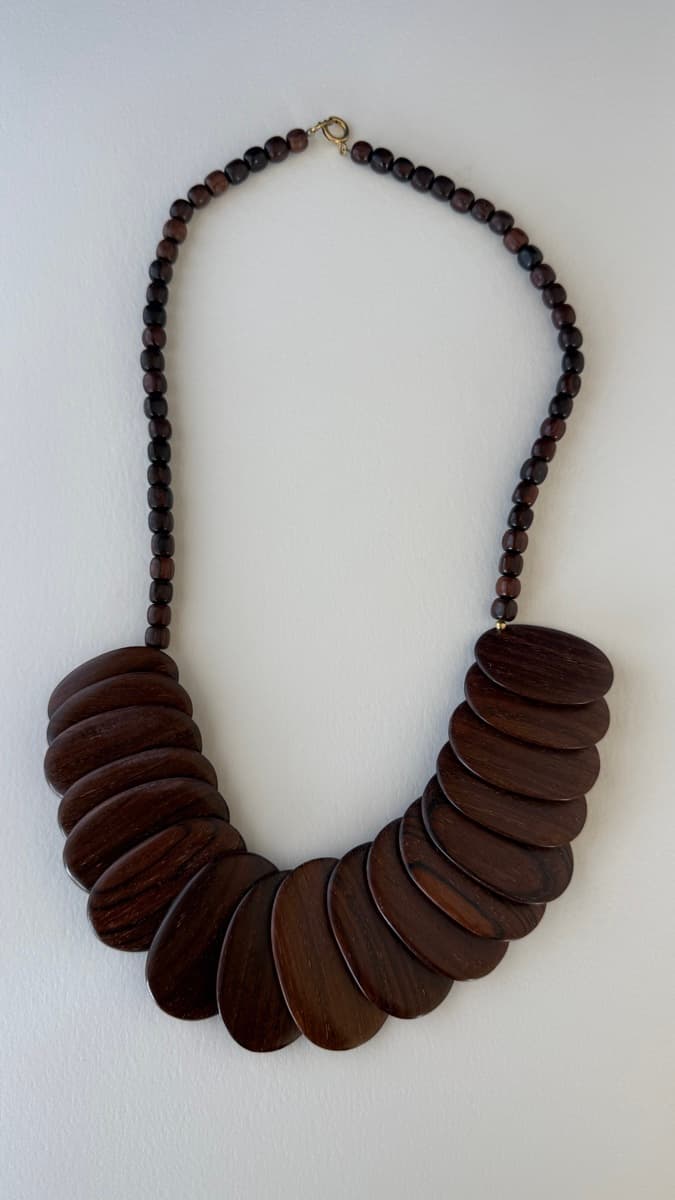
How do you wear a statement necklace?
Start with your neckline, because it decides almost everything. With a crew neck, either wear a short collar or bib that sits on the skin just above the neckline, or go long and let the necklace fall well below it. Anything that lands right on the edge of the fabric looks like it’s fighting with your shirt. A V-neck wants a V or a drop that follows its shape, and round, wide collars tend to clash with it. A strapless or off-the-shoulder top is the classic stage for a big collar or bib, since there’s nothing competing with it.
Button-downs and turtlenecks take a little more thought. With a button-down shirt, button it all the way up and wear a bib over the collar (it looks far more intentional than you’d expect). With a turtleneck, skip anything short and wear one bold piece that hangs well below the collar. If you’re not sure which length you’re looking at in a listing, our necklace length guide shows where each one sits.
Keep the earrings small when you wear one (or skip them). Two big pieces fight for attention, and the necklace should win.
What are statement necklaces made of?
Most are plastic (acrylic, Lucite, or resin), glass, wood, metal, or a mix. Listings don’t always say, and the difference matters for weight, care, and sometimes value. You can usually tell without damaging anything. Glass feels cool and heavy and stays cool for a moment in your hand, while plastic warms up almost right away and feels lighter. Tap a bead with your fingernail, too: glass gives a sharper click, and plastic sounds duller. (Bead researchers traditionally tapped beads on their teeth, which we’re not going to recommend.)
Skip the hot pin test. An Antiques Roadshow appraiser has warned that it can damage a piece and ruin its value, and the same goes for acetone or scratch tests. If it really matters, ask a jeweler.
What should you check before buying a secondhand one?
Big necklaces put a lot of weight on two things: the clasp and whatever holds the beads together. Start with the clasp. Lobster clasps are the most secure common type. Spring rings are fine on light pieces but struggle with heavy ones, and magnetic clasps are the easiest to pop open. On a heavy statement piece, a weak clasp is how you lose a necklace on the sidewalk.
Then look at the stringing. Gaps between beads, fuzzy or loose knots, or a cord you can see stretching are all signs it needs restringing. Knots between beads are a good sign, since if the strand breaks you lose one bead instead of all of them. Restringing is usually a quick, inexpensive job, so ask a local bead shop or jeweler for a quote before you rule out an otherwise great piece. Finally, check the plating on any gold- or silver-tone parts, especially at the edges and around the clasp, where wear shows first.
How do you care for a statement necklace?
Keep perfume, hairspray, lotion, and hand sanitizer away from it (put the necklace on last). Never soak a strung necklace, and never put it in an ultrasonic or steam cleaner. If a strung piece gets damp, let it dry flat on a towel before you wear it or put it away, because hanging a wet strand stretches it. Resin can yellow in sunlight and doesn’t like heat, and wood should stay dry.
Storage is where most statement necklaces get ruined. Lay beaded and strung pieces flat in a drawer or box instead of hanging them, since their own weight stretches the cord over time. Our jewelry cleaning guide covers the metal parts.
Are statement necklaces worth anything?
Most sell for modest amounts, and that’s the fun of buying them secondhand. Necklaces from mall and department store brands usually resell for far less than they cost new, so you can try a big look without a big price. Signed designer costume pieces are a different story. A Victoire de Castellane for Chanel cross necklace from 1993 sold at Bonhams in London in December 2022 for £9,562.50 including the buyer’s premium, and pieces by makers like Miriam Haskell and Kenneth Jay Lane are collected too. (One of the best-known costume jewelry sales wasn’t a statement piece at all: Jackie Kennedy Onassis’s faux pearls sold at Sotheby’s in 1996 for $211,500, against an estimate of $500 to $700.)
To price a specific necklace, look up what the same piece actually sold for, not what people are asking. Our guide to whether vintage costume jewelry is worth anything shows how.
Buying or selling a statement necklace
Selling one? Photograph it laid flat and, if you can, on a person or a bust so buyers can see the scale. Add a close-up of the clasp, give the length, and mention the material if you know it. Shopping? We just added a lot of them, vintage and new, in resin, wood, beads, and gold tone. Browse statement necklaces on StillSparkly and find the one that does the talking for you.
Sources
- Merriam-Webster: bib necklace
- JCK: bib necklaces back in style (2009)
- The Zoe Report: statement necklaces are back (2025)
- PBS Antiques Roadshow: damage done by destructive tests
- GIA: caring for strung pearls
- Jewelers Mutual: types of jewelry clasps
- Sotheby’s: a First Lady’s faux pearls
- Bonhams: Victoire de Castellane for Chanel cross necklace (2022)
Related guides
Necklace Length Guide (And How to Figure Out Which One You Actually Wear)
Necklace length is the single biggest reason a piece looks great on the model and weird on you. The standard lengths, where each one sits, and how to find yours.
Is My Vintage Costume Jewelry Worth Anything?
Usually a little, sometimes a lot. The value is in the maker, the design, the construction, and the condition, and you can check all four at the kitchen table.
How to Clean Jewelry at Home Without Ruining It
Most jewelry doesn’t need a fancy cleaner. Warm water and dish soap handle almost everything, as long as you skip the few mistakes that ruin it.
Find your statement piece
We have a lot of statement necklaces right now, vintage and new. Browse them, or list one of your own with a photo of the clasp.