Guide ·
How to Tell if Amber Is Real (and Where Copal Fits In)
Short answer: real amber is fossilized tree resin. It feels light and warm, and loose amber floats in strong salt water, while glass and most plastics sink. Copal (a much younger resin), pressed amber, and some plastics pass the same home tests, so they can rule amber out but can’t prove it. For a valuable piece, a gem lab can separate amber from copal and plastic.
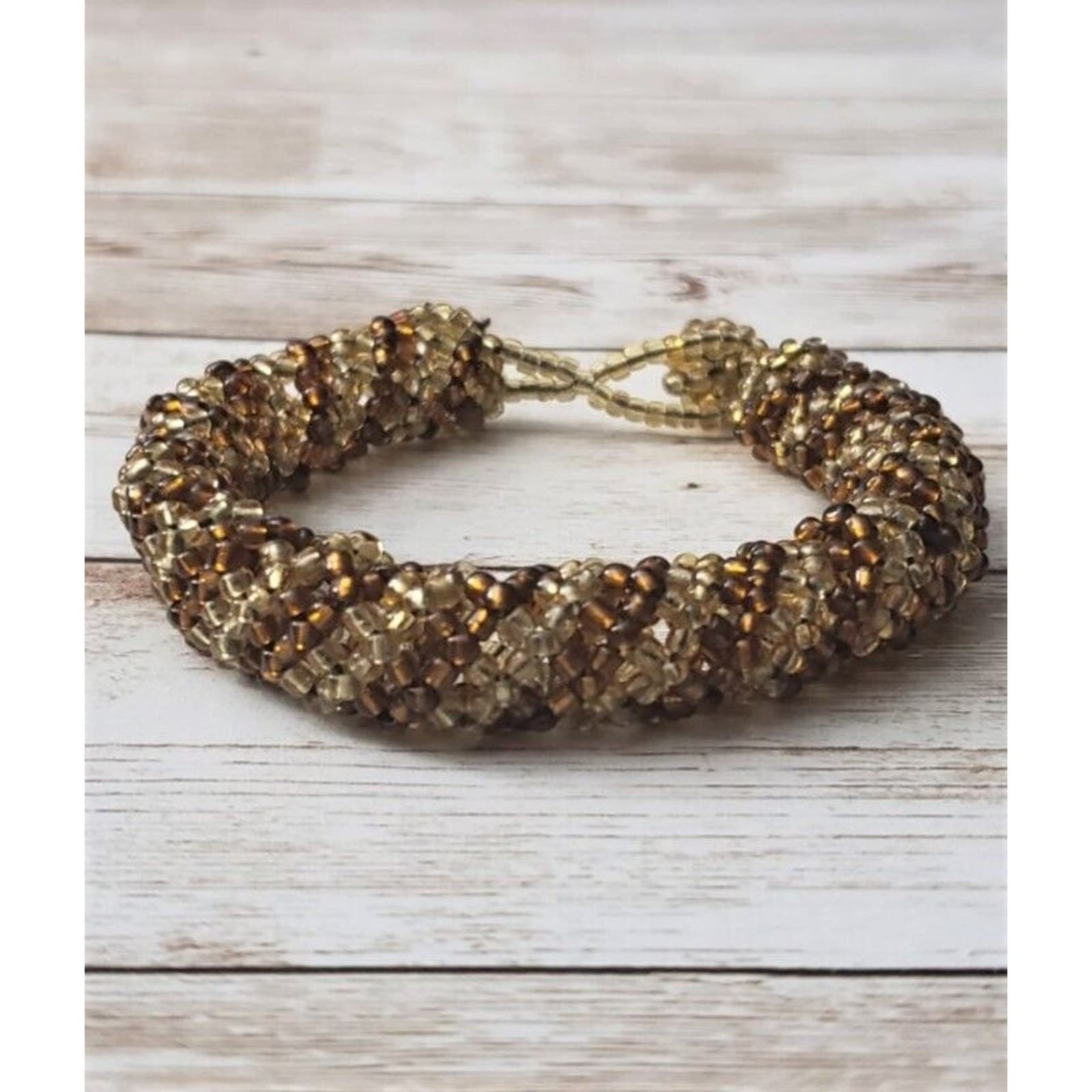
You pick up a strand of golden beads at an estate sale and the tag says “amber.” Maybe it is. It could also be copal, a pressed block of amber scraps, Bakelite, or a cheerful piece of amber-colored glass (and plenty of perfectly lovely jewelry is made from all of those). Most of these can be ruled in or out at your kitchen table without hurting the piece, and a few can only be settled by a gem lab.
What is amber, and how is it different from copal?
Amber is tree resin that has fossilized over millions of years. GIA classes it as an organic gem, with a specific gravity of about 1.08 and a Mohs hardness of only 2 to 2.5, which is why it feels so light and why it scratches easily. Copal is the same kind of material caught partway through the process: resin that has started to harden but is far younger and hasn’t fully polymerized. It has the same density as amber, so most of the home tests can’t tell them apart. Copal does tend to be softer, it’s more easily attacked by solvents and heat, and it often develops a network of fine surface cracks as it dries out.
Baltic amber is the classic jewelry amber, found around the Baltic Sea and especially in the Kaliningrad region. Scientists call it succinite because it contains succinic acid (the University of Waterloo’s Earth Sciences Museum puts it at 3 to 8 percent). It dates to the Eocene, though estimates of its exact age vary quite a bit, from roughly 34 to 47 million years depending on the study. Amber also comes from other places, including the Dominican Republic and Myanmar, so “Baltic” on a listing is a claim about where the amber came from.
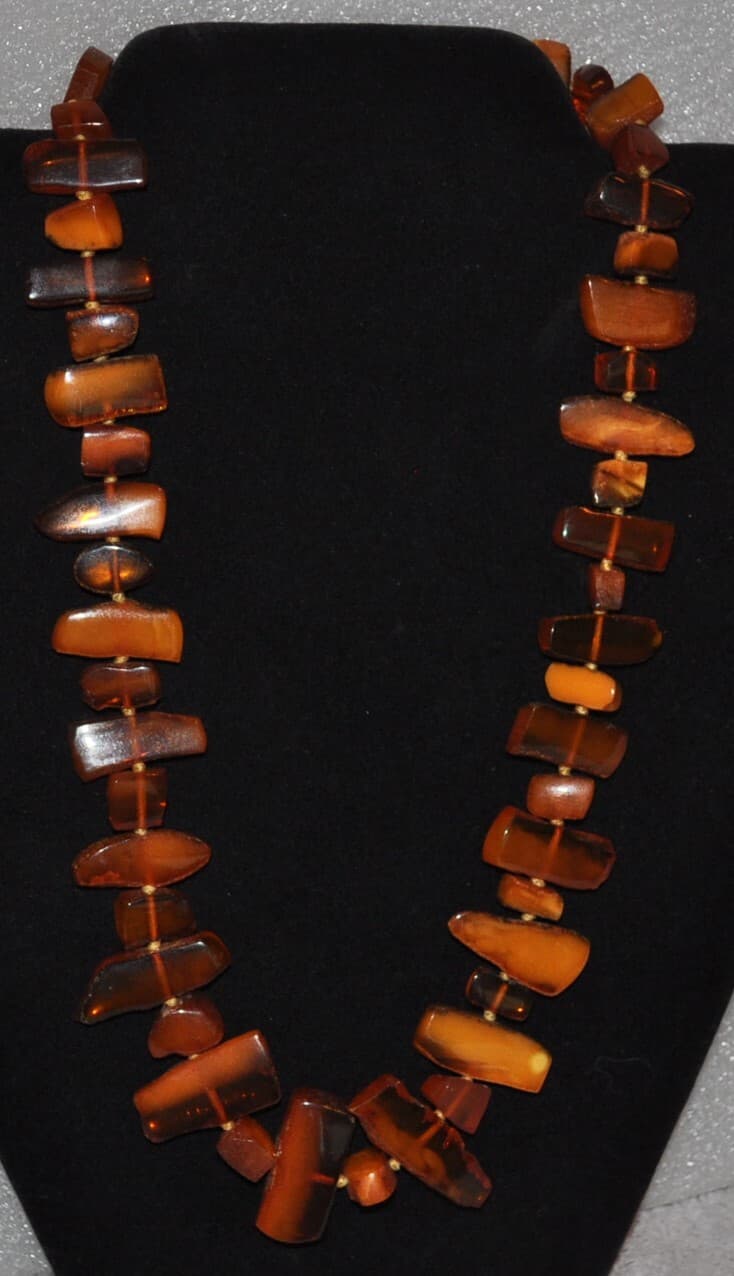
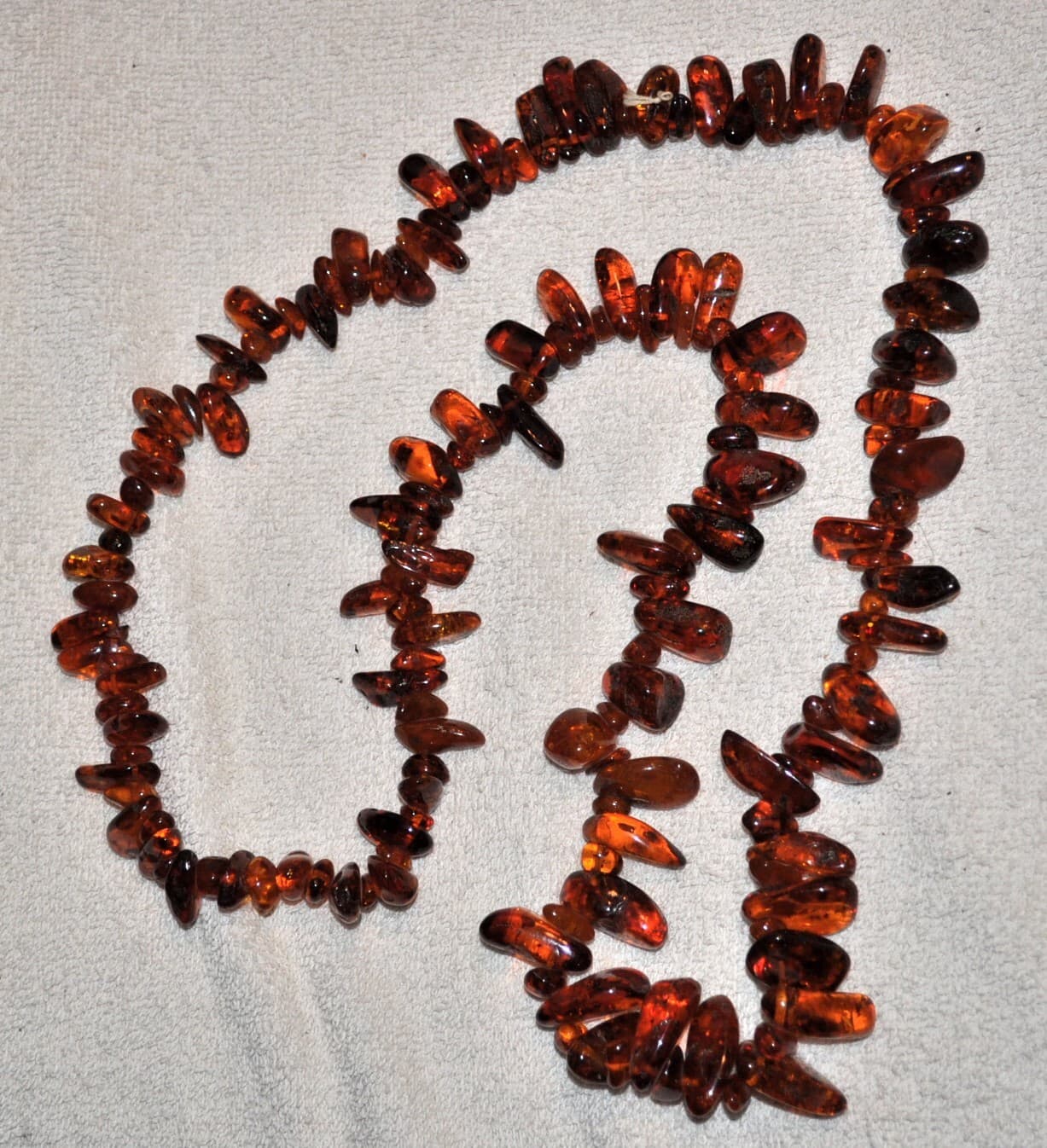
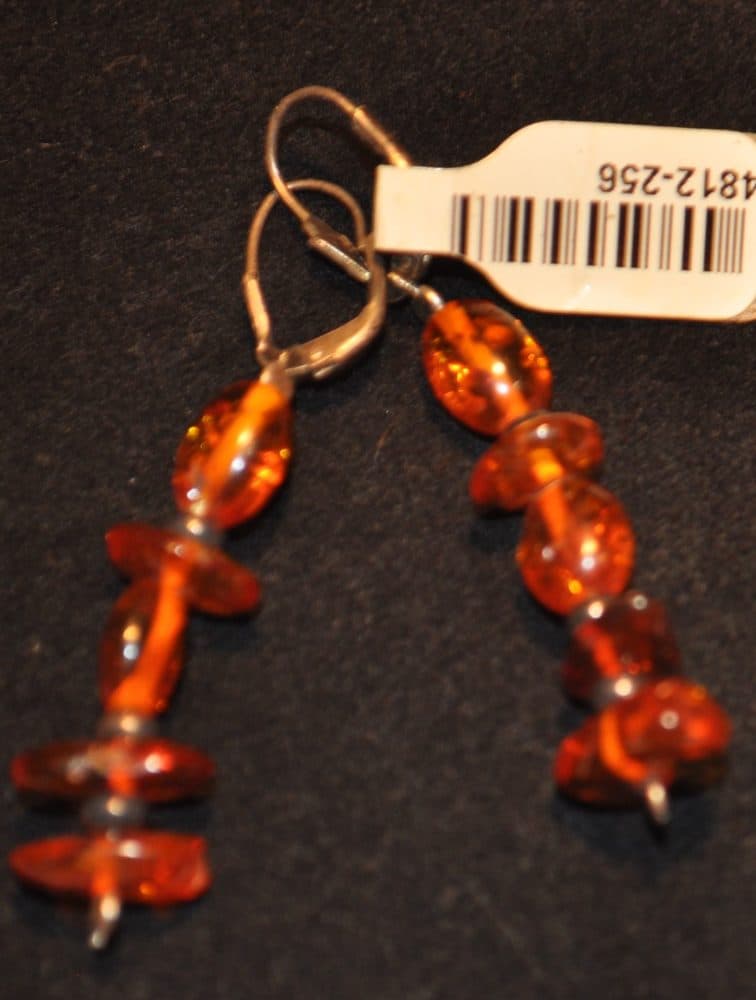
What is fake amber usually made of?
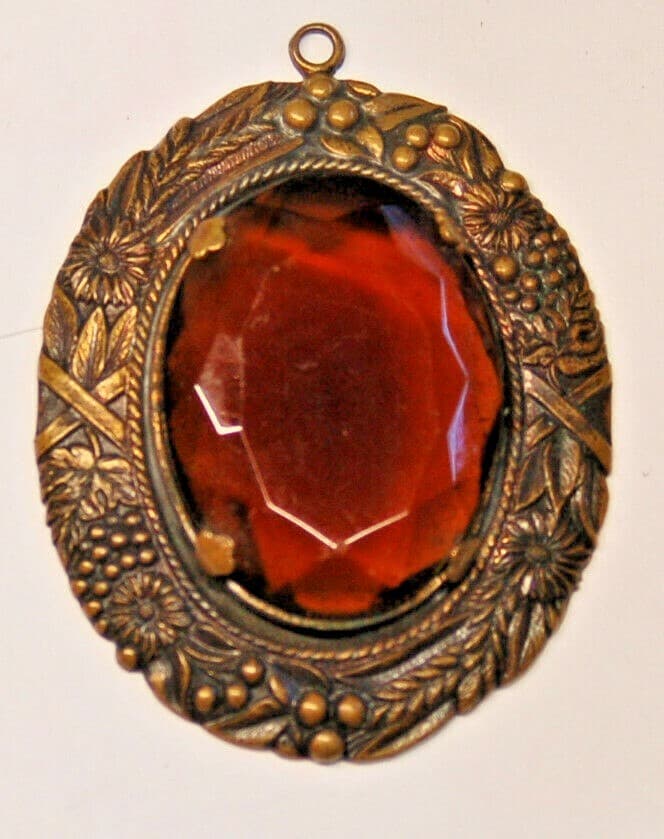
Plastic is the most common amber imitation, and it comes in a lot of forms, from vintage phenolic resins like Bakelite to modern polyester and polystyrene. Glass shows up too, especially in older costume jewelry, though it feels much colder and heavier than amber once you hold it. Copal is often sold as amber, sometimes on purpose and sometimes because the seller simply doesn’t know.
Then there’s the in-between category. Pressed (or reconstructed) amber is made from small pieces of real amber fused under heat and high pressure into a larger block. The International Amber Association’s classification only counts it as pressed Baltic amber when nothing else is added, but Gem-A notes that some reconstructed amber does contain added natural or artificial resins. Pressed amber is real amber in a sense, and it’s worth less than a single natural piece. And “amber tone” or “amber colored” in a listing describes the color, not the material.
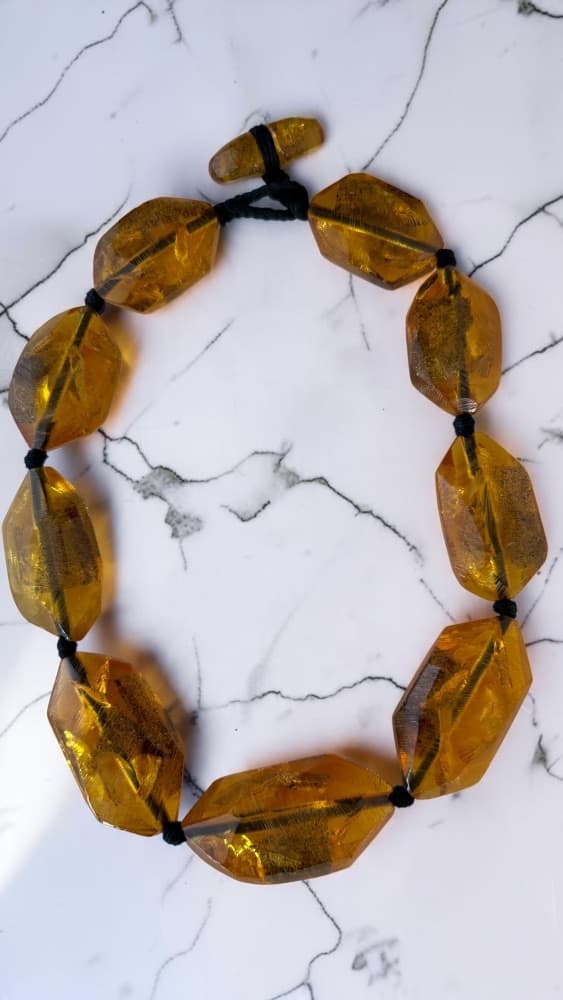
How can you test amber at home without damaging it?
The salt water test is the best-known check, and it works for loose, unset amber. The Mineralogical Society of America suggests about 10 teaspoons of table salt in a cup of water, which makes a solution with a specific gravity around 1.13. Amber floats in it, and so do copal and polystyrene plastic, while glass and most other imitations sink. So a piece that sinks is very likely not amber, and a piece that floats has passed one round and nothing more. Rinse it in fresh water afterward and dry it.
The catch is that most jewelry can’t take the test. A ring, a pendant in a bezel, or earrings with metal findings will sink because of the metal, no matter what the stone is. A clasp can drag a strand down too, and you probably don’t want to soak a knotted silk strand anyway. For set pieces, you’re left with the other clues.
Hold it in your hand. Amber is very light for its size and warms up almost right away, while glass feels cool and noticeably heavy. That helps you rule out glass, but plenty of plastics are light and warm too. Next, try static. Rub the piece briskly on wool or your sleeve and hold it near tiny bits of tissue paper, and amber will often pick them up. Bakelite and some other plastics can do this as well, so treat the result as one more hint.
If you have a long-wave UV flashlight, amber usually glows under it, often a chalky bluish or whitish color in Baltic amber. That glow proves less than you’d hope, though. The National Park Service notes that some copal and modern resins can fluoresce like amber, and GIA has examined a polystyrene imitation that fluoresced too. Where UV does help is with uneven patterns: GIA has described pressed amber showing a grainy, patchy glow under long-wave UV where natural amber glowed evenly, and epoxy-filled areas in amber beads showing up as chalky blue patches.
Does an insect inside mean the amber is real?
No, and a big, perfect insect is a reason to be suspicious. Insects trapped in real amber are almost always small, because larger creatures could usually struggle free. Fakes come in two main kinds: plastic with a modern insect set inside, and real amber that has been cut open, given a modern insect, and glued back together, which can be very hard to spot. Fossil collectors treat a large, beautifully posed insect in a clear piece as a warning sign.
Inclusions that aren’t insects are more reassuring. Small bubbles, swirls, plant fragments, and bits of bark are common in natural amber. So are flat, disc-shaped cracks with a golden shine, though those mean something else entirely (more on them below).
Which amber tests should you skip?
Skip the hot needle test. It means pushing a heated pin into the piece and sniffing the smoke, and it leaves a melted mark behind. Even the sources that recommend it disagree about what the smell and the resistance are supposed to tell you. GIA notes that the easiest and most reliable amber tests are destructive, which is exactly why its lab reaches for spectroscopy first.
Skip the acetone (nail polish remover) test too. Acetone can make copal turn sticky, and solvents can dull or damage the surface of amber and plastic alike. Scratch tests are out for the same reason, since amber is soft enough to mark with very little effort.
What is treated amber, and is it still real?
Treated amber is real amber that has been heated, pressurized, or otherwise processed to change its look, and a lot of the amber sold today has had some treatment. The International Amber Association sorts Baltic amber into natural (only cut and polished), modified (heat or pressure treated to change its clarity or color), pressed, and bonded (pieces joined with a small amount of colorless glue).
Heat treatment in an autoclave can clarify cloudy amber and push its color toward golden, cognac, or deep red. A GIA study of Baltic amber produced golden, red, and “beeswax” varieties this way. Heating can also create “sun spangles,” those flat, disc-shaped stress cracks that catch the light. They’re pretty, and they’re a sign the piece has been heated. Green is the color to be most careful with. GIA has documented bright greenish yellow to green material sold as green amber that was made by heating natural amber or copal under pressure, so a vivid green piece has very likely been treated (and may have started out as copal).
How do you care for amber jewelry?
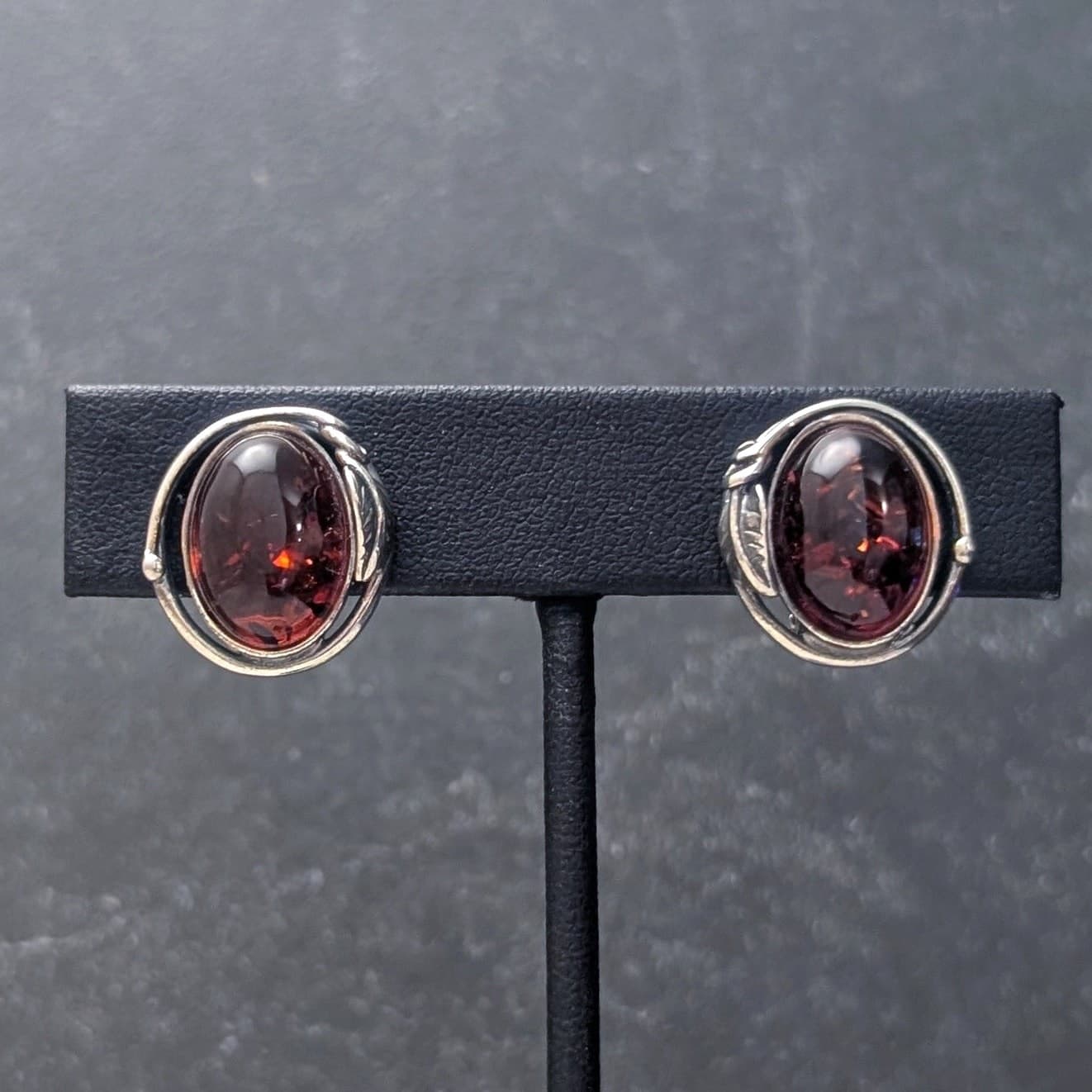
Treat amber like the soft, organic material it is. GIA lists amber among the gems that shouldn’t go in an ultrasonic cleaner, and heat, steam, and solvents are all risky. Clean it with lukewarm water, a drop of mild soap, and a soft cloth, then dry it right away. Put it on after your perfume, hairspray, and lotion, and store it on its own so harder gems and metal don’t scratch it. Our jewelry cleaning guide covers the silver or gold around it.
Is amber jewelry valuable, and when is a lab test worth it?
Amber values vary widely, and the biggest jump is between natural amber and everything that only looks like it. Within real amber, size, color, clarity, and genuine inclusions all matter, and a single large natural piece is usually worth more than pressed or heavily treated material.
A lab test makes sense when the price depends on the claim. If a piece is sold as natural Baltic amber, untreated, or full of rare fossil inclusions, those are exactly the things you can’t confirm at home. Gem labs use techniques like infrared and Raman spectroscopy to separate amber from copal and plastics, and GIA has published work identifying treated green amber with NMR. For a modest strand, enjoy it. For an expensive one, ask for a report.
If your piece turns out to be glass or plastic, it might still be worth something as costume jewelry, and our guide to vintage beaded necklaces covers telling glass, Lucite, Bakelite, and other bead materials apart. Selling amber? Say what you know (“Baltic amber,” “untested,” or “amber tone”) and buyers will trust the rest of your listing more. Shopping? Browse amber on StillSparkly and ask the seller how they know (a good seller won’t mind).
Sources
- GIA: amber gem encyclopedia
- GIA: tips on caring for jewelry
- Gems & Gemology: characterization of “green amber” (2009)
- Gems & Gemology: heat treatment of Baltic amber (2014)
- Gems & Gemology: pressed amber imitating root amber (2022)
- International Amber Association: Baltic amber classification
- Mineralogical Society of America: gem FAQ (salt water test)
- University of Waterloo Earth Sciences Museum: Baltic amber
Related guides
How to Tell if Turquoise Is Real (and What “Stabilized” Means)
“Real or fake” is the wrong question for turquoise. Most of it is real and treated, some is pressed from powder, and some is a different stone dyed blue.
Vintage Beaded Necklaces: How to Tell What the Beads Are Made Of
Most vintage beaded necklaces are glass, plastic, or stone, and you can usually tell which in a minute with your hands and a loupe. Here’s how.
How to Clean Jewelry at Home Without Ruining It
Most jewelry doesn’t need a fancy cleaner. Warm water and dish soap handle almost everything, as long as you skip the few mistakes that ruin it.
Shopping for amber?
Browse amber from real sellers, and ask what they know about it. Selling? Say whether your piece is amber or amber-colored in your listing.