Guide ·
How to Tell if Turquoise Is Real (and What “Stabilized” Means)
Short answer: most turquoise sold today is real but treated, usually stabilized with resin. Some is reconstituted from turquoise powder, and some isn’t turquoise at all (dyed howlite or magnesite, glass, or plastic). You can spot a lot of fakes by looking for dye pooled in cracks and matrix that sits on the surface, but many treatments can only be confirmed by a gem lab.
You find a gorgeous turquoise necklace and the listing says “genuine.” Great, but genuine what? With turquoise, “real or fake” turns out to be the wrong question. The useful question is what kind of turquoise you’re looking at, because a natural stone, a stabilized one, and a dyed howlite bead can all be sold as “turquoise” and they’re worth very different amounts.
What is turquoise, exactly?
Turquoise is a copper and aluminum phosphate that forms in dry regions. GIA describes it as porous and semitranslucent to opaque, and it’s fairly soft, around 5 to 6 on the Mohs hardness scale. That softness and porosity explain almost everything that follows: raw turquoise can be chalky and fragile, so most of it gets treated before it’s ever set in jewelry.
What are the kinds of turquoise you’ll see?
| Type | What it is |
|---|---|
| Natural | Turquoise that hasn’t been chemically or otherwise altered. The least common and the most valuable. |
| Stabilized | Real turquoise impregnated with a colorless resin to harden it and deepen the color. Most turquoise on the market, according to GIA. |
| Zachery-treated | Real turquoise given a proprietary treatment that improves polish and reduces porosity. GIA says it usually takes chemical analysis to detect. |
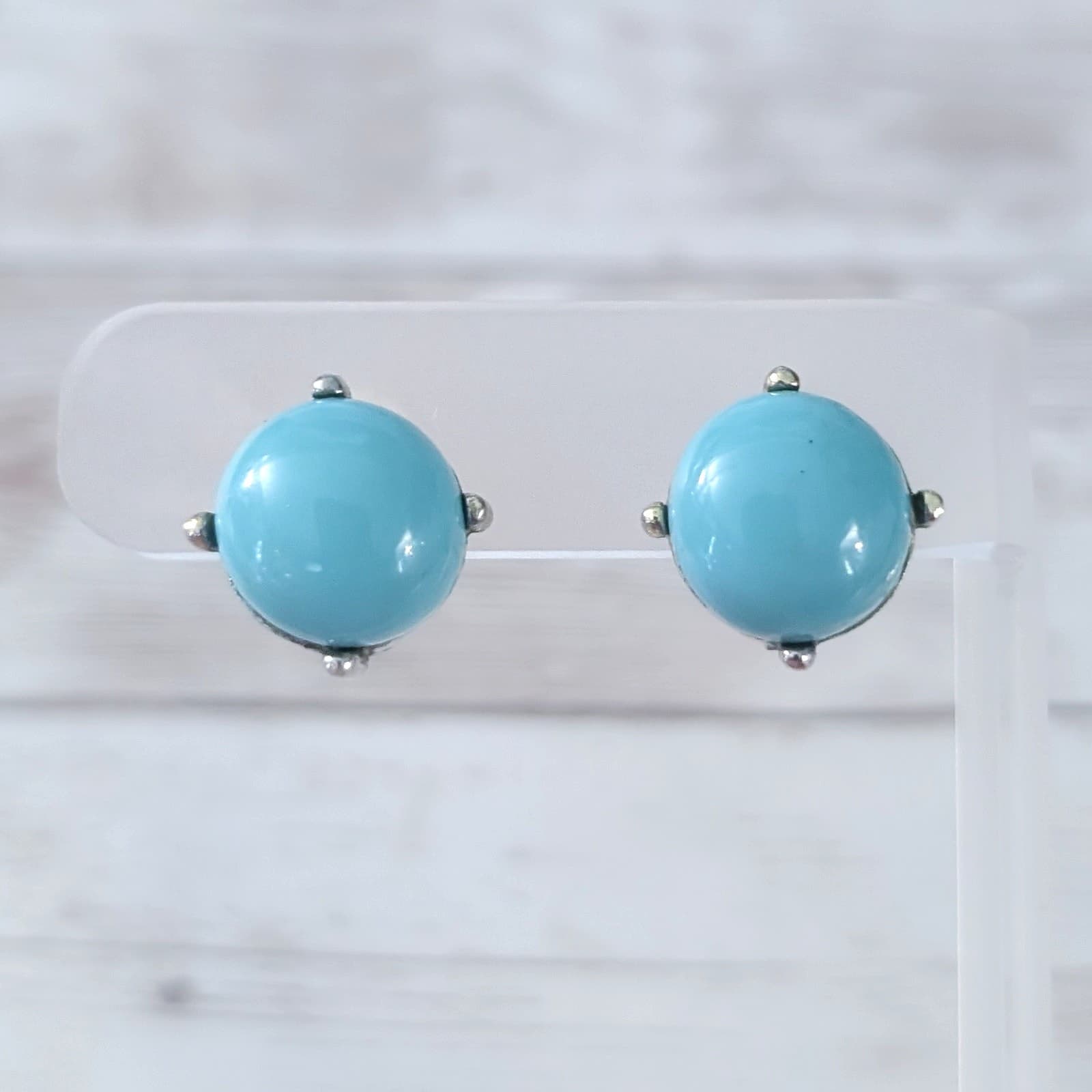
| Dyed | Turquoise with added color, which tends to collect in cracks and cavities. |
| Reconstituted | Turquoise dust and particles bound with resin and pressed into a solid block. |
| Imitation | Not turquoise at all: usually dyed howlite or dyed magnesite, sometimes glass or plastic. |
Stabilized turquoise is real turquoise, and there’s nothing wrong with buying it. It just isn’t natural, and it’s priced accordingly. Under the FTC’s Jewelry Guides, sellers should disclose treatments that aren’t permanent, need special care, or significantly affect value, and imitations should be labeled with a word like “imitation” or “simulated.” One naming trap to know: “white buffalo” is used both for a genuine white turquoise and for plain dyed or undyed howlite, so ask which one a seller means.
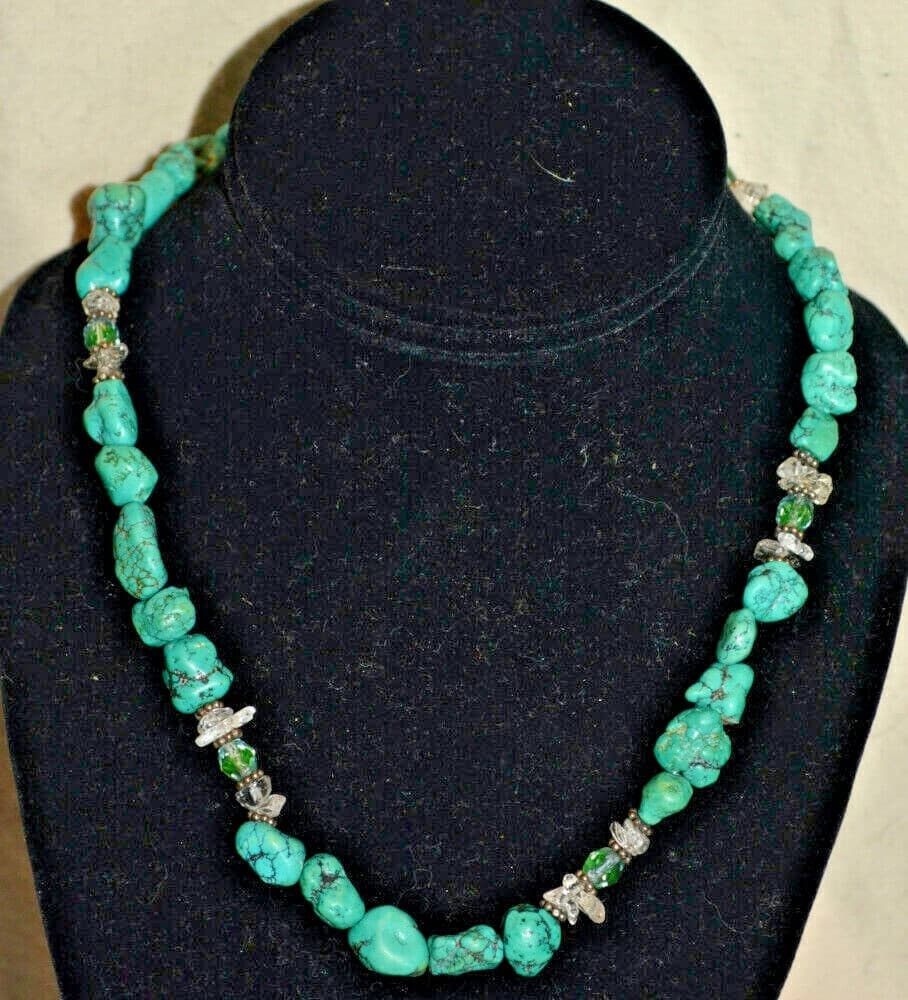
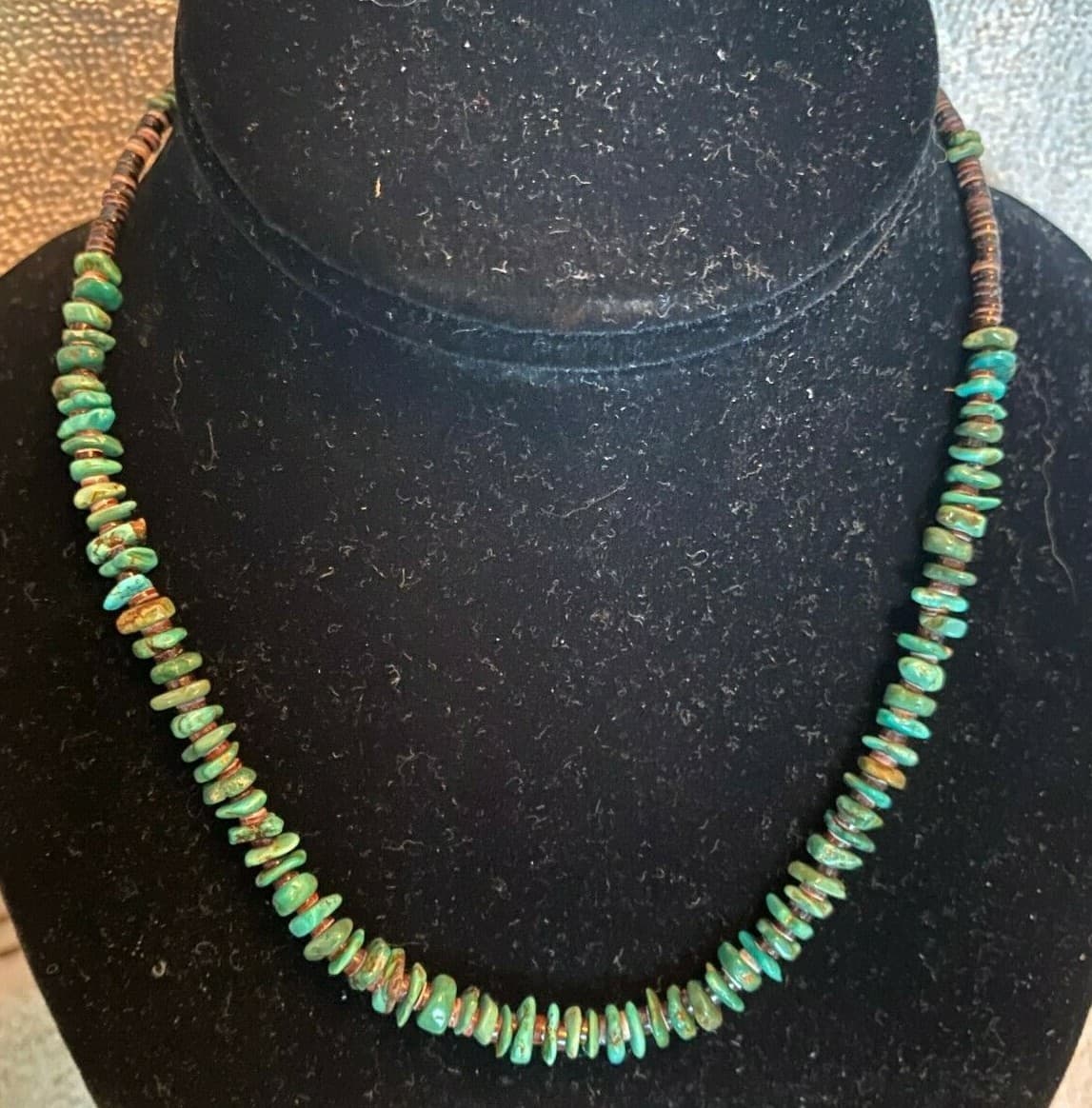
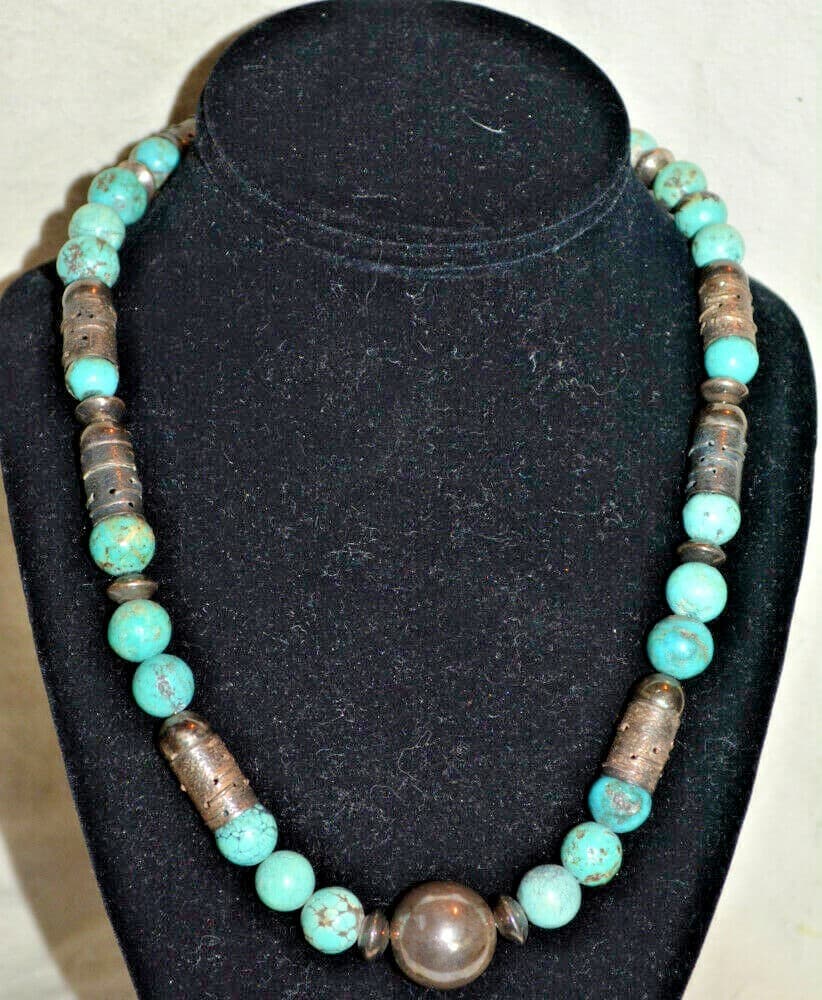
How can you check turquoise without damaging it?
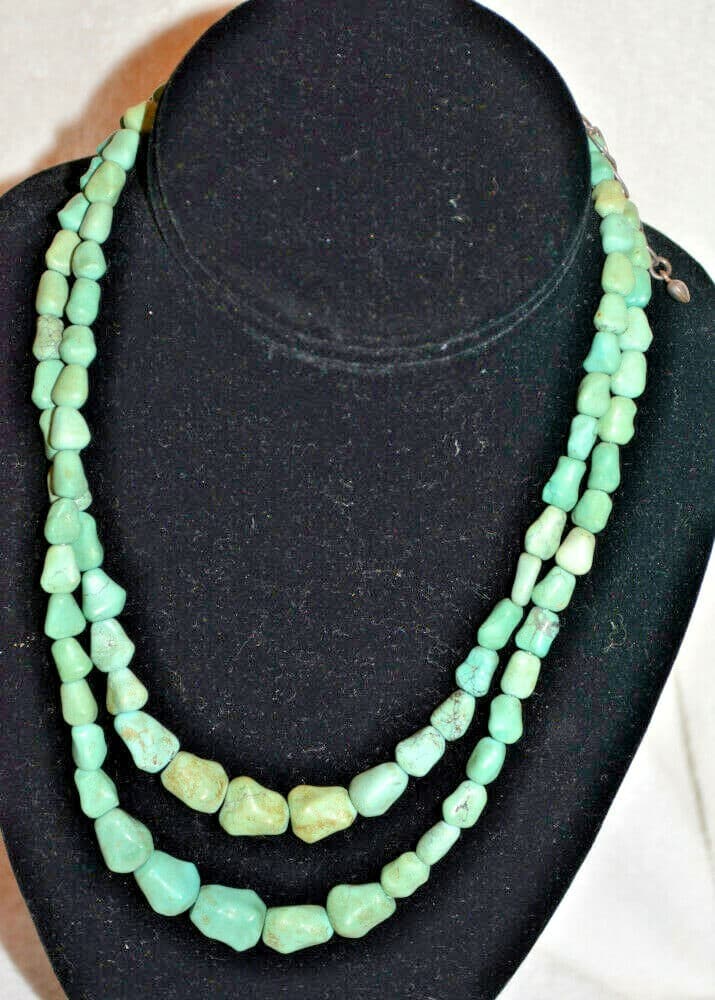
Grab a loupe (or your phone’s zoom) and good daylight, and look at the places a dye or an imitation gives itself away. Start with the cracks and pits. GIA has documented dyed turquoise with the color concentrated in cracks and cavities, so blue that looks darker and heavier in every little crevice is a strong hint. Check around the drill holes on beads too.
Then look at the matrix, the dark veining. On natural and stabilized turquoise it’s part of the stone. On some imitations it’s missing completely, or it looks drawn on and doesn’t run into the stone. Perfectly even, flawless color isn’t proof of anything (stabilized turquoise can look very uniform), but on a piece sold as natural it’s a good reason to ask more questions. And honestly, so is the price: natural turquoise at a costume jewelry price deserves a second look.
Which turquoise tests should you skip?
The internet is full of tests that damage the stone. The hot needle test can melt resin and mark the surface, and a scratch test does exactly what it sounds like. Acid tests are lab tools, not something to try at the kitchen table. An acetone swab only picks up surface dye, so a clean swab doesn’t clear a stone, and solvents can harm treated surfaces. None of these is worth ruining a piece over.
When is a lab test worth it?
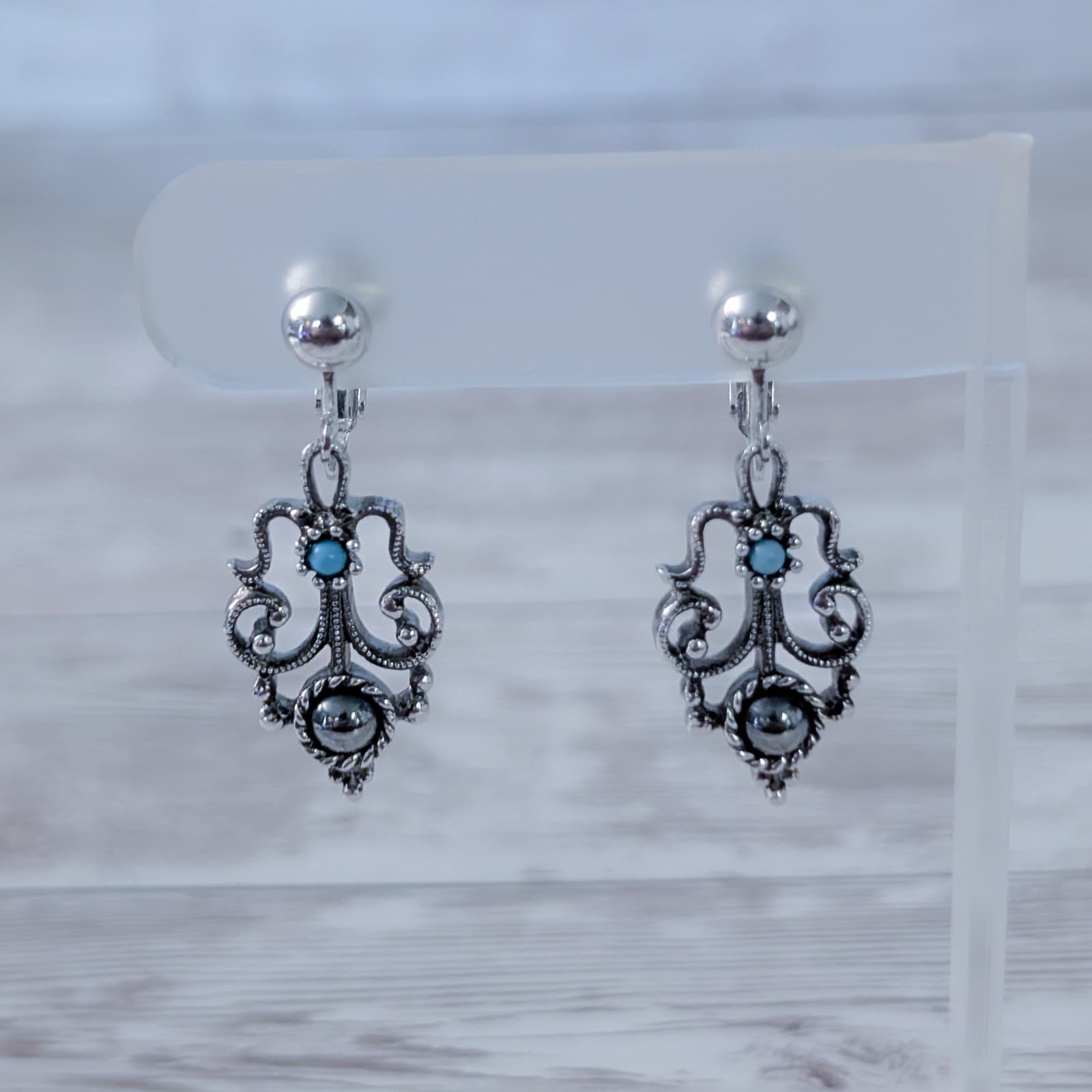
When the price depends on the claim. If a piece is sold as natural, untreated, or from a named mine like Sleeping Beauty, Kingman, or Bisbee, that claim is where the money is, and it’s exactly what you can’t confirm by eye. Gem labs use infrared spectroscopy to find resin and chemical analysis to identify Zachery treatment, and they can separate howlite and magnesite from turquoise. For a $30 strand, skip it. For an expensive “natural” piece, ask for a report or get one.
What about Native American turquoise jewelry?
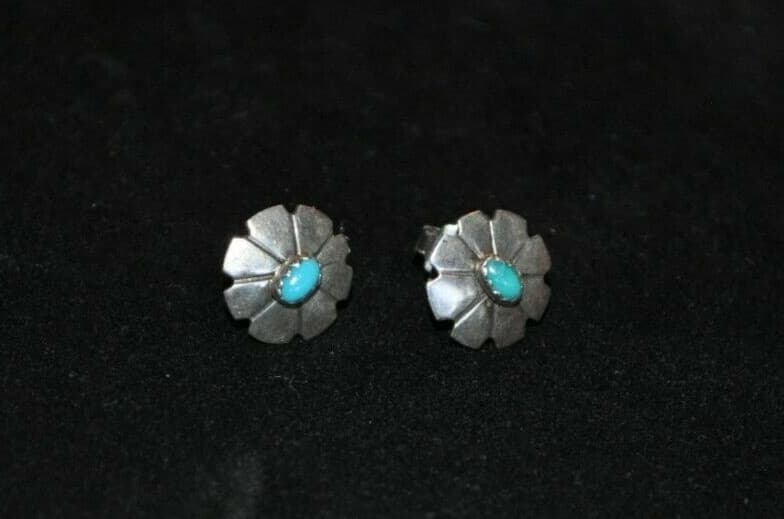
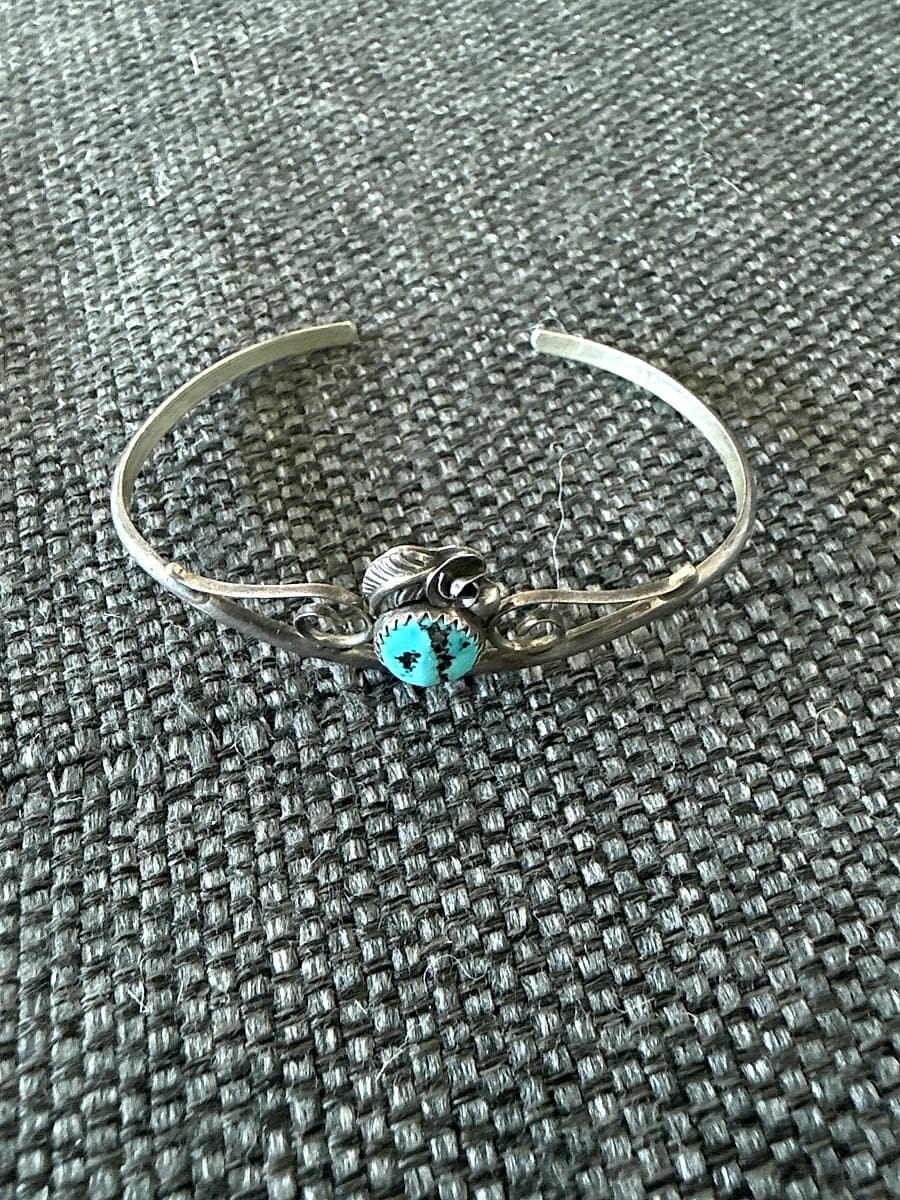
The Indian Arts and Crafts Act of 1990 makes it illegal to sell anything in a way that falsely suggests it was made by a Native American artist or a particular tribe. That covers listings, labels, and how a piece is described. If you think a piece is being misrepresented, the Indian Arts and Crafts Board takes reports at 1-888-ART-FAKE. And because so much of this jewelry is set in silver, our sterling silver guide is worth a read too.
How do you care for turquoise?
Gently. GIA warns that heat can discolor turquoise and that chemicals, cosmetics, skin oils, and even sweat can change its color over time. Warm soapy water and a soft cloth are safe; steam and ultrasonic cleaners are not. Put it on after your lotion and perfume, and our jewelry cleaning guide covers the silver around it.
Selling turquoise? Say what you know (“stabilized,” “unknown treatment,” or “faux”) and buyers will trust everything else in your listing more. Shopping? Browse turquoise on StillSparkly and don’t be shy about asking a seller how a stone has been treated (a good seller will be glad you asked).
Sources
Related guides
How to Tell if Your Jewelry Is Actually Sterling Silver
A lot of 'silver' jewelry on resale sites isn't sterling. Six checks to figure out what you have, from the stamp to the ice cube test.
What Is Costume Jewelry vs Fine Jewelry (And Why It Matters When You Buy or Sell)
The line between costume and fine jewelry sounds obvious until you try to draw it, and sterling silver and signed vintage make it blurrier than most people expect.
How to Clean Jewelry at Home Without Ruining It
Most jewelry doesn’t need a fancy cleaner. Warm water and dish soap handle almost everything, as long as you skip the few mistakes that ruin it.
Shopping for turquoise?
Browse turquoise from real sellers, and ask them how it’s been treated. Selling? Say what you know about the stone in your listing.