Guide ·
Weiss Jewelry: How to Identify, Date, and Value It
Short answer: Weiss jewelry was made by Albert Weiss & Co., a New York costume jewelry company founded in 1942 by former Coro designer Albert Weiss and closed in 1971. Weiss is best known for high-quality rhinestones, especially smoky gray stones the company called “black diamonds.” Marks include WEISSCO (first used 1947), WEISS (first used 1951), and Albert Weiss, and most pieces sell for modest amounts unless they’re large, colorful, and complete.
Weiss is one of those names that shows up in nearly every box of inherited costume jewelry, usually on a pair of clip-on earrings that still sparkle like crazy. Weiss used good stones, and a lot of it has held up beautifully.
Who made Weiss jewelry?
Albert Weiss worked as a designer for Coro in the 1930s before starting his own firm in 1942. (It’s pronounced “wice,” rhymes with rice.) Trademark filings place the company at 303 Fifth Avenue in 1947 and at 15 West 37th Street by 1960, where an old Weiss sign still survives on the building. Albert’s son Michael took over around 1969, and the company closed in 1971.
Weiss didn’t actually manufacture its own jewelry, which surprises a lot of people. According to the Costume Jewelry Collectors International marks reference, Weiss designed some pieces and contracted out the production, and some pieces (including Christmas tree pins) were made for Weiss by Hollycraft. That’s why you’ll occasionally see identical designs with different names on them, like a matched pair of earrings where one is marked Weiss and the other Lisner.
How do you date Weiss jewelry by its mark?
Trademark records give you two solid dates, and the rest is collector knowledge. Look on the back of a brooch, the clip of an earring, or the clasp tag of a necklace or bracelet.
| Mark | What we know |
|---|---|
| WEISSCO or Weissco NY | First used January 1947, per the USPTO registration |
| WEISS (block or script) | First used January 1951, per the USPTO registration |
| Albert Weiss, Weiss N.Y., © Weiss | Vintage marks seen on the company’s pieces; exact start dates aren’t documented |
| A.W.Co. | Seen on tags; collectors date it to the 1950s |
| Albert Weiss Co. on a new-looking piece | Possibly modern: a Brooklyn company has used this registered name since 2000 |
Collectors don’t fully agree on the order of the marks. Many say block WEISS came first, but on the federal record WEISSCO is the older registered mark. The © is a useful general clue across makers (our vintage costume jewelry marks guide explains why), but nobody has pinned down exactly when Weiss started using it.
What does Weiss jewelry look like?
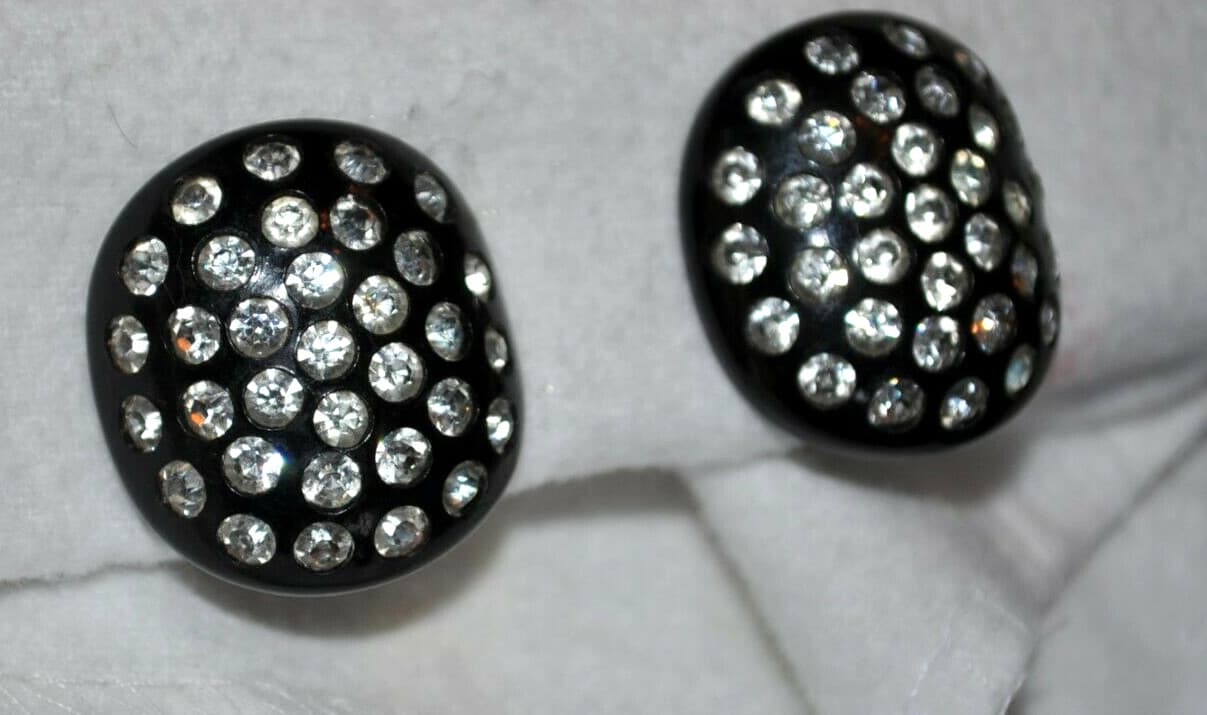
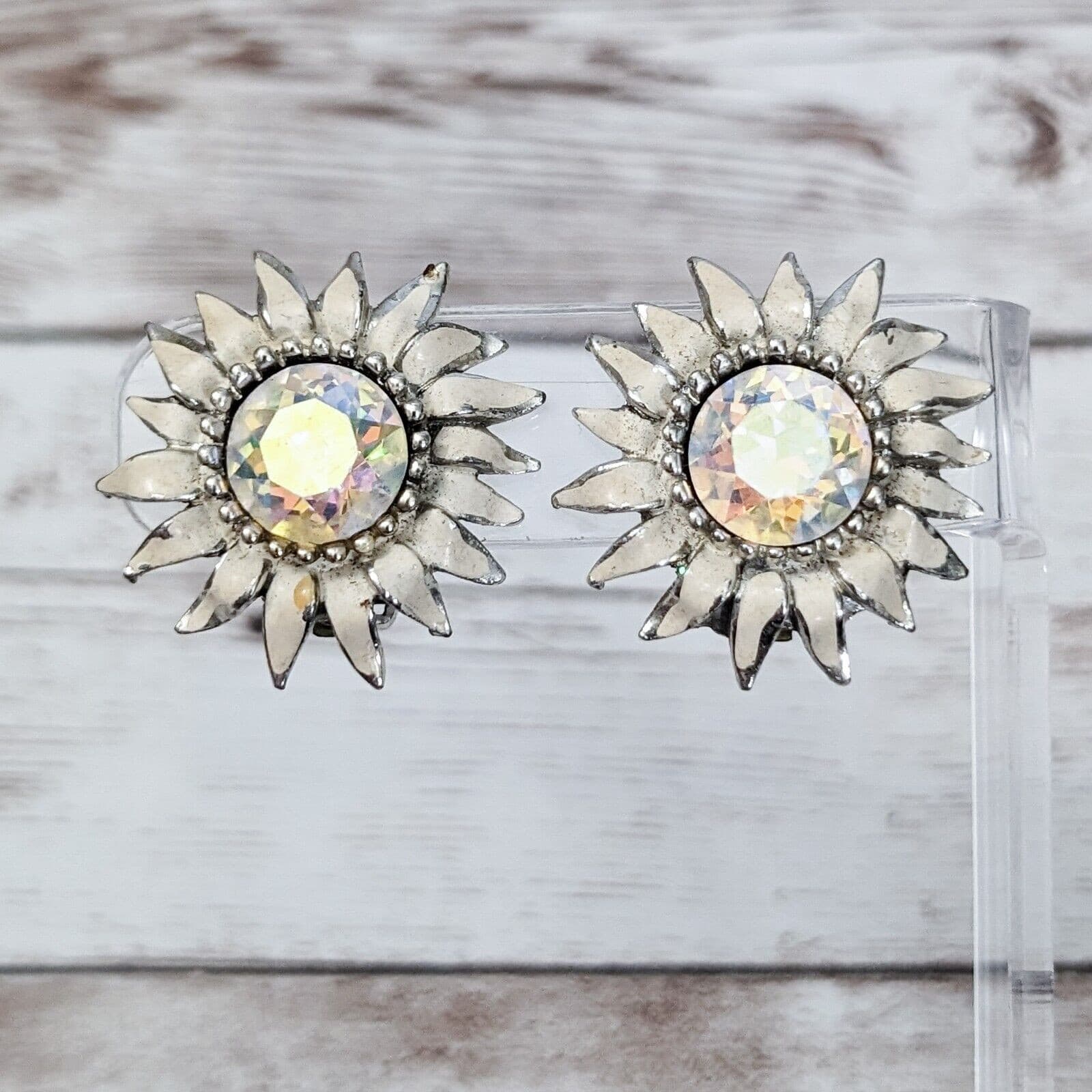
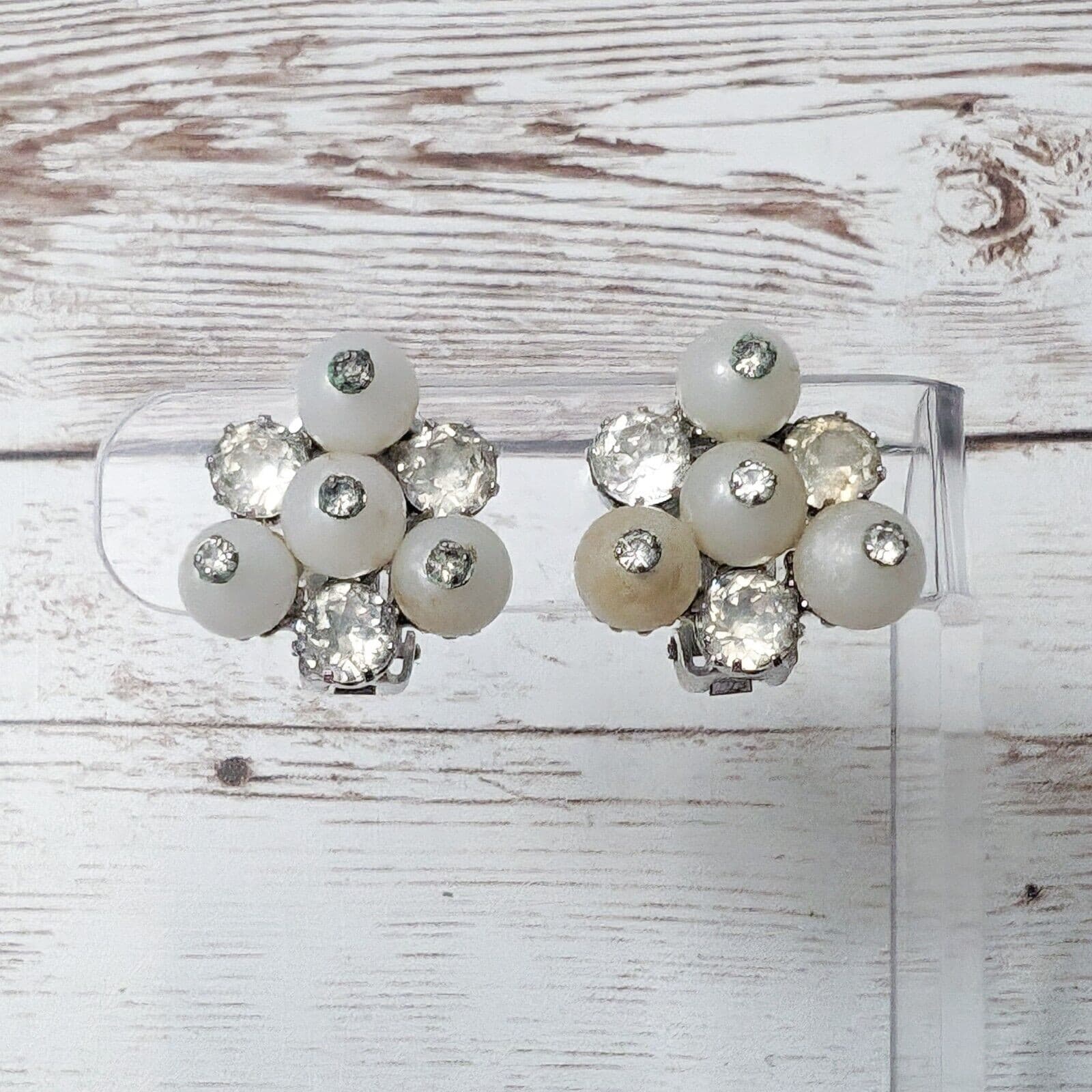
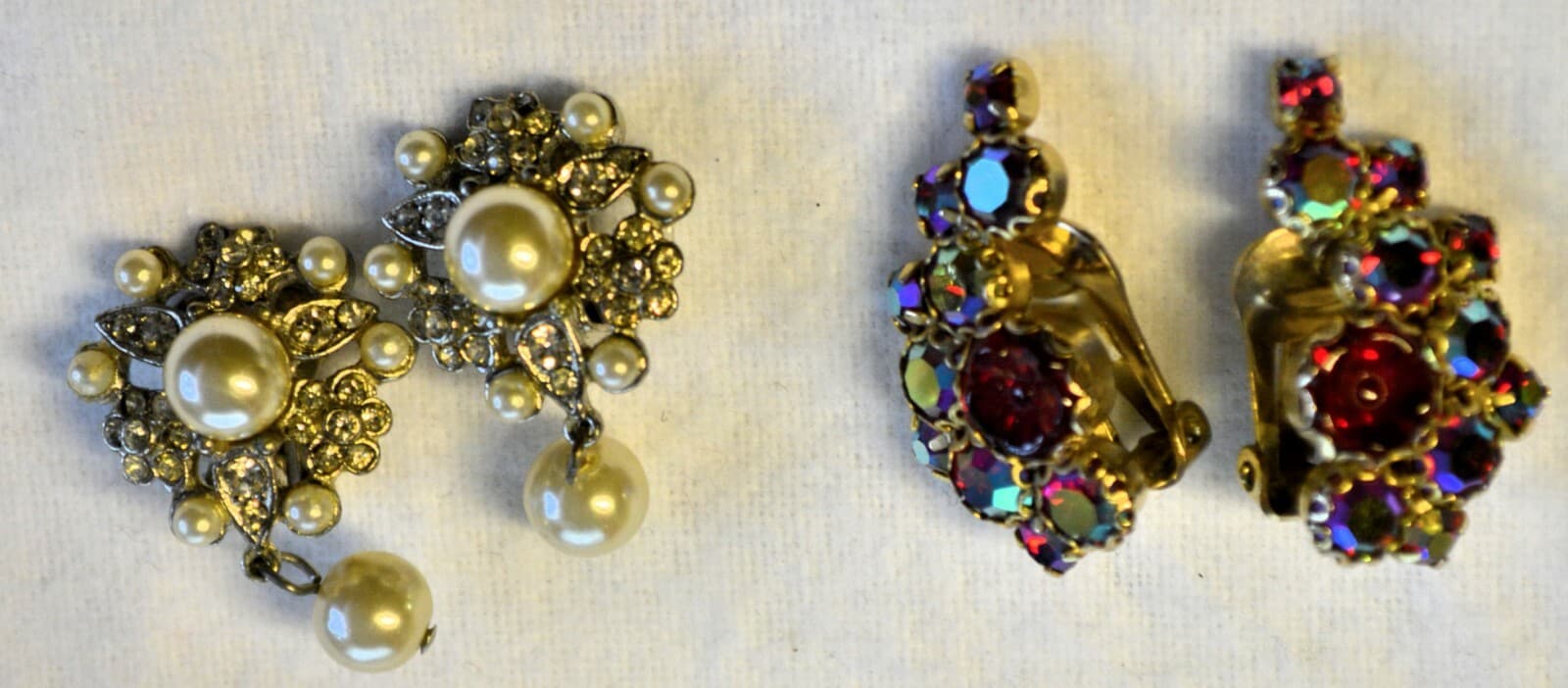
Mostly rhinestones, and good ones. Weiss is best known for smoky gray “black diamond” rhinestones, and Collectors Weekly credits it as one of the first companies to use Swarovski’s aurora borealis crystals. You’ll also see japanned (blackened) metal settings with deep blue or ruby red stones, clear rhinestone pieces that look a lot like Eisenberg (no relation), enameled flowers and animals, and floral and figural brooches. In 1964 Weiss advertised a whole butterfly pin collection in the New York Times, and one of those brooches is now in the Cranbrook collection.
How can you tell if Weiss jewelry is fake?
Start with the back. A real Weiss piece usually has a clean, smooth, well-finished back, often rhodium plated, with the stones set neatly in their prongs. Fakes can look fine from the front and then give themselves away with rough castings, sloppy glue, or a deliberately “antiqued” or oxidized finish on the back. A mark can be copied or added to someone else’s piece, so treat a signature as evidence, not proof, especially on a big, flashy brooch priced like a rare find.
And remember that unsigned Weiss exists too, since many pieces only had paper tags. An unsigned piece that looks like Weiss is “Weiss style” unless something else (a matching signed set, original card, or tag) ties it to the company.
Is Weiss jewelry worth anything?
Usually it’s worth a modest amount, with a few exceptions. Most Weiss earrings and small brooches sell for not much more than other signed costume jewelry. Big, colorful rhinestone brooches, complete sets (brooch, earrings, and bracelet together), and the more unusual figurals and black-diamond pieces do better, and condition matters more than anything. Missing, cloudy, or darkened stones cut the price sharply. Our vintage rhinestones guide explains how to check the stones, and our guide to whether vintage costume jewelry is worth anything shows how to look up completed sales instead of asking prices.
Selling? Photograph the mark, the back, and every stone up close, and mention any missing or dull stones up front. Shopping? Browse Weiss on StillSparkly, and if your new earrings are clip-ons, our clip-on earrings guide has comfort tips.
Sources
- USPTO: WEISSCO trademark, Reg. 503146 (first use 1947)
- USPTO: WEISS trademark, Reg. 733087 (first use 1951)
- USPTO: ALBERT WEISS CO. trademark, Reg. 2576447 (Rhinestone Jewelry Corp., first use 2000)
- Cranbrook Center for Collections and Research: a 1964 Weiss butterfly brooch
- Costume Jewelry Collectors International: Weiss marks and history
- Collectors Weekly: Vintage Weiss jewelry
Related guides
How to Tell if Rhinestones Are Vintage (and What “Dead” Stones Mean)
Rhinestones are glass, usually with a foil mirror behind them. The way that foil has aged, and the way the stones are set, says a lot about when a piece was made.
Vintage Costume Jewelry Marks: A Guide to Designer Signatures
A name on the back of a brooch tells you who made it. How that name is written, and what’s stamped next to it, often tells you when.
Is My Vintage Costume Jewelry Worth Anything?
Usually a little, sometimes a lot. The value is in the maker, the design, the construction, and the condition, and you can check all four at the kitchen table.
Have some Weiss?
Get a free estimate from a photo, or list it with a clear close-up of the mark and the back.