Guide ·
Renoir and Matisse Copper Jewelry: History, Marks, and Care
Short answer: Renoir copper jewelry was made by Renoir of California, a Los Angeles company founded by Jerry Fels and Kurt Freiler that collectors date to 1946 and that stopped production in 1964. Renoir pieces are plain copper with a sculptural, modernist look, and Matisse is the same company’s enameled line, introduced in 1952. Both are marked on the back (“Renoir,” “Matisse,” or “Matisse Renoir”), and pieces with a © are generally from the mid-1950s on.
If your mom or grandmother had a copper bracelet that looked like a piece of abstract sculpture, there’s a decent chance it said Renoir on the back. Postwar copper jewelry was cheap enough to buy on a whim and looked nothing like the gold jewelry of the previous generation, and Renoir was one of the companies that did it best.
Who made Renoir and Matisse jewelry?
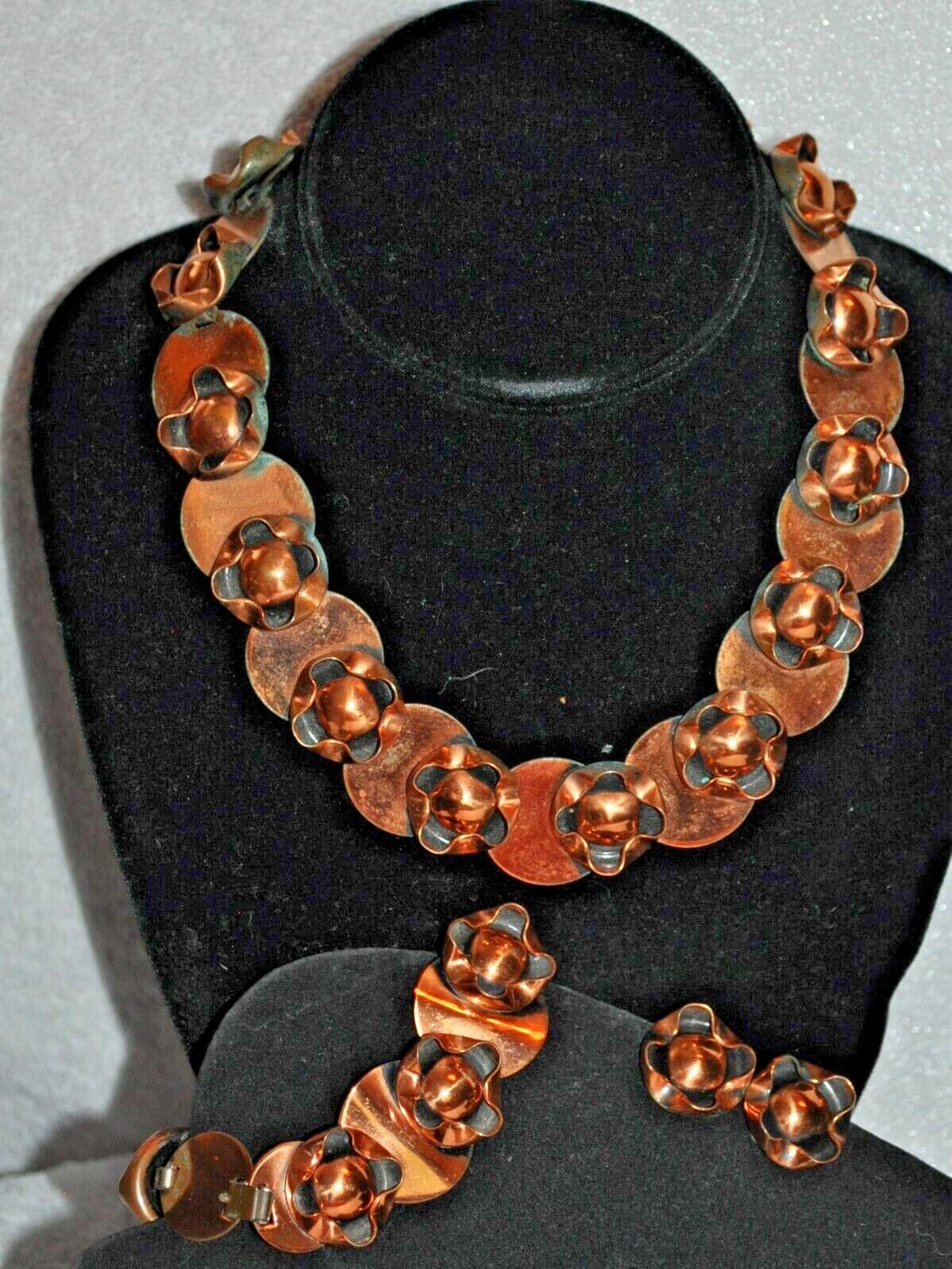
Jerry Fels was a New York-trained painter and sculptor who settled in California after serving in World War II. With his brother-in-law Kurt Freiler (the two married sisters), he started the company as Renoir of Hollywood. According to the Cooper Hewitt, Smithsonian Design Museum, Fels handled design and sales while Freiler made the pieces by hand. Collector sources date the start to 1946 and the change to Renoir of California to around 1948.
In 1952 Fels introduced Matisse, Ltd., a line of copper and enamel jewelry. Both lines stopped production in 1964. (Costume Jewelry Collectors International points to a mix of reasons: fashion moving toward bare necklines, cheaper imitations, and a tricky hard-enamel design with too many rejects.) Fels and Freiler went on to found Artisan House, whose metal wall sculptures are signed “C. Jeré,” a name made from the two men’s names.
What is the difference between Renoir and Matisse?
Renoir is plain copper, and Matisse is copper with enamel. The company often released the same design both ways, so a bracelet you see in bare copper with a Renoir mark may also exist in enameled form marked Matisse. That’s why the mark and the enamel tell you more than the shape does. Some pieces are marked “Matisse Renoir” together. A few designs were also made in sterling silver under the name Sauteur, and those turn up much less often.
The enamel on Matisse pieces is fired glass, like other vitreous enamel, so it can chip if the piece is dropped. Our vintage enamel jewelry guide explains how to check enamel for damage and repairs.
How do you date Renoir jewelry by its mark?
The marks give you a rough timeline, though these dates come from collectors and dealers rather than company records.
| Mark | What it suggests |
|---|---|
| Renoir of Hollywood | The earliest pieces, about 1946 to 1948 |
| Renoir of California | From about 1948 |
| Hand Made Renoir of California | About 1952 to 1954 |
| Renoir, then © Renoir | Plain Renoir from about 1954; the © on later pieces |
| Matisse or Matisse Renoir | The enameled line, 1952 to 1964 |
Original Renoir cards described an “exclusive Copron process,” a coating meant to slow tarnish and fingerprints, and told owners “Do not polish.” Pieces in the Cooper Hewitt collection include a “Peter Pan” necklace and earrings and a “Nouveau” bracelet, which gives you a sense of how the company named its designs. Dealers list many more names, and Matthew Burkholz’s book Copper Art Jewelry is the usual reference for matching a piece to its design.
How can you tell real Renoir from other copper jewelry?
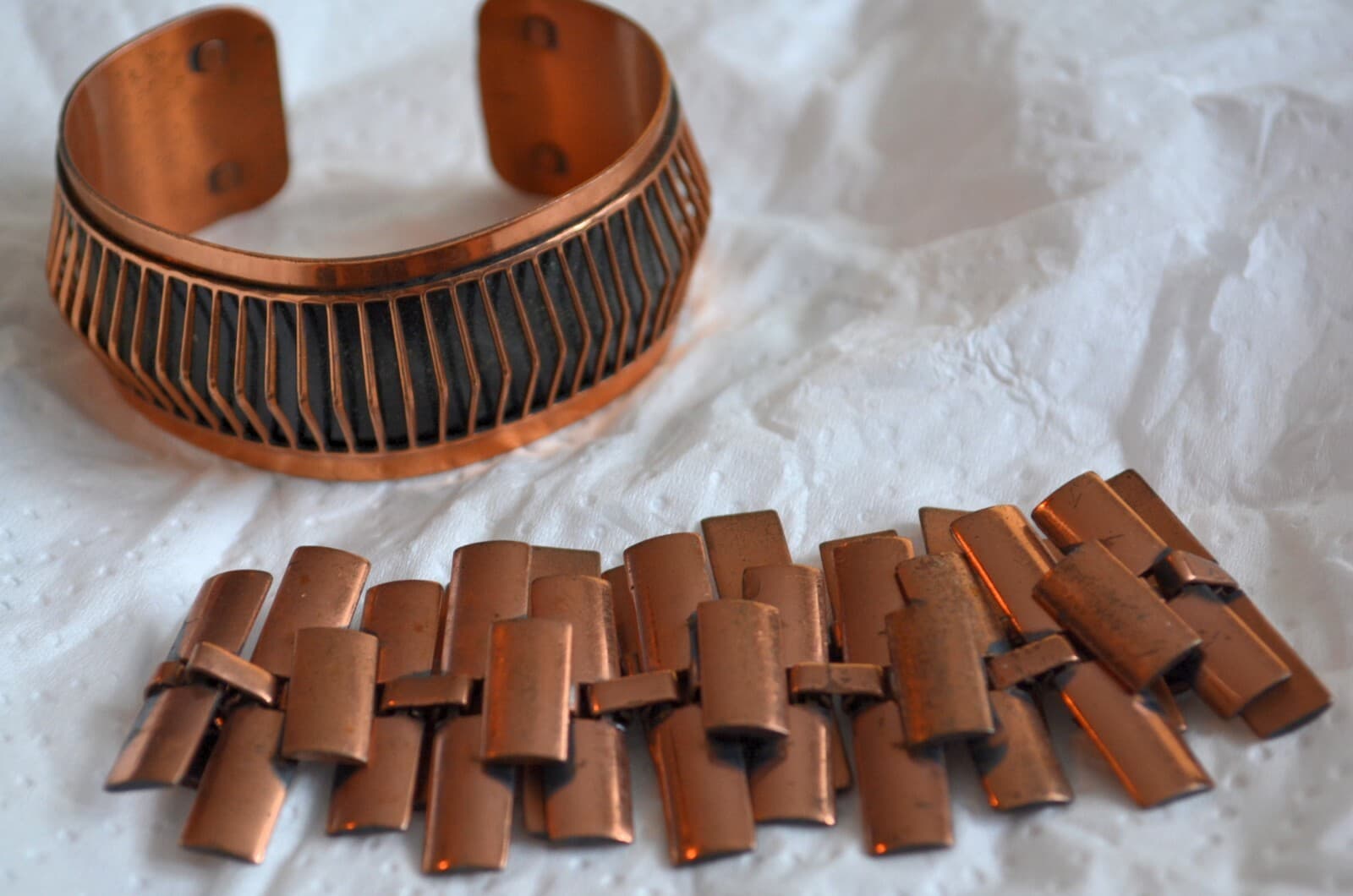
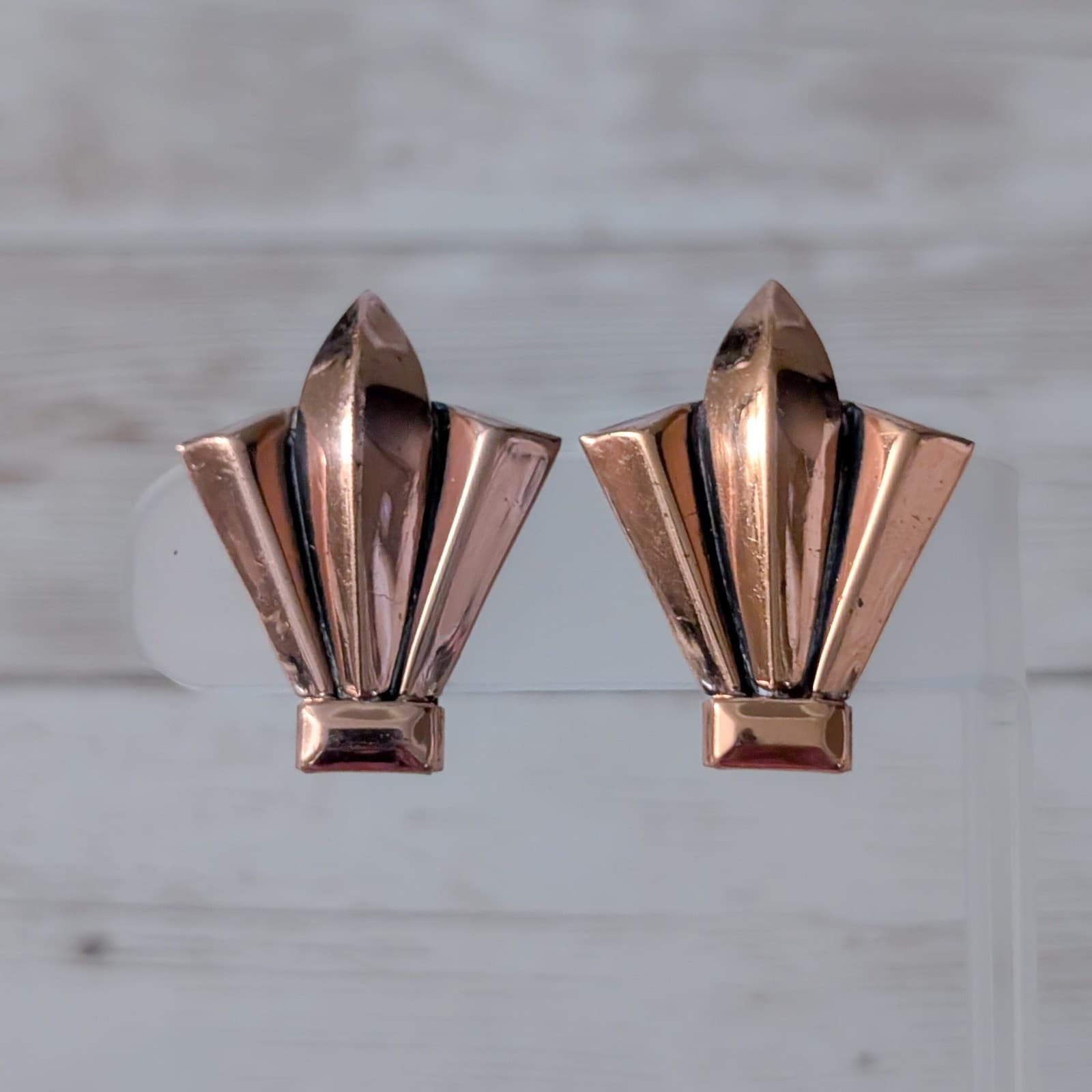
Look for the signature first. Renoir was copied in its own time (cheaper imitations were one of the company’s headaches), and plenty of mid-century copper was made by other companies or sold unmarked. Pieces stamped only “copper” or “hand wrought” aren’t Renoir, even if they look a lot like it. Other well-known copper names of the era include Rebajes (Francisco Rebajes opened his Fifth Avenue shop in 1942 and sold nearly everything for under $10), Kim Craftsmen, and Bell Trading Post. Be wary of listings that say “Renoir style,” and of “copper-look” pieces that may not be solid copper at all.
As for value, collectors tend to pay more for the bold modernist shapes (boomerangs and space-age forms) than for florals, and for Matisse enamel in good condition. Chipped enamel, heavy scratches, or a piece that’s been polished down to bright bare copper all bring the price down. Our guide to whether vintage costume jewelry is worth anything explains how to check completed sales.
How do you clean Renoir copper jewelry without ruining it?
Mostly, you don’t polish it. The dark accents on a lot of mid-century copper were put there on purpose with a chemical blackening, and Renoir pieces often have an original coating too. Polishing removes both, along with a little of the metal every time. The Canadian Conservation Institute’s advice for copper is a good rule here: cleaning (removing dirt and fingerprints) is not the same as polishing (removing tarnish and some metal), and if you’re unsure, clean without polishing. A soft brush or a lightly damp swab with mild soap is plenty. Skip abrasive and ammonia-based metal polishes, which can scratch, leave residue, and attack copper.
Dark brown tarnish is normal and harmless. Green or blue-green spots are corrosion and worth dealing with gently before they spread. And yes, copper can leave a green mark on your skin. It’s a reaction with sweat, not dangerous, and it washes off with soap and water. A thin coat of clear nail polish on the inside of a bracelet stops it (just don’t paint over the signature). More on safe cleaning in our guide to cleaning jewelry at home.
Shopping? Browse Renoir and Matisse on StillSparkly. Selling? Photograph the signature, the back, and any enamel up close, and say whether the piece has been polished.
Sources
- Cooper Hewitt, Smithsonian Design Museum: Jerry Fels biography
- Costume Jewelry Collectors International: Renoir of California, midcentury copper masters
- Antique Trader: Copper jewelry, mid-century modern art you can wear
- Cooper Hewitt: Rebajes, a life made of copper
- Canadian Conservation Institute: cleaning, polishing, and waxing brass and copper
- Morning Glory Antiques: copper jewelry marks and design names
Related guides
Vintage Enamel Jewelry: Techniques, Makers, and Care
Real enamel is glass fused to metal in a kiln. How to recognize the main techniques, the makers worth knowing, and how to keep enamel from chipping.
Vintage Costume Jewelry Marks: A Guide to Designer Signatures
A name on the back of a brooch tells you who made it. How that name is written, and what’s stamped next to it, often tells you when.
How to Clean Jewelry at Home Without Ruining It
Most jewelry doesn’t need a fancy cleaner. Warm water and dish soap handle almost everything, as long as you skip the few mistakes that ruin it.
Have some Renoir or Matisse?
List it with a close-up of the signature and the back, or get a free estimate from a photo first.