Guide · 7 min read
Vintage Enamel Jewelry: Techniques, Makers, and Care
Real enamel is glass: finely ground colored glass, fused onto metal in a kiln. That’s why good enamel stays bright for a century, and also why it can chip if you drop it. Once you know the handful of techniques and the makers who did them well, vintage enamel gets a lot easier to read.
Real enamel vs cold enamel
The first question is whether it was fired at all. Plenty of costume jewelry uses cold enamel: a resin or paint that hardens without a kiln. It can look nice, but it isn’t the same material. CIBJO, the international jewelry trade confederation, says it should be described as cold enamel or resin, not simply “enamel.”
- Fired enamel looks glassy, feels hard and cool, and has a smooth, even surface. Translucent enamel lets you see the metal or pattern underneath.
- Cold enamel tends to look like paint, can feel softer or slightly warm, and may show brush marks, bubbles, or wear on raised edges.
These are clues, not proof. Neither is “fake,” but if you’re selling, describe what you actually have; if you’re not sure, say so.
The main techniques
| Technique | What you see |
|---|---|
| Cloisonné | Thin metal wires form little cells (cloisons), each filled with a color. Look for fine metal outlines between colors. |
| Champlevé | The cells are carved, etched, or stamped into the metal itself, so the metal between colors is part of the base. |
| Basse-taille | Translucent enamel over metal that’s been engraved or patterned, so the design shows through the color. |
| Guilloché enamel | A form of basse-taille over a precise machine-turned pattern (waves, rays, or sunbursts). Common on mid-century Scandinavian silver and compacts. |
| Plique-à-jour | Enamel with no metal backing, so light passes through it like stained glass. Hold it up to a window. Delicate and comparatively rare. |
| Painted enamel | A picture painted in enamel over an enamel ground, as on portrait miniatures and many Victorian pieces. |
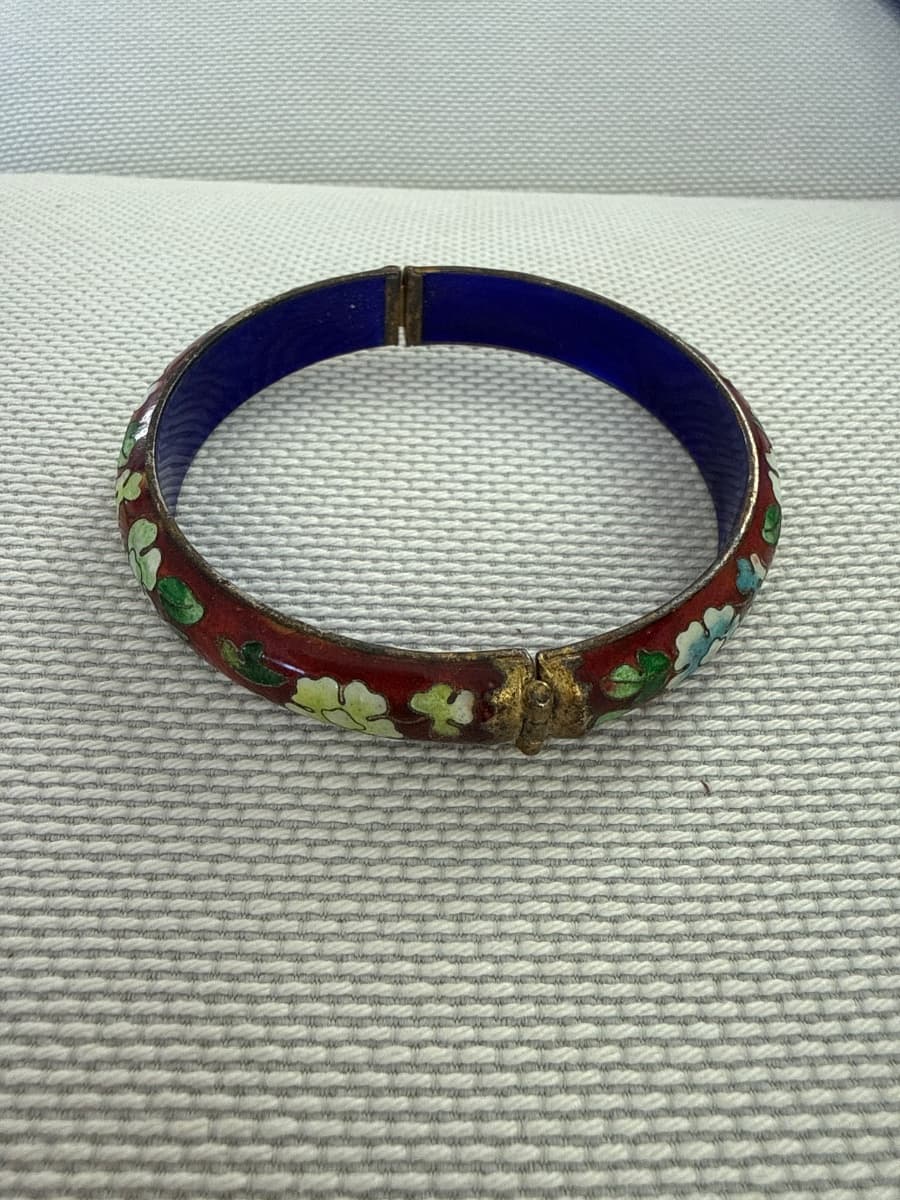
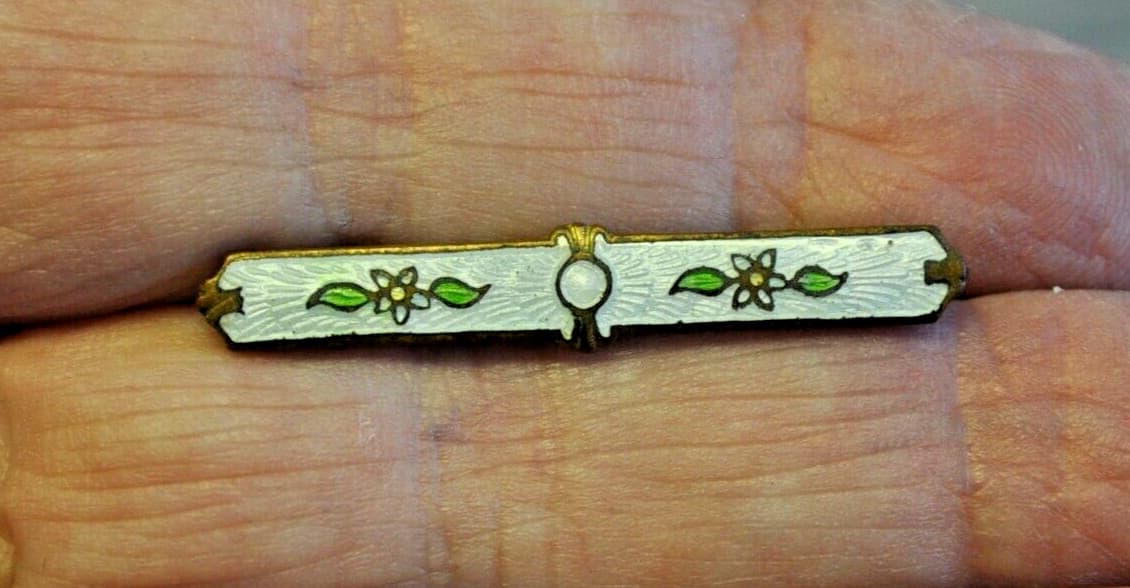
One look-alike to know: niello, the black inlay on silver, isn’t enamel at all. It’s a fused metal sulfide, and it’s what gives classic Siam sterling its black-and-silver look.
Makers collectors look for
Norwegian sterling: David-Andersen, Ivar T. Holth, Aksel Holmsen
Mid-century Norway produced some of the best-known vintage enamel: guilloché and plain enamel on sterling or gilded silver, in leaf, flower, butterfly, and abstract designs. Look for the maker’s mark plus Norway and a silver standard (Sterling, 925S, or 830S).
- David-Andersen, founded in Oslo in 1876. Marked D-A or David-Andersen, often with Norway and Sterling or 925S. Its enamel leaves and butterflies are among the most recognized.
- Ivar T. Holth, Oslo. Often marked with an H in a circle along with 830S or 925S.
- Aksel Holmsen, Sandvika, near Oslo. Known for enamel flower and leaf brooches and pendants.
Many Norwegian enamel pieces are gilded silver, and the enamel often has a slight translucence over a guilloché pattern. A Norwegian hallmark does a lot of the identification work for you; our hallmarks guide covers reading silver standards.
Matisse (Renoir of California)
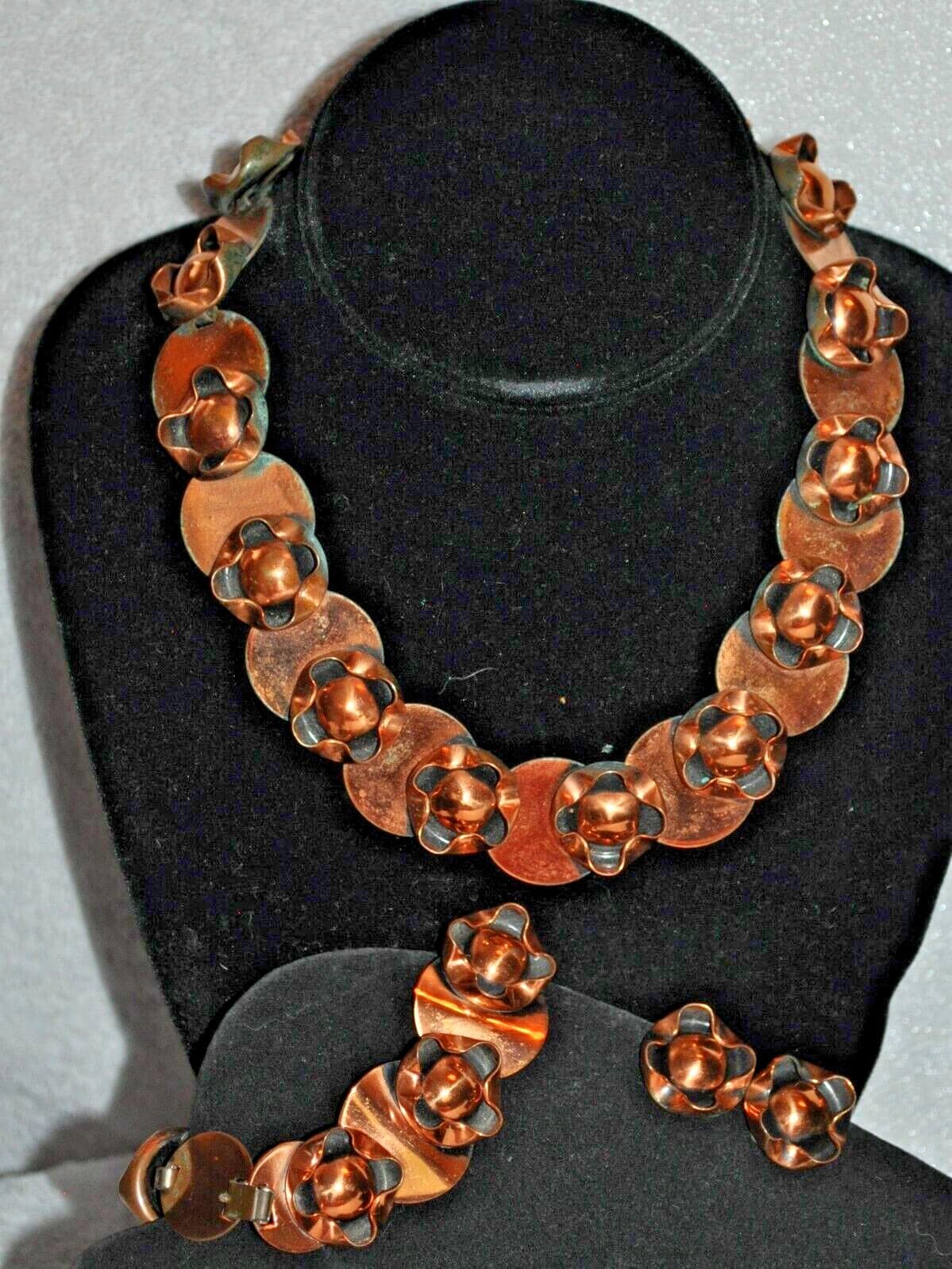
Jerry Fels’s Los Angeles company made modernist copper jewelry under the Renoir name, and from 1952 added the Matisse line of enamel on copper, made until the company closed in the mid-1960s. Early pieces may read “Hand Made Renoir of California”; later ones are marked “Matisse” or “Renoir” with ©. Bold, abstract shapes in bright enamel are typical. Browse Renoir and Matisse.
Siam sterling
Souvenir silver from Thailand, very often with the dancing figure of the goddess Mekkala. Most is niello rather than enamel, though some pieces use colored enamel. The country was renamed Thailand in 1939, but “Siam” marks kept appearing for decades afterward, so the word alone doesn’t date a piece.
Our vintage costume jewelry marks guide has more makers, and the vintage brooches guide covers dating a pin by its findings.
What affects value
- Condition of the enamel. Chips, cracks, and crazing (a network of fine lines) are hard to repair invisibly and cut value more than anything else. Check edges and raised points, where damage starts.
- Maker and metal. Signed Norwegian sterling and gold pieces sit above unsigned costume enamel, which sits above cold enamel.
- Technique and quality. Even color, crisp wires or cells, and clean guilloché under the enamel all show good work. Plique-à-jour in good condition is uncommon.
- Sets. Matching brooch and earrings, or a full bracelet and necklace, usually beat separate pieces.
We couldn’t find a reliable set of recent completed sales to quote, and prices vary hugely by maker and condition, so we won’t put a number on it. Look up completed sales of the same maker and design rather than asking prices; our guide to whether vintage costume jewelry is worth anything shows how, and What’s It Worth gives a free estimate from a photo.
Caring for enamel
- Wipe with a soft, slightly damp cloth and dry it straight away.
- Skip ultrasonic cleaners, steam, and harsh chemicals. Vibration and sudden temperature changes can crack enamel, and chemicals can dull it.
- Polish only the bare metal around the enamel, with a cloth, not a paste that could scratch.
- Store pieces separately so harder jewelry can’t knock or scratch them, and take enamel rings and bracelets off before anything that might bang them.
For everything else in the jewelry box, see how to clean jewelry at home.
Buying or selling enamel
If you’re selling, photograph the enamel in daylight, front and at an angle, so buyers can see the surface and any chips, and add a close-up of the mark. Say whether you believe it’s fired or cold enamel, and if you aren’t sure, say that. If you’re shopping, browse enamel jewelry on StillSparkly or the brooch collection, where a lot of it lives.
Related guides
Vintage Brooches: How to Identify, Date, and Value Them
Turn it over first. The back of a brooch tells you more about its age than the front, and the materials narrow it down from there.
Vintage Costume Jewelry Marks: A Guide to Designer Signatures
A name on the back of a brooch tells you who made it. How that name is written, and what’s stamped next to it, often tells you when.
How to Clean Jewelry at Home Without Ruining It
Most jewelry doesn’t need a fancy cleaner. It needs warm water, dish soap, and you not doing the one thing that ruins it.
Love a bit of color?
Browse enamel pieces from real sellers, or list your own with close-ups of the enamel and the mark.