Guide ·
How to Tell if Jade Is Real (and Which Tests to Ignore)
Short answer: real jade is one of two minerals, jadeite or nephrite, and you can’t fully confirm either at home. You can rule out a lot: a loupe shows dye collected in cracks, glitter in aventurine quartz, or bubbles in glass; real jade feels cold at first, unlike plastic; and loose jadeite (specific gravity about 3.34) and nephrite (about 2.95) are heavier for their size than quartz imitations (about 2.6). The scratch test is unreliable and damaging. Telling natural jade from bleached, resin-filled, or dyed jade takes a gem lab.
Jade might be the most imitated stone in the jewelry box. GIA once noted that it has more simulants than most other gems, and the word “jade” gets stuck on everything from dyed marble to green glass. So if you’ve inherited a jade bangle or found a carved pendant at an estate sale, “is it real?” is a fair question, and the answer usually comes in stages.
What is real jade?
Real jade is either jadeite or nephrite, two different minerals that share the name. Jadeite is a pyroxene, a little harder (6.5 to 7 on the Mohs scale) and denser, and it comes in the widest range of colors: greens, white, lavender, yellow, reddish orange, black, and more. Its best-known source is Myanmar, with others in Guatemala, Japan, and California. Nephrite is an amphibole, slightly softer (6 to 6.5) but made of tightly matted fibers that make it remarkably tough, and its colors are more muted: greens, creams, browns, grays, and black. It comes from China, Canada, New Zealand, Russia, the US, and elsewhere.
Both are real jade, and both can be valuable, but in today’s market fine jadeite (especially intense, translucent green) commands the highest prices. Most vintage and costume “jade” jewelry is neither, which brings us to the imitations.
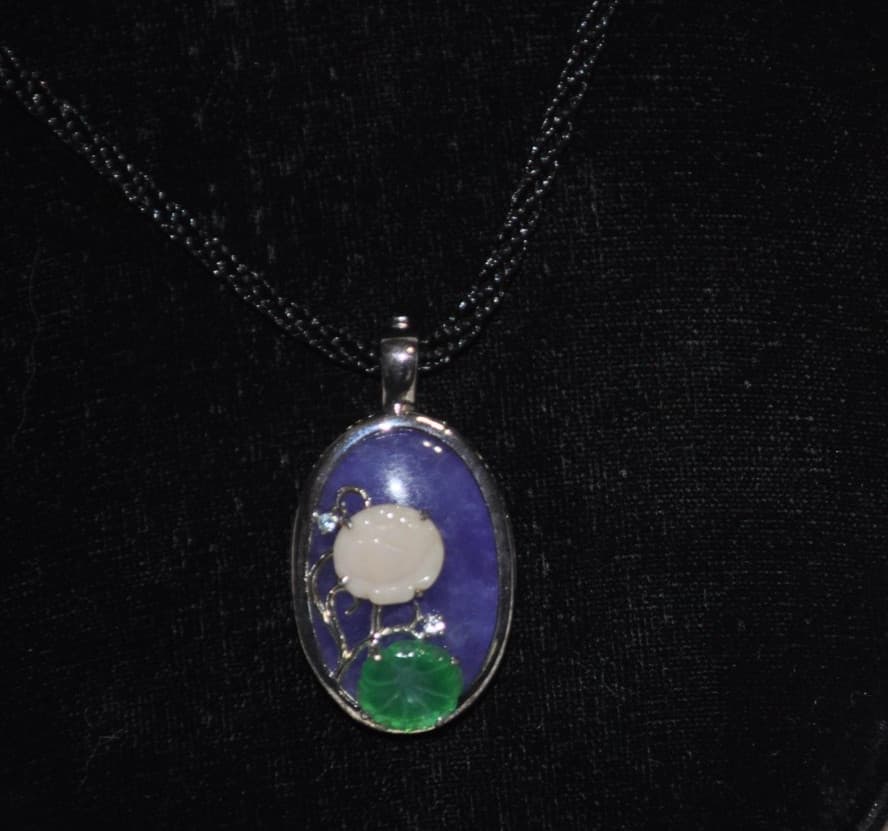
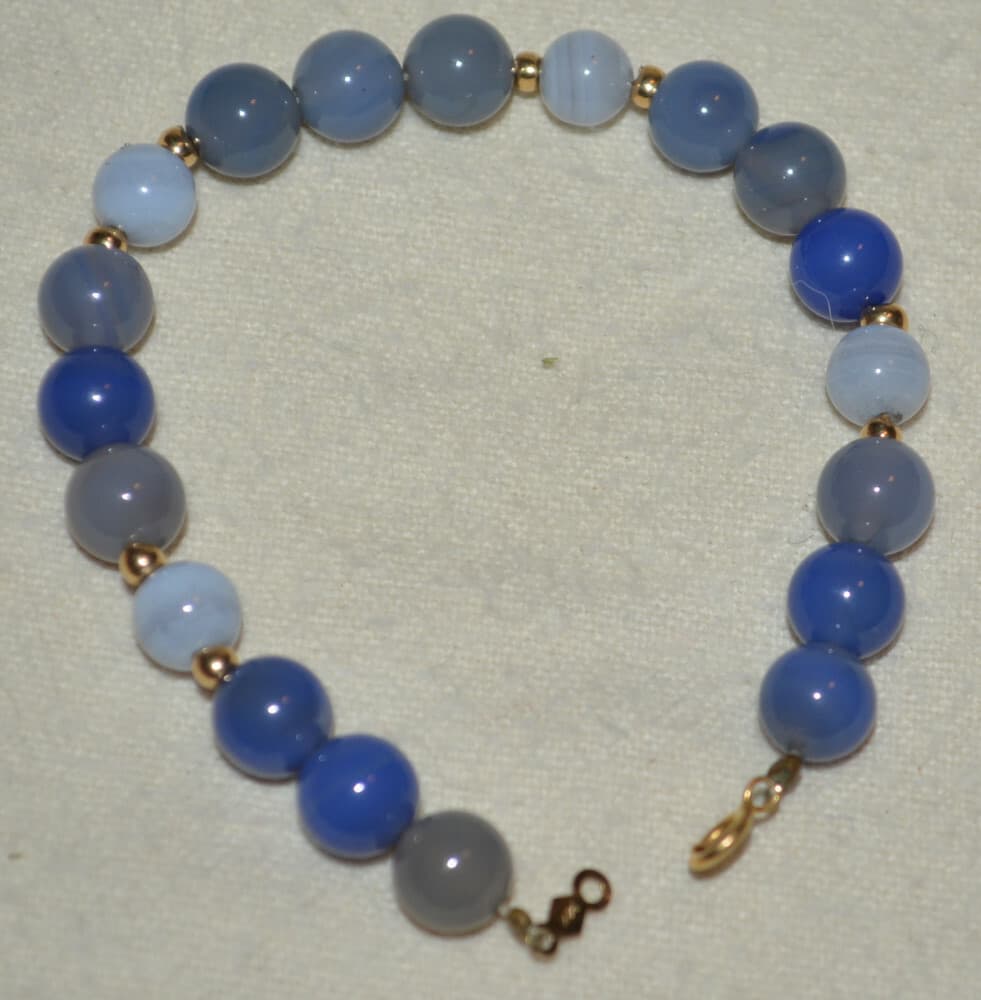
What is fake jade usually made of?
Mostly other green stones, glass, and plastic, and a lot of them are sold under names that include the word jade. Here are the common ones, with the trade names they go by:
| Sold as | What it actually is |
|---|---|
| “Mexican jade” | Usually green-dyed calcite or marble |
| “Korean jade,” “New jade” | Serpentine and its harder variety, bowenite |
| “Indian jade” | Aventurine quartz (look for glitter) |
| “Malaysia jade” | Dyed quartz |
| “Queensland jade” | Chrysoprase, a green chalcedony |
| “Transvaal jade” | Hydrogrossular garnet |
| “American” or “California jade” | Idocrase |
| “Amazon jade” | Amazonite |
Add glass (sometimes partly devitrified to look stony) and plastic, and you’ve covered most of what turns up in vintage boxes. Serpentine in particular is everywhere, and in parts of the Chinese market “jade” is still used loosely for several stones, so a piece can be honestly sold as jade where it was bought and still not be jadeite or nephrite.
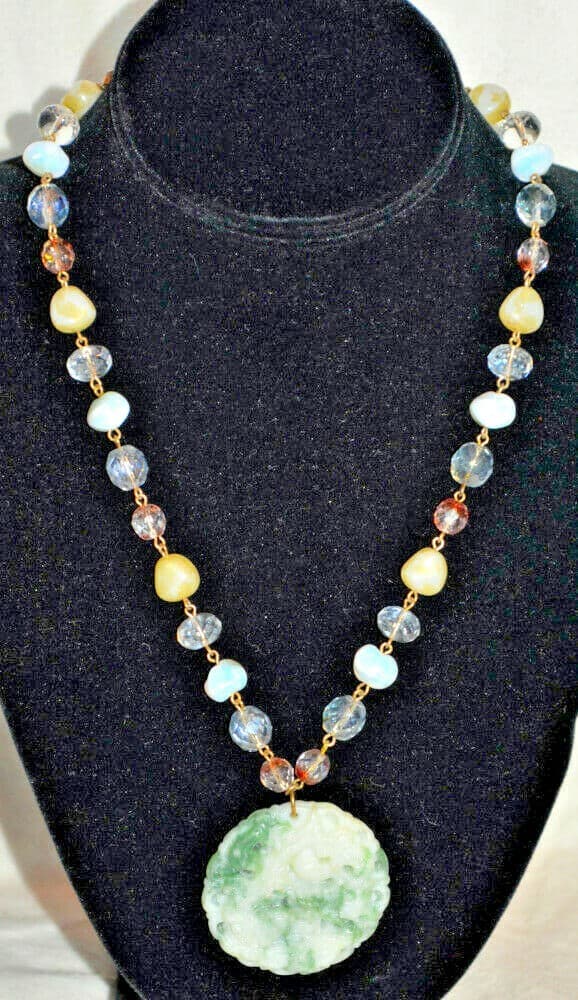
Which at-home jade tests actually work?
A few help you rule things out. None of them proves a piece is jade.
Look closely
A 10x loupe is the most useful tool you can own here. Dye tends to collect in cracks and in the tiny gaps between grains, so color that’s strongest along fractures is a red flag (don’t confuse it with natural mottling, which is patchy but not tied to cracks). Sparkly flecks suggest aventurine quartz, and round bubbles suggest glass. Modern dyes are subtler than older ones, though, so a clean look doesn’t clear a piece.
Feel the temperature
Jade and almost all of its stone imitations feel cold when you first touch them, and plastic doesn’t. So the touch test can rule out plastic, but GIA calls identifying jade by feel questionable at best, because the stone imitations feel cold too.
Check the specific gravity (loose pieces only)
If you have a kitchen scale that weighs to a hundredth of a gram, you can weigh a loose stone in air and then suspended in water to work out its specific gravity. Jadeite is around 3.34 and nephrite around 2.95, while serpentine (about 2.57), quartz imitations (about 2.6), and glass are lighter. It’s a useful clue but not proof: some imitations overlap, and treated jadeite can read lower than natural. It doesn’t work on anything set in metal or strung on a cord.
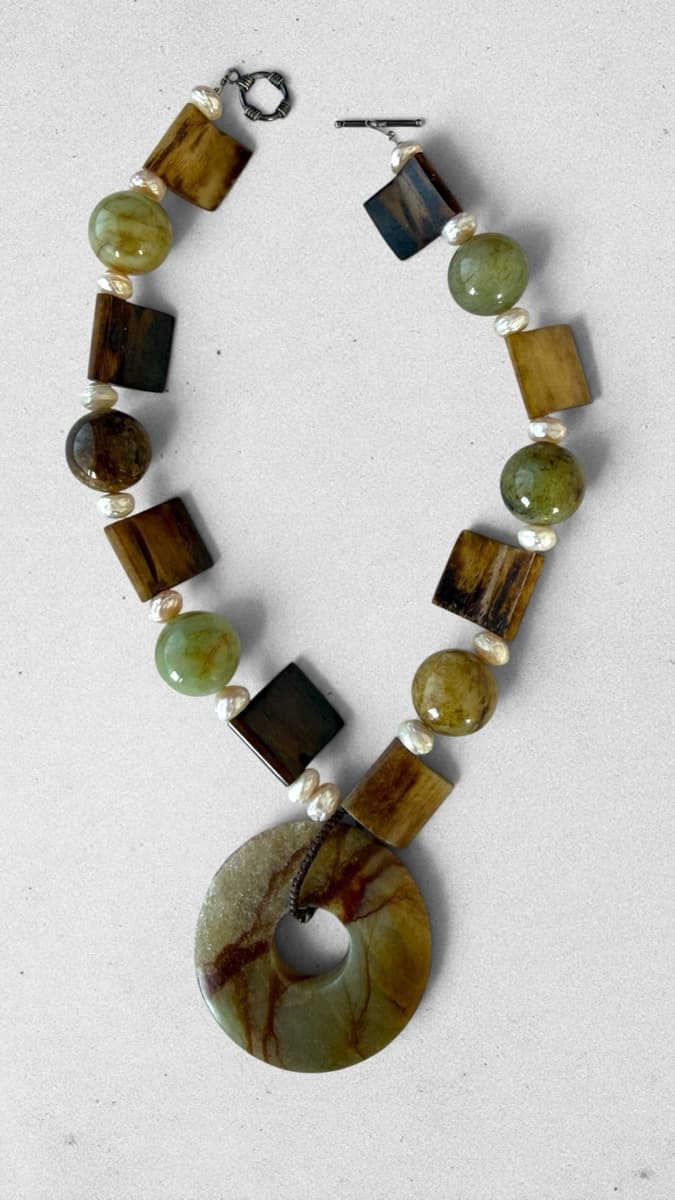
Which jade tests should you skip?
The scratch test is the one everyone mentions, and it’s the least useful. Aventurine quartz, chalcedony, and dyed quartzite are as hard as jade or harder, so they pass, and even bowenite can be hard enough to pass. The only fakes it catches are soft ones like calcite, talc, and some serpentine, and GIA warns that hardness testing can mar or even break a stone. The tap test (listening for a clear ring from a bangle) takes reference pieces and years of experience, and it’s useless on small pieces. Acid and hot-point tests damage the surface. And the Chelsea filter only works one way: some dyed green jade looks red through it, which is a warning sign, but plenty of dyed jade doesn’t react, so a “pass” tells you nothing.
What are A, B, and C jade?
These are trade terms for jadeite, and they describe treatment, not quality. A jade is natural, untreated jadeite (a surface wax is normal and still counts as A). B jade has been soaked in acid to bleach out brown staining and then filled with polymer resin to hold it together. C jade has been dyed, and B+C has had both treatments.
B jade can look beautiful, but bleaching weakens the stone, and GIA has reported treated pieces that yellowed or darkened over months to years. You can’t spot it reliably at home. GIA’s research found infrared spectroscopy was the only method that conclusively detects polymer impregnation every time, which is why a lab report matters for any piece being sold as fine jadeite. Lavender jadeite deserves a special mention: its natural color comes from manganese, and GIA notes that most intensely colored lavender has been treated to get that saturation.
When is it worth getting jade tested?
When the price depends on the answer. A strand of costume beads or a souvenir carving isn’t worth a lab fee. A translucent green bangle, a fine carving, or anything being sold as untreated jadeite for real money is, and a reputable seller of fine jade should already have a report from a gem lab that tests for treatment. Our guide to how much your jewelry is worth covers appraisals, and our vintage beaded necklaces guide helps with jade, glass, and plastic beads.
Selling? Describe jade the way you actually know it. “Jade, untested” or “sold as jade, not lab-tested” is perfectly fine, and it’s a lot better than a buyer finding out later that it’s serpentine.
Sources
- GIA Gem Encyclopedia: Jade (jadeite and nephrite properties)
- GIA, Gems & Gemology: The Jade Enigma (simulants, trade names, and home tests)
- GIA, Gems & Gemology: Identification of bleached and polymer-impregnated jadeite
- GIA lab note: dyed and natural green jadeite
- GIA, Gems & Gemology: Color origin of lavender jadeite
- Penn Museum, Expedition magazine: Jade
- Antique Jewelry University (Adin): Mexican jade
Related guides
Vintage Beaded Necklaces: How to Tell What the Beads Are Made Of
Most vintage beaded necklaces are glass, plastic, or stone, and you can usually tell which in a minute with your hands and a loupe. Here’s how.
How to Tell if Turquoise Is Real (and What “Stabilized” Means)
“Real or fake” is the wrong question for turquoise. Most of it is real and treated, some is pressed from powder, and some is a different stone dyed blue.
How Much Is My Jewelry Worth? Six Ways to Find Out
You google “how much is this worth” and get answers from $12 to $4,000, because each site is answering a different question. Once you know which value you’re after, the number gets much easier to find.
Shopping for jade?
Browse jade from real sellers and ask what they know about it. Selling? Say whether your piece has been tested.