Guide ·
How to Tell if Bakelite Is Real (Without Wrecking It)
Short answer: to tell if Bakelite is real, combine a few gentle tests. Real Bakelite gives off a sharp, chemical smell when warmed under hot water or rubbed, usually leaves a mustard yellow mark on a cotton swab with Simichrome polish, and clunks heavily when two pieces are tapped together. No single test is proof: black and coated Bakelite can fail the swab test, and some modern “Fakelite” passes it. Skip the hot pin test, which damages the piece.
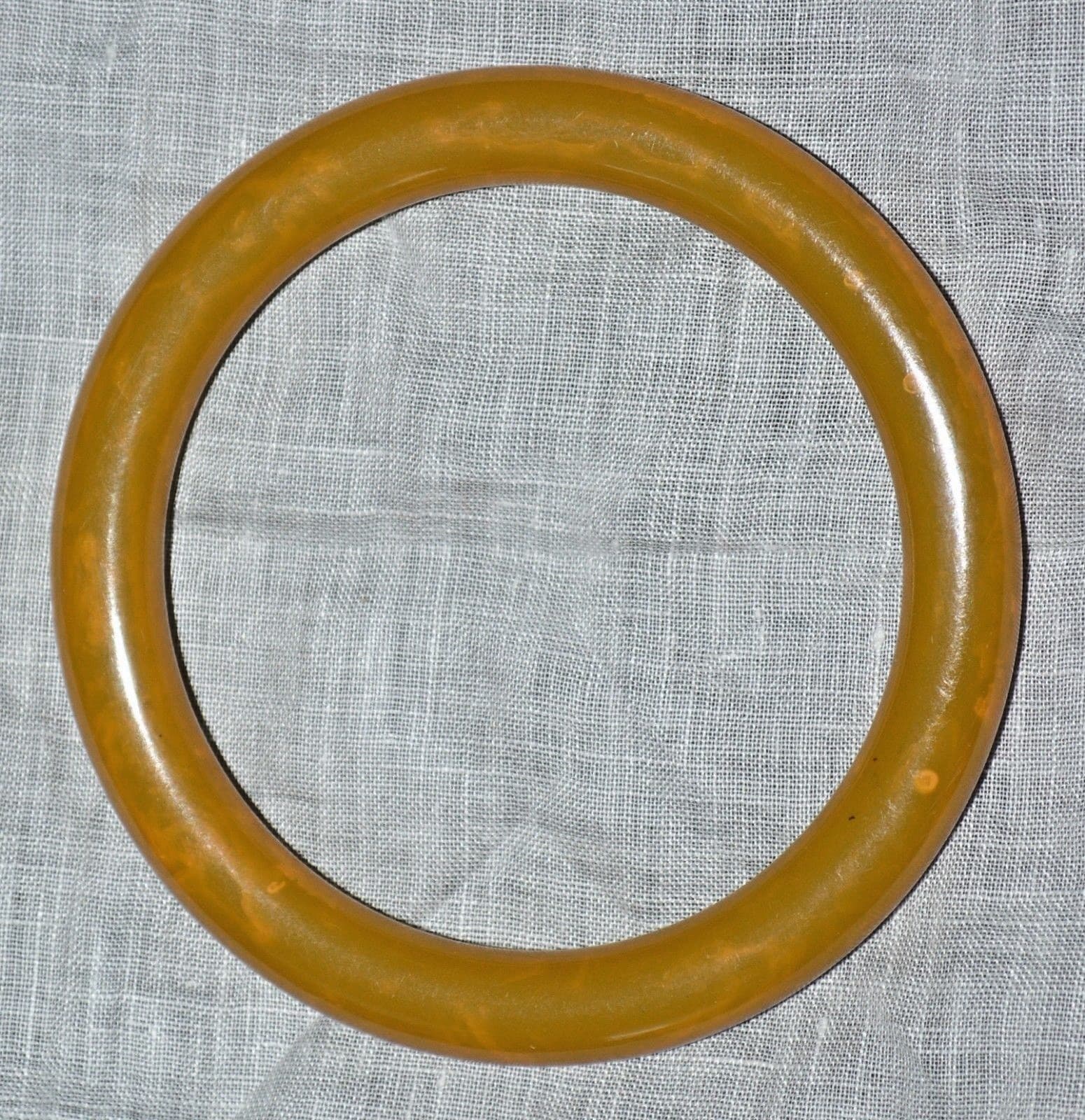
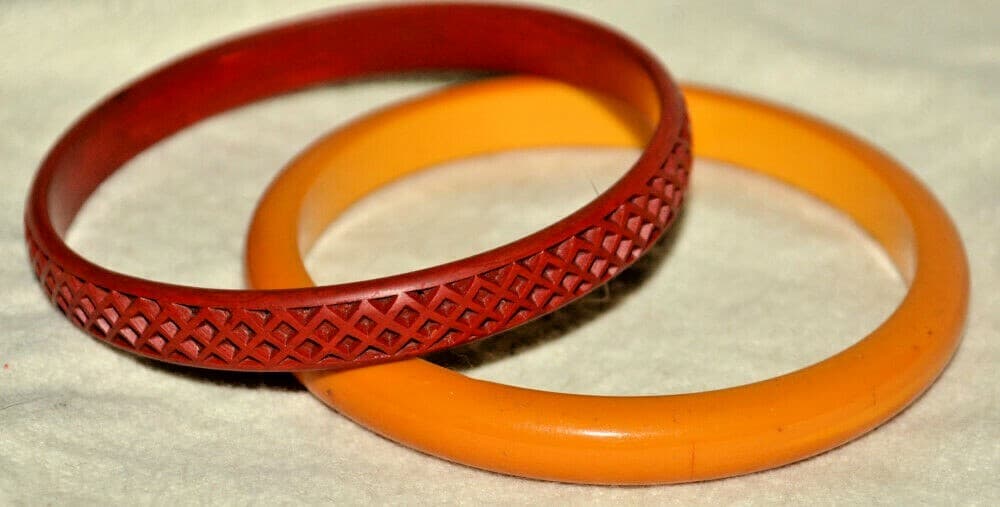
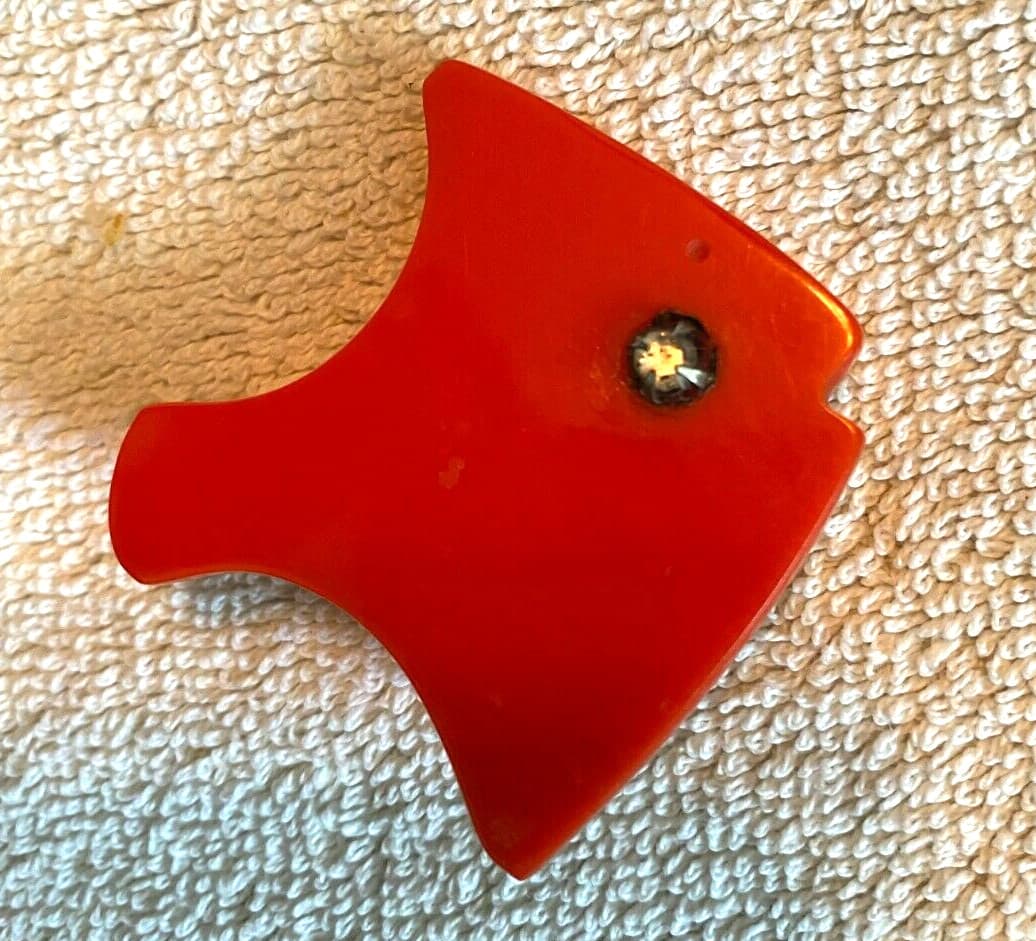
Bakelite jewelry is pure fun, from chunky carved bangles in butterscotch and cherry red to cartoonish fish brooches. It’s also been collectible (and copied) for long enough that “is this real?” is the first question everyone asks, and the best-known way to answer it leaves a burn mark.
What is Bakelite, exactly?
Bakelite is a phenol formaldehyde resin, developed between 1907 and 1909 by the Belgian-born chemist Leo Baekeland and called by the American Chemical Society the world’s first synthetic plastic. Once it sets, it doesn’t soften again with heat, which is part of what makes it testable. The original molded Bakelite was filled with sawdust and came out dark and opaque, which is great for telephones and terrible for jewelry.
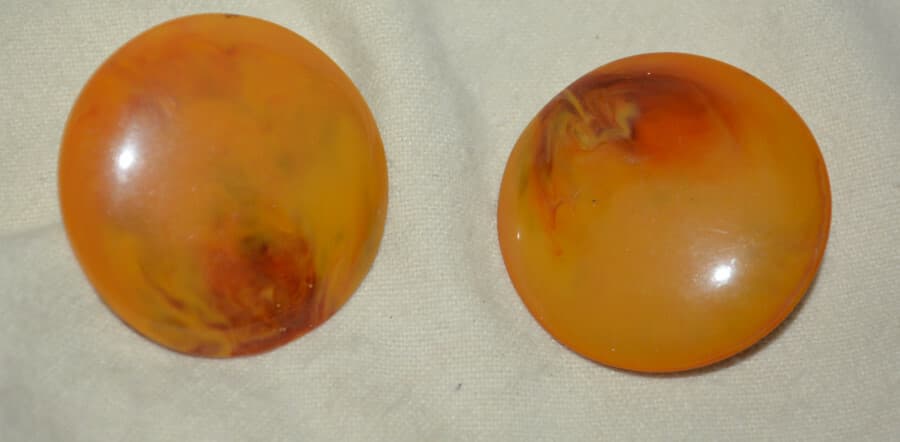
The bright, translucent, marbled “Bakelite” in jewelry is really cast phenolic resin, introduced in 1927 and sold under names like Catalin (Fortune magazine called it “the gaudy brother of somber Bakelite”). Collectors and sellers call all of it Bakelite, and that’s fine, since it’s the same family of plastic and tests the same way. Most of this jewelry was carved from cast stock and was popular in the 1930s and ’40s.
Which Bakelite tests actually work?
Conservators are pretty blunt about sensory tests. When the V&A checked over 200 plastic objects that had been identified by looking, touching, and smelling against lab analysis, more than half had been identified wrong. So use two or three of the tests below and see if they agree, and treat the result as a strong guess.
The hot water sniff
Run the piece under hot tap water for a bit (not boiling, and keep any rhinestones or glued parts dry), then smell it. Bakelite gives off a sharp, acrid, chemical smell that people often call formaldehyde. Conservators say the smell is actually phenol, or carbolic acid, which is released more readily than formaldehyde. You can get the same result by rubbing the piece hard with your thumb until it’s warm. Not everyone can pick up the smell, and black or very old pieces may need more rubbing.
The swab test
Put a little Simichrome metal polish on a cotton swab and rub a hidden spot, like the inside of a bangle or the back of a brooch. A mustard yellow mark on the swab suggests Bakelite. (Brownish yellow might just be dirt.) Some collectors use 409 cleaner instead. Rinse the spot right away, and ask a seller before you test their piece. The catch is that black Bakelite and heavily lacquered pieces can come up clean, which is a false negative, and some modern fakes turn the swab yellow too. Skip Scrubbing Bubbles, which some sellers swear by but which can strip the surface.
The clunk
Tap two bangles together gently. Bakelite makes a low, heavy “clunk,” while lighter plastics clack or click. It’s a decent hint once your ear knows the sound, but size and thickness change it, so it’s weak on its own.
Which Bakelite tests should you skip?
Skip the hot pin. Pushing a heated needle into a piece is the classic test you’ll see online, and it always leaves a mark: Bakelite doesn’t melt but can sizzle, smoke, or dent, while celluloid melts around the needle (and celluloid is flammable, so this is a genuinely bad idea). Conservators and collectors both advise against it. Also skip acetone and nail polish remover, harsh scrubbing, and anything that involves an open flame.
How do you spot Fakelite?
“Fakelite” is the collectors’ name for modern plastic made to look like Bakelite, and it’s been around long enough to fool a lot of people. Since the late 1990s, carved bangles and brooches have been made in Asia from a formula similar to Bakelite, and according to Morning Glory Antiques some of them even pass the swab test. Things to look for:
Fakelite bangles often run larger than vintage ones (about 2-5/8 inches across the inside, compared with the usual 2-1/2). The surface may have a chalky coat, and a chip can reveal a different color underneath. Real carving shows tool marks and fine scratch lines, while molded fakes look soft. And a whole tray of identical “Bakelite” bangles in perfect condition at low prices is almost certainly new. Some contemporary artists make new pieces from vintage Bakelite stock and sign them, which is fine as long as they’re sold as new.
Is it Bakelite, celluloid, or Lucite?
These three get mixed up constantly. Celluloid (cellulose nitrate) dates back to 1870, and it smells like camphor, or mothballs, when warmed, instead of Bakelite’s sharp chemical smell. It softens with heat and is flammable. Lucite is an acrylic introduced in the 1930s, prized for its glassy clarity, so a crystal-clear or water-clear piece is much more likely Lucite than Bakelite. It has no real smell under hot water. Bakelite itself is usually opaque or only translucent, often marbled, and many light-colored pieces have mellowed toward yellow over the decades. Our vintage beaded necklaces guide has more on telling plastic beads apart.
What makes Bakelite valuable?
Carving, color, and thickness. Antiques Roadshow appraisers point to how many colors a piece has, whether it’s carved, and whether it’s laminated, and deeper, more elaborate carving is more desirable. Uncommon colors are always in demand, and green and red generally sell for more than butterscotch. Thick, chunky bangles beat thin ones. A single-color butterscotch “Philadelphia” bracelet (a design named after an early-1980s auction in Philadelphia) was appraised on Antiques Roadshow in 2015 at $2,000 to $3,000 for auction, which tells you how far the top end can go. Plain, thin, uncarved pieces sell for far less. Our guide to vintage brooches covers Bakelite figural pins alongside other brooch types.
Selling? Say which tests you did and what happened (“tested positive with Simichrome” is exactly what buyers want to read), photograph any carving up close, and give the inside diameter for bangles.
Sources
- American Chemical Society: Bakelite, the first synthetic plastic (National Historic Chemical Landmark)
- Museum of Design in Plastics: phenol formaldehyde, molded and cast
- V&A: identifying plastics by looking, touching, and smelling
- PBS Antiques Roadshow: Bakelite or Fakelite? Learn the difference
- PBS Antiques Roadshow: Philadelphia Bakelite bracelet appraisal
- Conservation DistList: Julia Fenn (Royal Ontario Museum) on identifying phenolic plastics by smell
- Morning Glory Antiques: new Bakelite and Fakelite
Related guides
Vintage Brooches: How to Identify, Date, and Value Them
Turn it over first. The back of a brooch tells you more about its age than the front, and the materials narrow it down from there.
Vintage Beaded Necklaces: How to Tell What the Beads Are Made Of
Most vintage beaded necklaces are glass, plastic, or stone, and you can usually tell which in a minute with your hands and a loupe. Here’s how.
How to Tell if Amber Is Real (and Where Copal Fits In)
Amber is fossilized tree resin, and its best-known imitations are younger resin, plastic, and glass. The salt water test helps, but it can only take you so far.
Love Bakelite?
Browse Bakelite from real sellers and ask how it was tested. Selling? Say which tests you tried in your listing.