Guide ·
Earrings for Sensitive Ears: Which Metals to Wear and What to Ask
Short answer: the best earrings for sensitive ears are ones where the post or hook is made of a metal that doesn’t release nickel, such as implant-grade titanium, niobium, platinum, or 18-karat or higher yellow gold. Sterling silver is usually fine too, though alloys vary. Nickel allergy is the most common reason earrings make ears itch, and white gold, plated base metal, and a lot of costume jewelry can contain nickel.
You put on a gorgeous pair of earrings in the morning, and by lunch your lobes are hot, itchy, and pink. If that sounds familiar, you’re in good company. The good news is that the cause is usually one specific metal, which means you can shop around it instead of giving up on earrings. (We’re a jewelry marketplace, not a doctor’s office, so everything here is general information. A dermatologist can tell you what’s going on with your ears.)
Why do some earrings make your ears itch?
Most of the time, it’s nickel. Nickel is the most common cause of allergic contact dermatitis, and the American Academy of Dermatology and Mayo Clinic both point to earrings and other piercing jewelry as one of the main ways people meet it. Mayo notes that women have higher rates of nickel allergy, probably because they’re more likely to have piercings. A post sitting in a pierced lobe all day is about as much skin contact as jewelry gets.
Once you’re sensitized, it tends to stick. Mayo Clinic says avoiding nickel is what prevents repeat reactions, and DermNet notes that you can’t be desensitized to it. So the practical fix is finding earrings that keep nickel away from your skin.
The EU limits how much nickel jewelry can release: 0.2 micrograms per square centimeter per week for posts that go through a piercing, and 0.5 for items in long contact with skin. A Danish study cited in a dermatology review found that nickel sensitization among girls with pierced ears fell from 17.1% to 3.9% after regulation came in. The US has no equivalent federal limit (our costume vs. fine jewelry guide covers the safety rules that do exist, for lead and cadmium). When researchers bought 277 pairs of earrings in San Francisco, about 30% released nickel, from chain stores and independent makers alike.
Which earring metals are safest for sensitive ears?
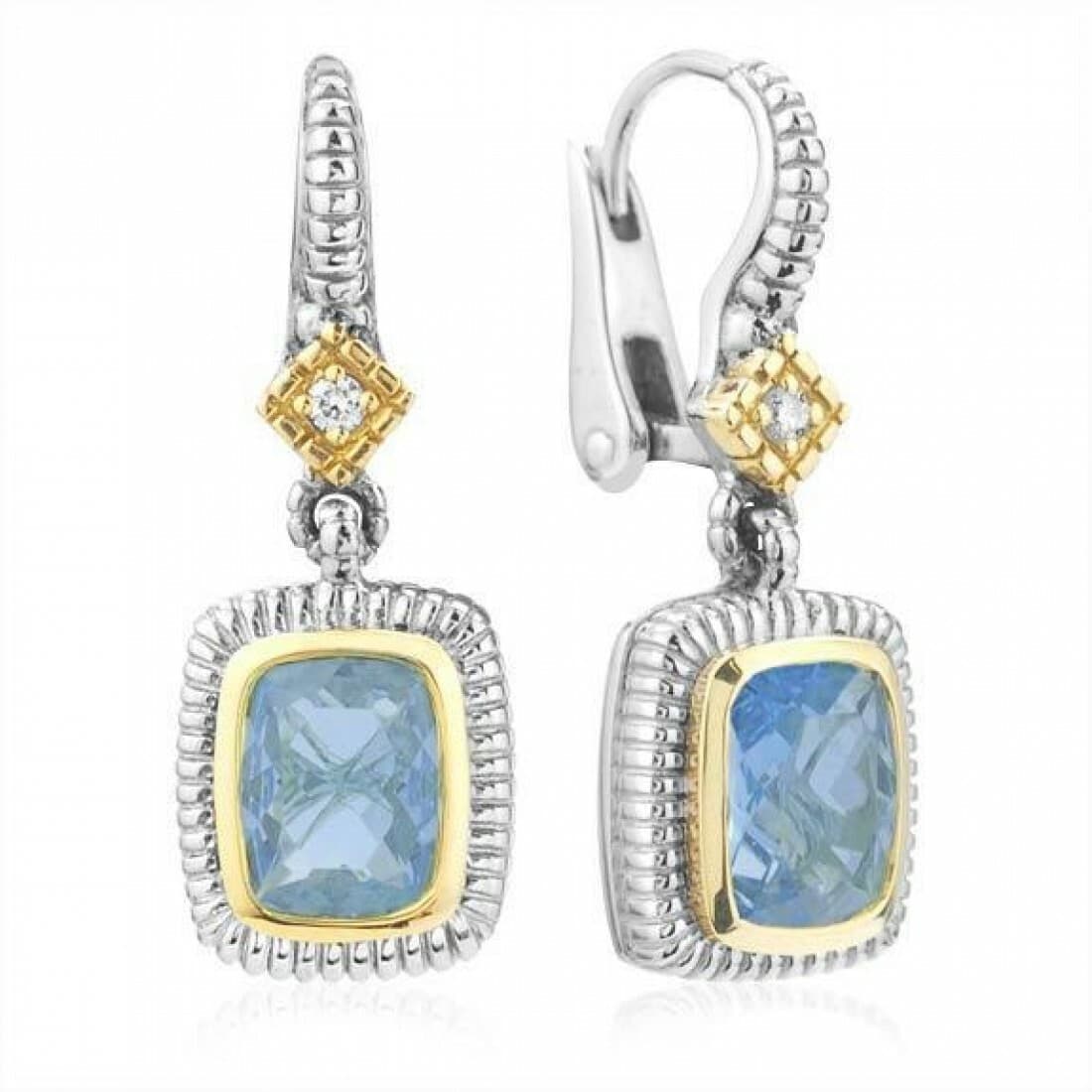
Implant-grade titanium, niobium, platinum, and high-karat yellow gold are the metals most often recommended for sensitive ears, and each one (along with the metals people often ask about) has a catch or two.
| Metal | For sensitive ears |
|---|---|
| Implant-grade titanium | Widely recommended. Professional piercers favor titanium made to the ASTM F136 standard for fresh piercings. Plain “titanium” on a cheap pair doesn’t tell you the grade. |
| Niobium | Nickel-free and often sold for sensitive ears, sometimes in bright anodized colors. Less common on vintage pieces. |
| Platinum | On the AAD and DermNet lists of safer metals. Pricey, and rarely seen on earring hooks. |
| Yellow gold, 18k and up | The AAD lists 18, 22, and 24 karat yellow gold. Lower karats (14k, 10k) have more alloy metal in the mix, and many sensitive ears still do fine with them, but it depends on the alloy. |
| Sterling silver (925) | Usually silver and copper, so usually nickel-free, and it shows up on the AAD, Mayo, and DermNet lists. Alloys vary, though, and trace nickel or a plated finish can cause trouble for very sensitive people. |
| White gold | Often alloyed with nickel. DermNet notes the rhodium plating that protects you wears off over months or years. Palladium white gold is the nickel-free version. |
| Surgical stainless steel | On the AAD and Mayo lists, but most stainless steel contains some nickel bound into the alloy, and “surgical steel” isn’t one standard. Some very sensitive people react anyway. |
One more wrinkle: a smaller number of people react to gold itself, or to other metals entirely. If you’ve switched to the “safe” metals and still itch, that’s a sign to get tested rather than keep guessing.
What does “hypoallergenic” mean on earrings?
Not much, legally. As far as we can find, no US federal standard defines “hypoallergenic” for jewelry, and the FDA says plainly that the word has no federal definition on cosmetics either, so it means whatever the company using it wants it to mean. A pair labeled hypoallergenic might be solid titanium, or it might be surgical steel or plated brass that the seller believes is gentle. “Nickel-free” is a more specific claim, and the most useful thing of all is the name of the metal in the post or hook.
Are vintage and costume earrings safe for sensitive ears?
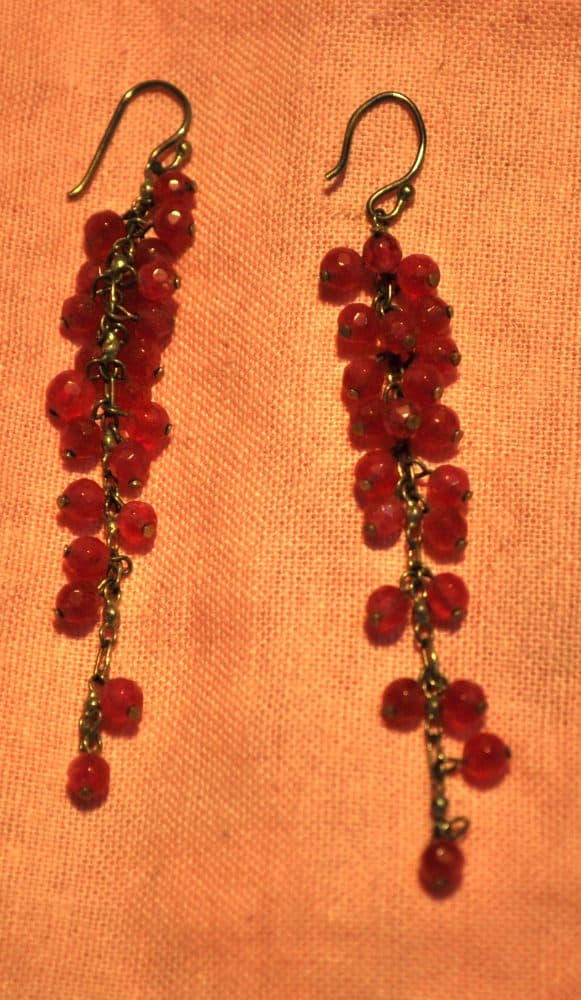
Some are, but plenty aren’t. Most vintage costume earrings are plated base metal, and nickel has long been used in base alloys and as the layer under gold plating. The plating itself can protect you for a while, but it wears thin with age and handling, and a fifty-year-old pair has had a lot of both. That’s why the same earrings can feel fine for an hour and itchy by evening, or fine on one person and miserable on another.
Plenty of vintage earrings were made in sterling or solid gold, though, and those are a different story. Check for a 925, sterling, or karat mark (our sterling silver guide and gold guide walk through the marks), and pay attention to what the post is made of, since posts were sometimes replaced over the years.
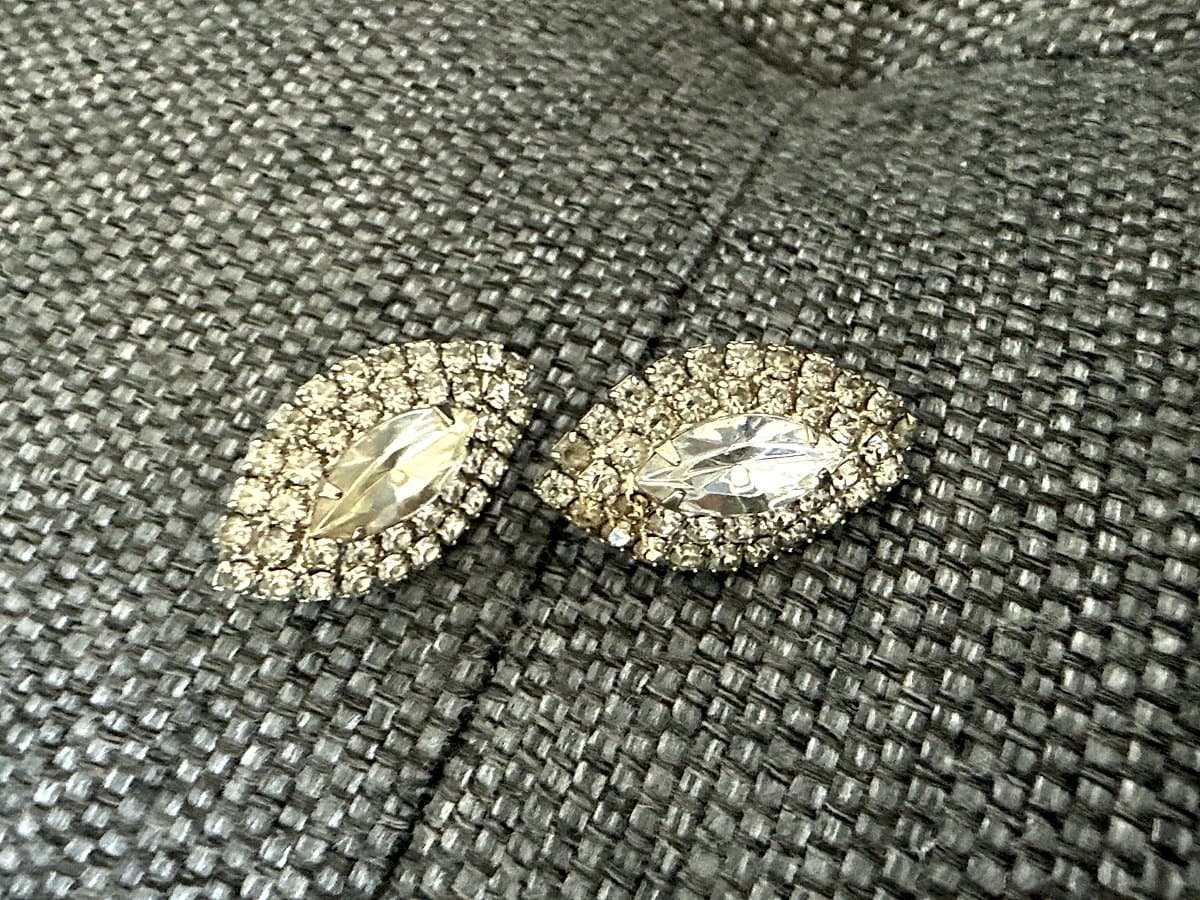
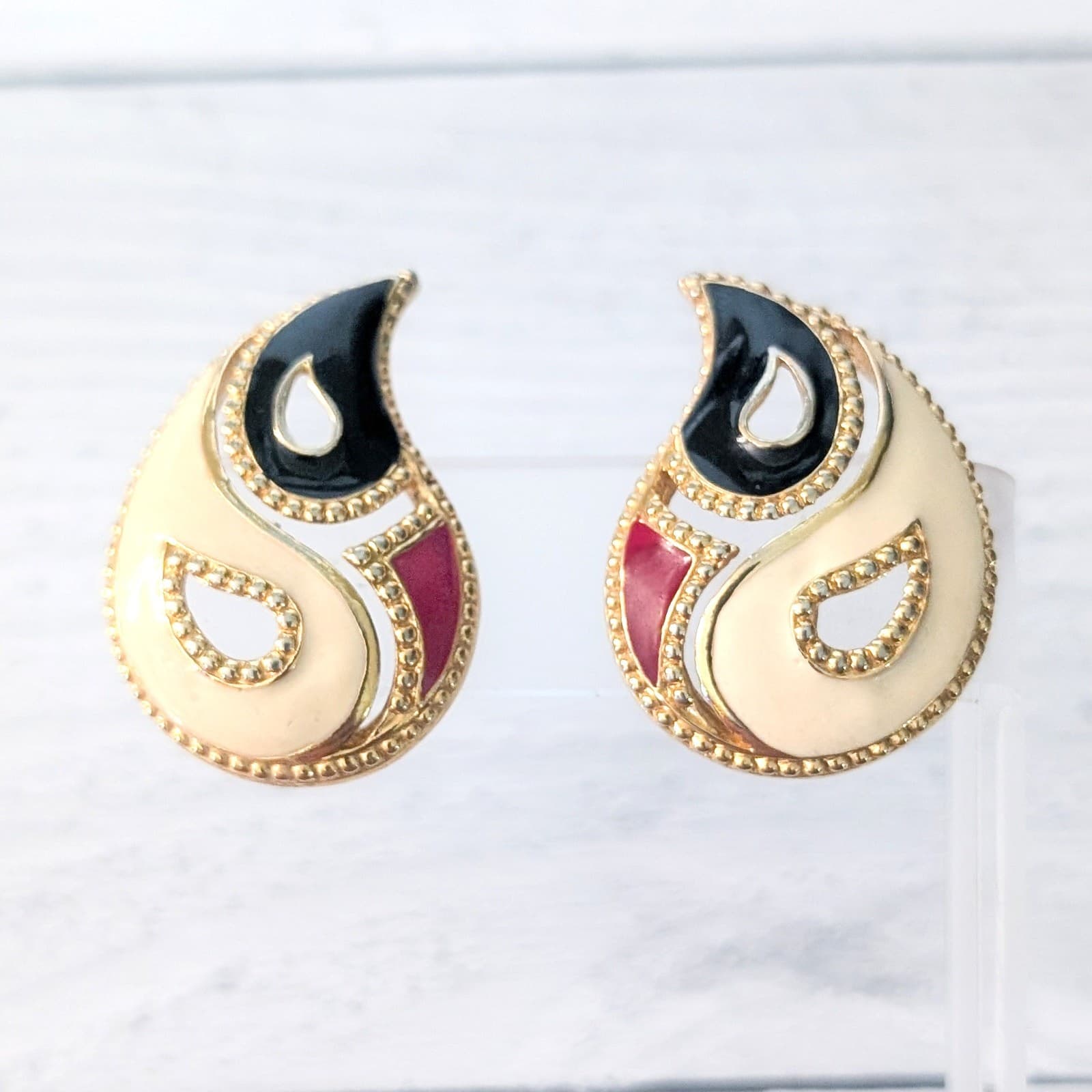
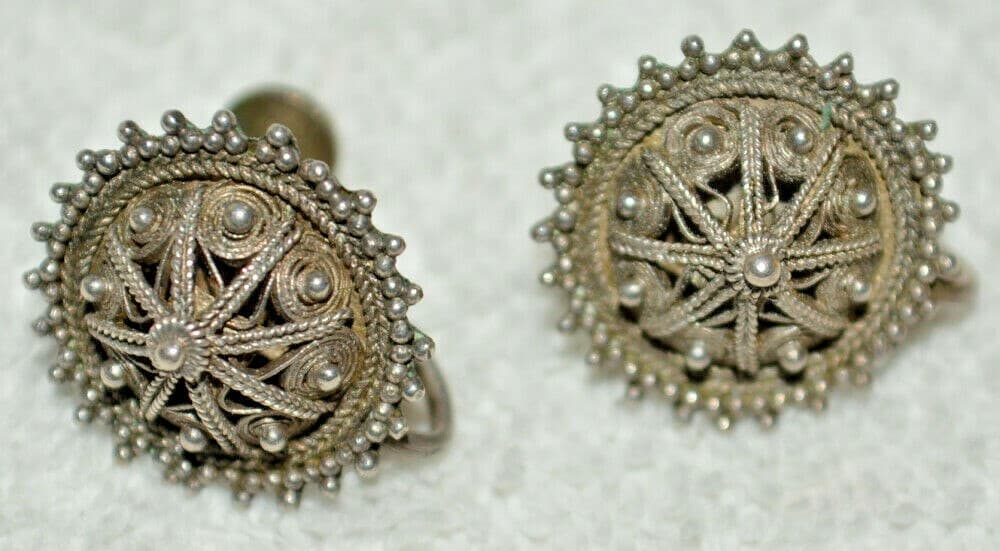
“Silver-tone” and “gold-tone” describe the color, not the metal, so treat them as plated until a seller tells you otherwise.
Can you wear clip-on earrings if you have sensitive ears?
Often, yes, and it’s one of the nicest ways to wear vintage pieces when your piercings complain. Clip-ons and screw-backs skip the post that sits inside your lobe, which is where reactions tend to start. Your skin still touches the clip and the back of the earring, though, so a nickel-heavy clip can still cause a rash on the outside of your ear. Our vintage clip-on earrings guide covers how to find a pair that fits and how to keep them from pinching.
How can you make earrings you already own easier to wear?
Start with the part that touches your ear. Mayo Clinic says earring backs should be made of hypoallergenic materials too, and plastic or titanium backs are cheap to swap in. A jeweler can often replace a post or hook with titanium, niobium, or gold, which is a good fix for a pair you love (though collectors may care about original findings on valuable vintage pieces, so keep the old parts).
A coat of clear nail polish on the post or the back of the earring is the classic stopgap. Both the AAD and Mayo Clinic mention it, with the same catch: it wears off and needs to be reapplied often. Nobody has a reliable number for how long a coat lasts on an earring post, and it can rub off on the inside of a piercing faster than you’d expect. Think of it as a fix for a special occasion. If you want to check a piece before you wear it, nickel spot test kits use a chemical called dimethylglyoxime that turns pink when it finds nickel released at the surface you swab (a plated piece can test clean until the plating wears).
What should you ask a seller before buying earrings?
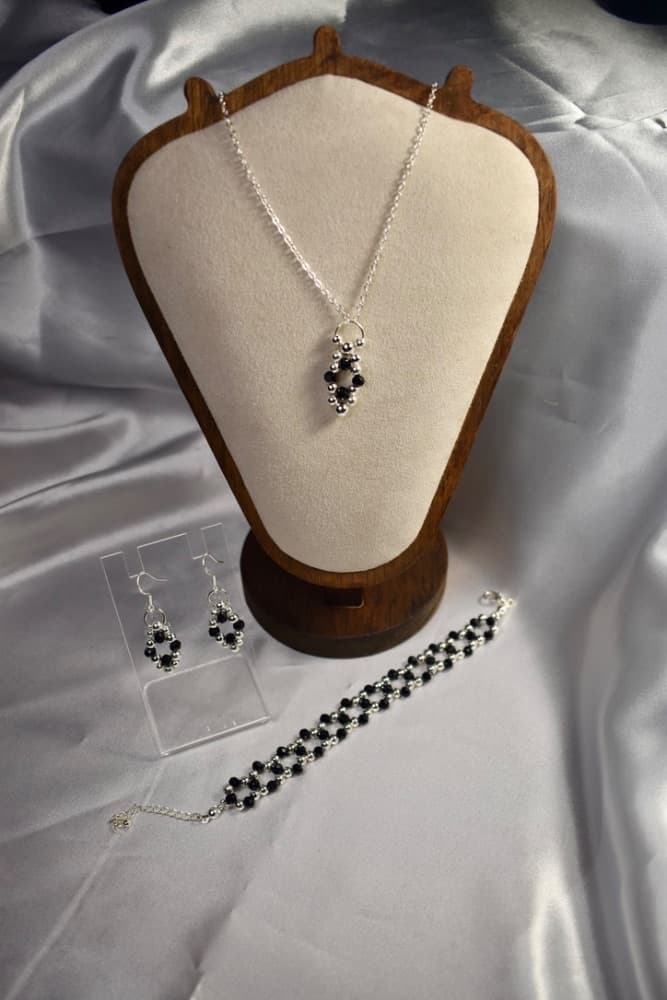
Ask what the post, hook, or clip is made of. That one question matters more than anything about the front of the earring, and it works whether you’re buying a vintage pair or a new handmade one. Handmade sellers choose their own findings, so many can tell you exactly what wire they used (and some will swap in titanium or gold hooks if you ask). Vintage sellers may only know what’s stamped on the piece, which is still useful.
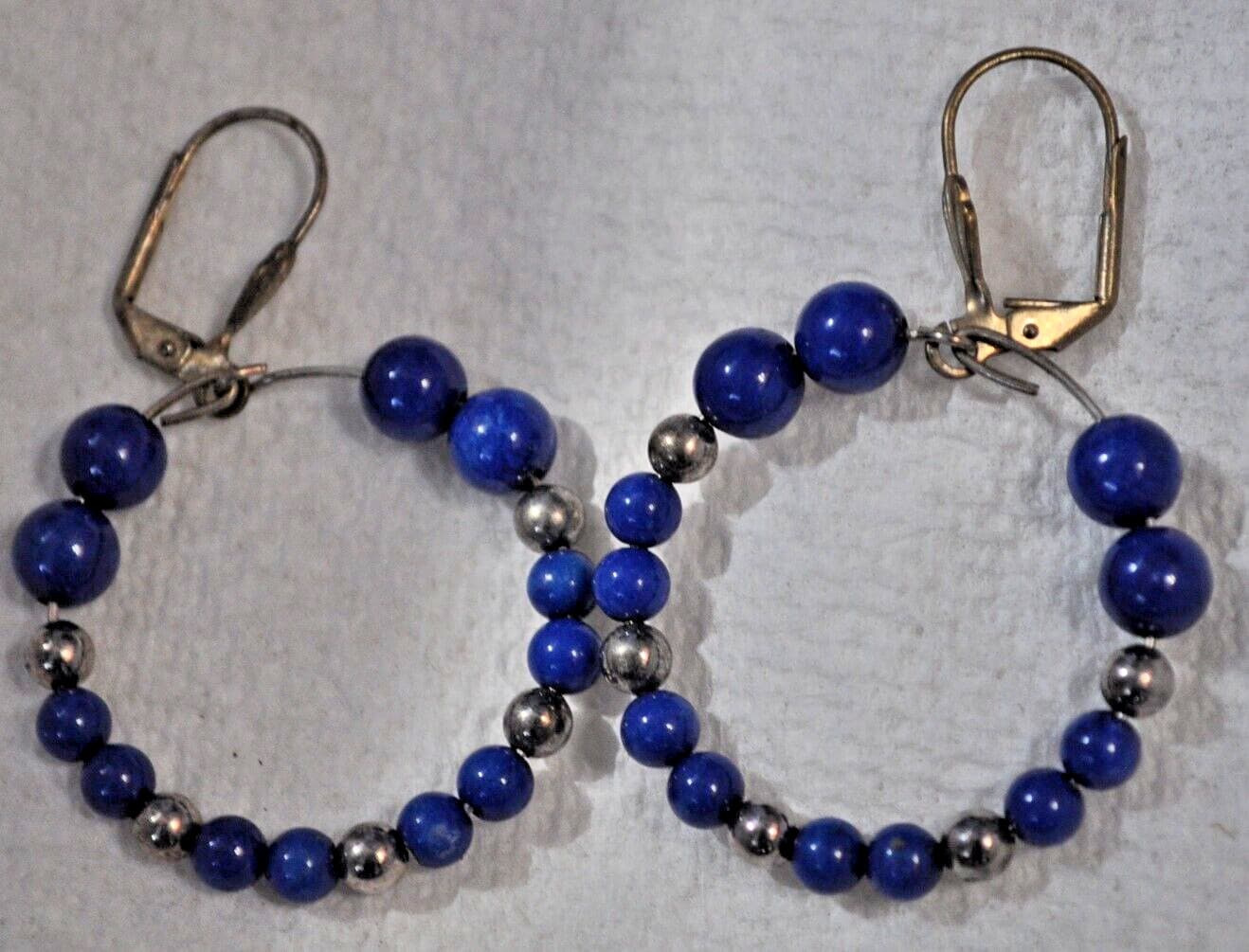
When you read a listing, a specific metal (“sterling ear wires,” “14k gold posts,” “niobium hooks”) tells you far more than a general word like “hypoallergenic.” Mixed descriptions like “sterling silver and gold-tone” are worth a follow-up, since the sterling part might be the hook or might be the charm. And if a listing says “silver-tone” or doesn’t mention metal at all, ask. A good seller will be glad you did. Ready to look? Browse sterling earrings on StillSparkly.
When should you see a dermatologist about earring reactions?
See a dermatologist when a reaction keeps coming back, spreads, or doesn’t settle after you stop wearing the earrings, or if a piercing looks infected. A dermatologist or allergist can confirm a nickel allergy with a patch test, where small amounts of common allergens are taped to your skin and checked over the next few days. It’s worth doing even if you’re fairly sure it’s nickel, because knowing for certain (or finding out it’s something else) makes every future earring purchase a lot easier.
Sources
- American Academy of Dermatology: nickel allergy
- Mayo Clinic: nickel allergy
- DermNet: jewellery allergy
- EU REACH Regulation (EC) No 1907/2006, Annex XVII, entry 27 (nickel)
- FDA: hypoallergenic cosmetics
- Cutis: contact allergy to nickel, still #1 after all these years
- Nickel release from earrings purchased in the United States: the San Francisco earring study (2008)
Related guides
What Is Costume Jewelry vs Fine Jewelry (And Why It Matters When You Buy or Sell)
The line between costume and fine jewelry sounds obvious until you try to draw it, and sterling silver and signed vintage make it blurrier than most people expect.
Vintage Clip-On Earrings: How to Buy, Wear, and Convert Them
Vintage clip-ons are everywhere, often cheap, and frequently gorgeous. Here’s how to pick a good pair and wear them for more than an hour.
How to Tell if Your Jewelry Is Actually Sterling Silver
A lot of 'silver' jewelry on resale sites isn't sterling. Six checks to figure out what you have, from the stamp to the ice cube test.
Shopping with sensitive ears?
Browse sterling earrings from real sellers, and ask what the posts and hooks are made of. Selling? Say what metal touches the ear in your listing.