Guide ·
Sarah Coventry Jewelry: Marks, History, and What It’s Worth
Short answer: Sarah Coventry is an American costume jewelry brand that the Stuart family of Newark, New York, sold through home jewelry parties from about 1949 until the original company went bankrupt in 1984. Its jewelry is usually marked SARAH COV., ©SARAH COV., or SARAH COVENTRY. Most Sarah Coventry is worth a modest amount because so much was sold, and complete named sets in excellent condition bring more.
Tip out an inherited jewelry box and flip a few brooches over, and there’s a good chance one of them says SARAH COV. Sarah Coventry sold costume jewelry at home parties across America for decades (your grandmother may well have hosted one). Most of it is worth a modest amount, though complete sets and pieces in great condition bring more.
Who made Sarah Coventry jewelry?
Sarah Coventry jewelry was designed and sold by a company the Stuart family of Newark, New York, founded around 1949, a year or so after their sister company, Emmons. (Sources disagree on exactly which Stuart founded it, and on whether the company was formally incorporated later.) The name came from a Stuart family granddaughter.
Instead of selling in stores, Sarah Coventry went through home “fashion shows” run by local fashion directors (think of it as the jewelry version of a Tupperware party), with TV and magazine ads behind them. The company designed its collections and then had them made by contract manufacturers, mostly in Rhode Island, which was the center of American costume jewelry production.
The original company went bankrupt in 1984. The name has come back several times since, including a stretch on TV shopping and a short-lived return to home parties in the 2000s, so don’t assume everything marked Sarah Coventry is mid-century.
How do you identify and date Sarah Coventry by its mark?
You identify Sarah Coventry by a stamped SARAH COV. or SARAH COVENTRY mark (or an original hang tag), but the mark only roughly dates it.
| What you see | What it suggests |
|---|---|
| SARAH COV. stamped, no © | Classic-era Sarah Coventry, 1950s onward |
| ©SARAH COV. | Common on 1960s and 1970s pieces. Costume makers generally added © from the mid-1950s on. |
| SARAH COVENTRY spelled out | Also used; dates overlap with the shorter mark |
| SC or a hang tag only | Hang tags were used through much of the company’s life; an SC mark was also reported on some later, revived-brand pieces |
| Emmons or EmJ | The sister company, same family, similar home-party model |
Collectors who’ve tried to date Sarah Coventry by mark alone report that the variations overlap too much to be precise. So let the mark tell you who made it, and let the style and materials tell you roughly when. Our vintage costume jewelry marks guide covers the general dating clues (©, “Sterling,” country names), and dating by clasps and findings helps with earring backs and brooch catches.
What are Sarah Coventry’s named collections?
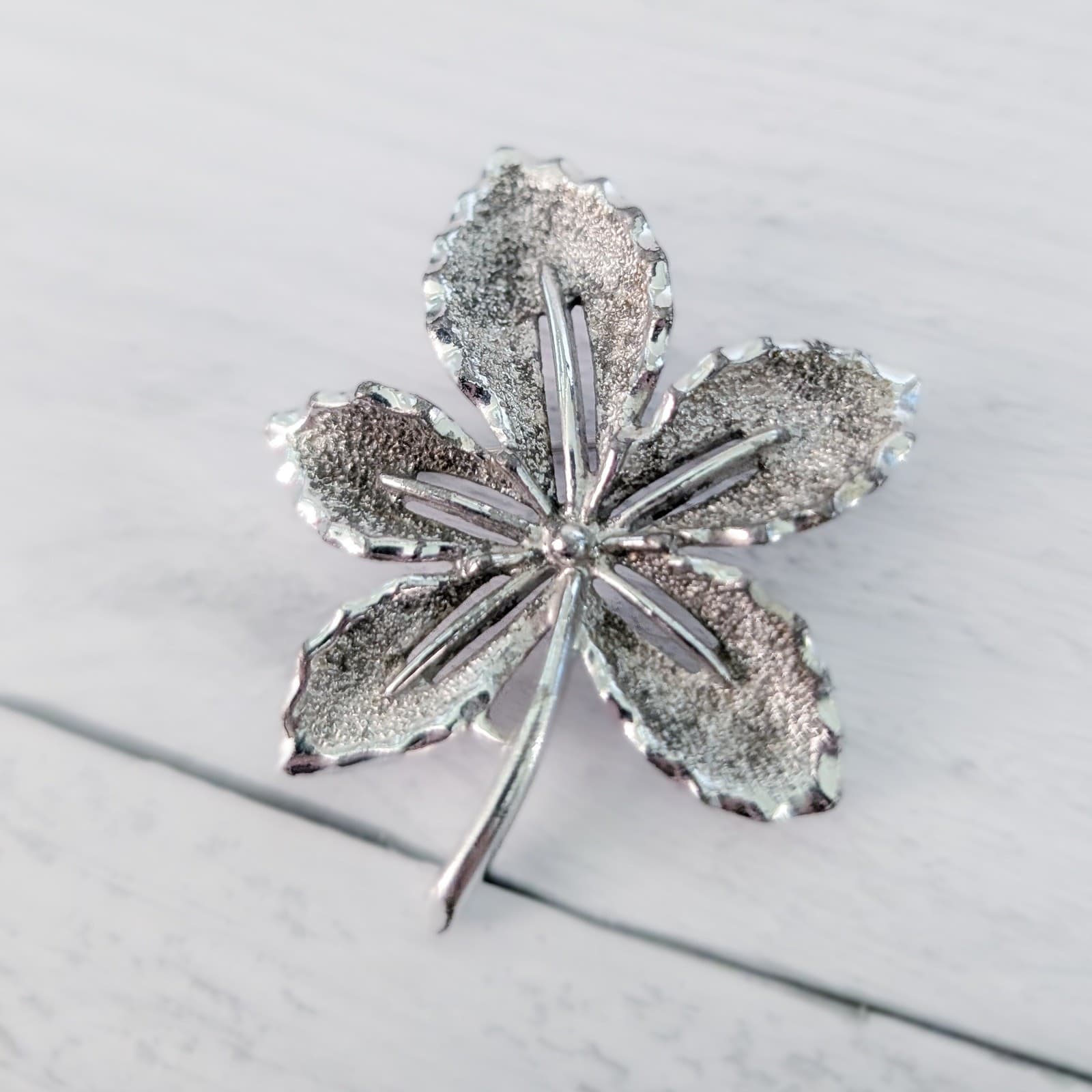
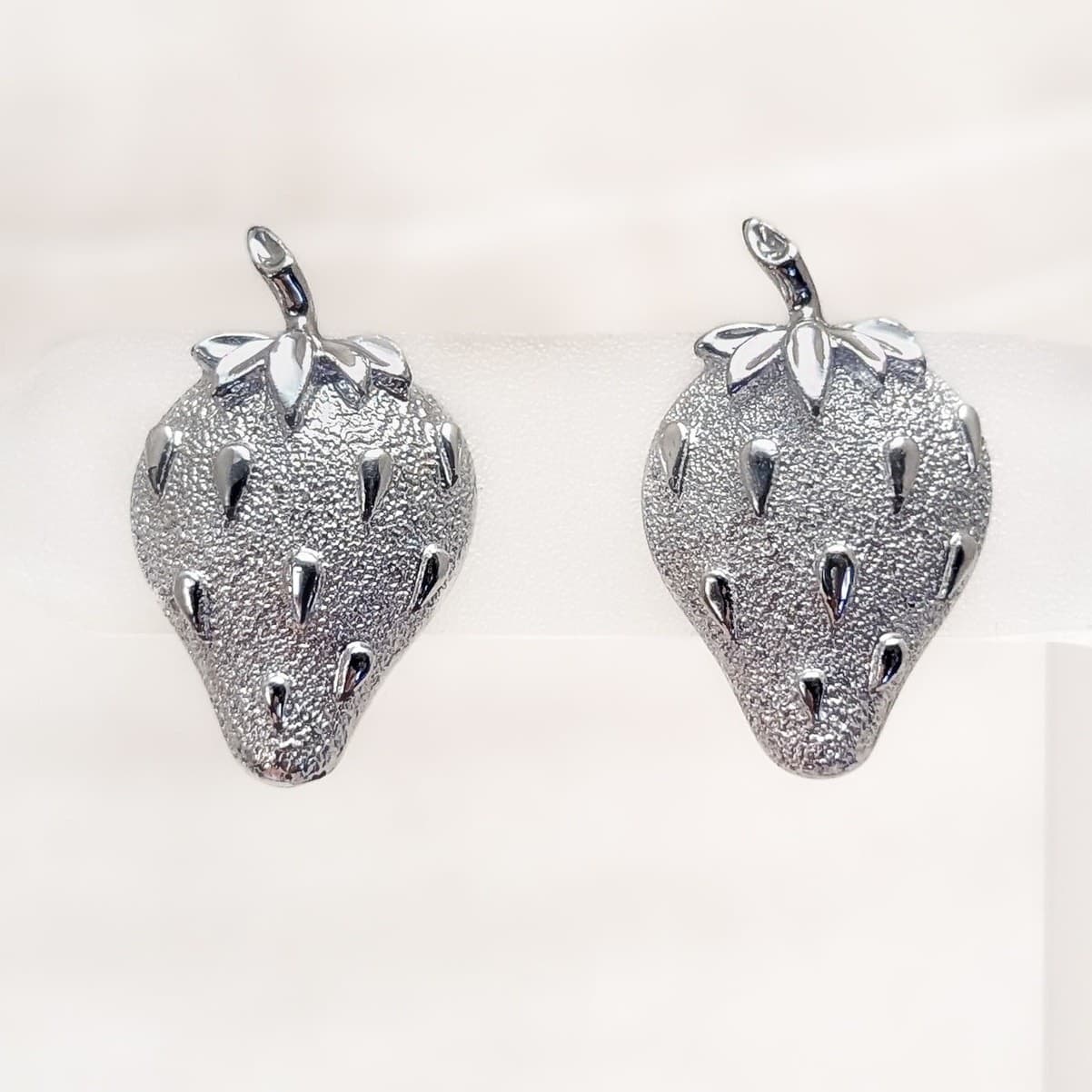
Sarah Coventry’s named collections were matching sets sold under one name, usually a brooch, necklace, bracelet, and earrings designed to be worn together. You’ll see names like “Black Beauty” and “Sultana” in collector references, and the standard books (Kay Oshel’s Sarah Coventry Jewelry, and Sturdivant and Crabtree’s Identifying Sarah Coventry) catalog many more. If you think you have a full set, those books are how you confirm the name and which pieces belong in it.
Is Sarah Coventry jewelry worth anything?
Most Sarah Coventry is worth a few dollars to a few tens of dollars, because it sold in enormous quantities, so there’s a lot of it around, and auction results reflect that. At regional auctions, a small lot of three Sarah Coventry necklaces and two pairs of earrings sold for $13 in 2025, and individual earrings and bracelets in one sale went for about $2 each. Those were auction sales, often in bulk, and a well-photographed single listing can fetch more, but they give you a fair sense of what to expect.
So what pushes a piece above that everyday range? A complete set from one named collection, with every piece matching, is the big one. Condition matters a lot too: buyers want plating that isn’t worn through, no missing or cloudy stones, and clips and catches that still work. Original boxes or tags help. And a strong, wearable design does well on its own (the kind of piece someone would want even without the name on the back).
To price yours, look up completed sales of the same design instead of asking prices (the eBay Sold Items filter is the easiest way). Our guide to whether vintage costume jewelry is worth anything explains how to read those results.
Selling or buying it
If you have a lot of Sarah Coventry, please don’t list every pair of earrings separately (you’ll spend more time on photos than the earrings will earn). Sets and themed groups sell better together, and a jewelry lot is often the right home for the odds and ends. Save individual listings for complete sets and standout pieces, with a sharp photo of the mark. And if you’re on the buying side, the low prices are honestly the fun part, since you can hunt down the missing pieces of a set without spending much. Browse Sarah Coventry on StillSparkly to start.
Sources
Related guides
Vintage Costume Jewelry Marks: A Guide to Designer Signatures
A name on the back of a brooch tells you who made it. How that name is written, and what’s stamped next to it, often tells you when.
Is My Vintage Costume Jewelry Worth Anything?
Usually a little, sometimes a lot. The value is in the maker, the design, the construction, and the condition, and you can check all four at the kitchen table.
What to Do With Inherited Jewelry You Don’t Want
Someone left you a jewelry box and you don’t want most of it. Don’t sell anything this week. Sort it first, because the valuable piece is rarely the one you’d guess.
Have some Sarah Coventry?
Get a free estimate from a photo, or list it with a close-up of the mark. Sets and themed groups are easy to list as one lot.